
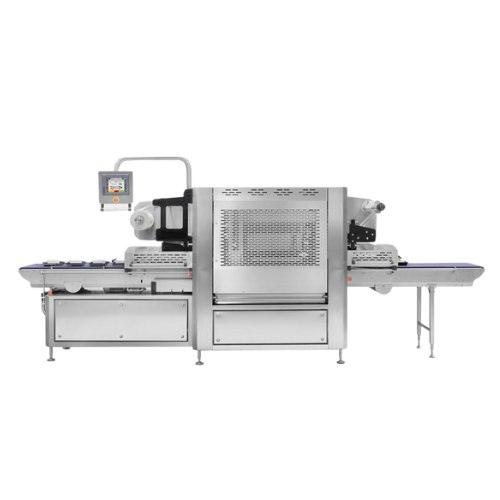
Tray Sealing Machines

LVP Automation offers advanced tray sealing machines designed to provide airtight and secure packaging for a wide range of products. Ideal for industries such as food, pharmaceuticals, and electronics, these reliable tray sealers help preserve product freshness, quality, and safety throughout storage and transport. With customisable options and high-speed processing, LVP’s tray sealers meet diverse packaging requirements while enhancing production efficiency.

Tray materials
PP, PET, CPET, foil
Sealing atmosphere
MAP or vacuum
Lidding films
Peelable, anti-fog
Tooling
Quick change tooling
Recipes
Stored per product
Seal window validated with your filmSpecified, installed and supported from Dublin 11
MAP and vacuum
Gas flush or vacuum plus gas
Four tray materials
PP, PET and rPET, CPET and aluminium
Seal proven inline
Leak detection and vision inspection
Ireland-wide support
Specification, install and service from Dublin 11

Tray sealing explained

The seal is the product, not the machine

A tray sealer joins a lidding film to a tray, and everything the pack claims about freshness, shelf life and safety rests on that one joint. The tray material, the film and the sealing parameters work as a single system, so changing any one of them changes the other two. That is why a tray sealer is specified around your pack rather than off a rate sheet, and why the seal window has to be proven with your actual tray and film rather than assumed from a datasheet.

01

MAP or vacuum, and what each buys

Gas flush, or modified atmosphere packaging, replaces the air in the pack with a gas mix chosen for the product. Vacuum plus gas draws the air out first and then backfills, which removes more of the residual oxygen. MAP is the usual choice where the pack has to look full and the product should not be compressed. Vacuum plus gas earns its place where oxygen sensitivity is the whole point. Both are only as good as the seal holding them in.
02

Tray materials and what they change

PP, PET and rPET, CPET and aluminium are all workable, and each seals differently. Recycled content in rPET is usually the sustainability move, but recycled material varies more batch to batch than virgin does, so the sealing parameters need more headroom. Aluminium behaves differently again. The practical answer is to fix the tray material early and set the sealing parameters and tooling against it, rather than switching substrate after the machine is specified.

03

Lidding film is half the seal

Peelable, anti-fog and recyclable films are all supported, and each has its own seal window. Peelable matters where the consumer opens the pack by hand rather than cutting it. Anti-fog matters where the product is visible and condensation would hide it. Recyclable film is where the sustainability commitment usually lands, and it is also where seal windows narrow, so validate it with your product rather than treating it as a like for like swap.

04

Proving the seal rather than assuming it

Seal integrity can be verified inline with leak detection and vision inspection for seal contamination, alongside date and lot printing and barcode verification. Contamination in the seal area is the classic failure, because a fleck of product across the sealing surface produces a pack that looks right and leaks anyway. Catching that inline is far cheaper than a customer complaint or a recall.

05

Changeover and recipes

Quick change tooling handles a range of tray sizes, and recipes store temperature, time, pressure and MAP settings per product so a changeover is a selection rather than a set-up. On a line running several SKUs a day this is the specification detail that decides real output, because the alternative is an operator dialling in parameters from memory and a first pallet nobody is quite sure about.

06

Hygiene and maintenance

Stainless frames, smooth surfaces, guarded enclosures and easy clean designs suit food and pharma environments and support HACCP compliant operation. Maintenance is routine cleaning, seal jaw inspection, film path checks and scheduled servicing of the pneumatics and drives. Seal jaw condition is the one to watch, because jaws wear gradually and the seal degrades before anything obvious fails, which is exactly the kind of drift a maintenance plan is for.

Throughput and where it sits in the line

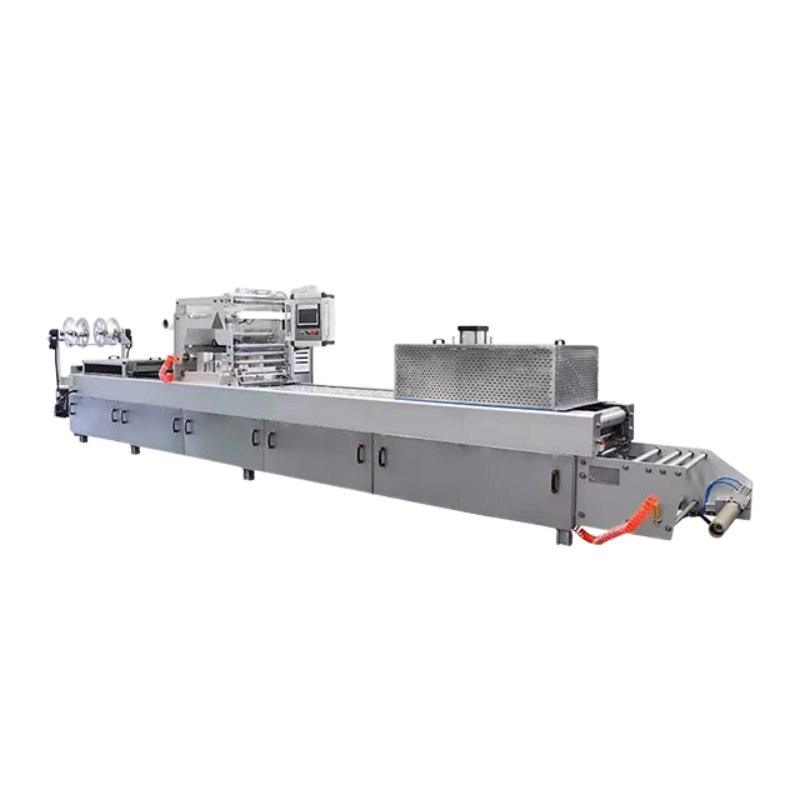
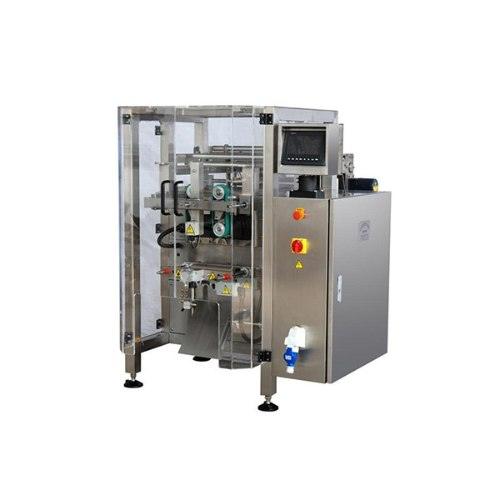
Rate is set by tray size, cavity count and film type rather than by the machine alone, so it is sized to your target packs per minute and the dwell time your seal needs. In the line it sits alongside vertical form fill seal and thermoforming depending on the pack, and hands off through PLC and HMI handshakes to fillers, weighers, vision, checkweighers and end of line machines, all specifiable as one complete packaging line. LVP Automation specifies, installs and supports tray sealing machines from Finglas, Dublin 11 as part of our wider automation services.

Specification

Tray materials
PP, PET and rPET, CPET and aluminium
Sealing atmosphere
Gas flush for modified atmosphere packaging, or vacuum plus gas
Lidding films
Peelable, anti-fog and recyclable films
Tooling
Quick change tooling across a range of tray sizes
Recipes
Temperature, time, pressure and MAP settings stored per product
Throughput
Set by tray size, cavity count and film type, sized to your target packs per minute and dwell time
Inline verification
Leak detection, vision inspection for seal contamination, date and lot printing and barcode verification
Hygiene
Stainless frames, smooth surfaces, guarded enclosures and easy clean design
Integration
Fillers, weighers, conveyors, printers and label applicators, checkweighers, vision and case packing
Maintenance
Routine cleaning, seal jaw inspection, film path checks and scheduled servicing of pneumatics and drives

Where Tray Sealing Machines Excel

Freshness & Food Safety

Airtight seals (with MAP/vacuum options) maintain product quality, extend shelf life and support HACCP-compliant operations.

Flexible Formats

Quick-change tooling handles a range of tray sizes and materials (PP, PET/rPET, CPET, aluminium), keeping changeovers fast and reliable.

Seamless Line Integration

Interfaces cleanly with conveyors, fillers, weighers, vision, print/label and case packing, minimal disruption, faster ROI.

FAQs about Tray Sealing Machines

Quick answers on materials, formats, MAP, speeds, hygiene, changeovers and integration.

Which tray materials are supported?

Common options include PP, PET/rPET, CPET and aluminium. We match sealing parameters and tooling to your chosen substrate.

Do you offer MAP or vacuum sealing?

Yes, gas flush (MAP) and vacuum + gas options are available to extend shelf life and improve presentation.

How fast can a tray sealer run?

Throughput depends on tray size, cavity count and film type. We size the machine to your target packs per minute and dwell time.

How easy are changeovers?

Quick-change tooling and recipe-based settings minimise downtime when switching tray sizes or SKUs.

Can seal integrity be verified inline?

Yes, add leak detection, vision inspection for seal contamination, date/lot printing and barcode verification.

What hygiene features are available?

Stainless frames, smooth surfaces, guarded enclosures and easy-clean designs suitable for food and pharma environments.

What about lidding films and recyclability?

We support a wide range of films (peelable, anti-fog, recyclable). We’ll validate seal windows for your sustainability goals.

How does it integrate with the rest of the line?

PLC/HMI handshakes to fillers, weighers, conveyors, printers/label applicators, checkweighers, vision and end-of-line case packing.

Can the machine store multiple recipes?

Yes, temperature, time, pressure and MAP settings are stored as recipes for fast, repeatable set-ups.

What maintenance is required?

Routine cleaning, seal jaw inspection, film path checks and scheduled servicing of pneumatics/drives; we provide a maintenance plan.

Similar Products

Let's Connect

Have a question about our conveyor systems or need a tailored automation solution for your business? Our team at LVP Automation is here to help. Fill out the form below with your details, and we’ll get back to you as soon as possible. Whether you need a quote, technical support, or more information on our products, we’re ready to assist.