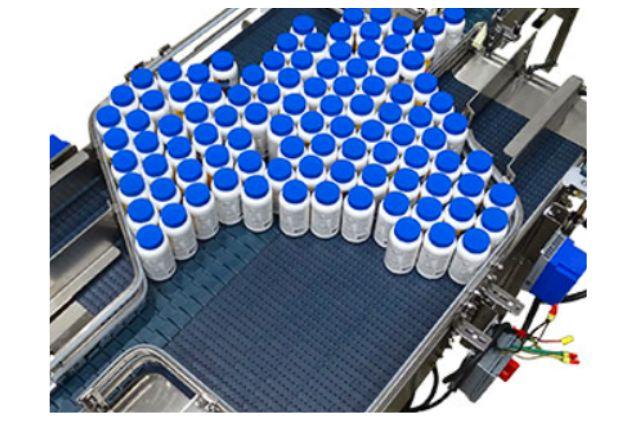
Accumulation in Conveyor Systems
Accumulation refers to the process of gathering or holding products on a conveyor at a specific point, such as boxes, plastic totes, FMCG goods, bottles, or cans. This occurs when products move along the conveyor belt and are stopped by a fixed point, such as an end stop or a retractable blade stop. Accumulation is crucial for managing workflow in various industries, providing a buffer for products during machine maintenance, label changes, or manual workstations.
Common Applications
Why Proper Accumulation is Important
Accumulators are essential in preventing product jams, ensuring efficient workflow, and maintaining product integrity. An improperly designed accumulator can lead to overloading, system breakdowns, and increased wear on conveyor components. At LVP, we specialise in designing and building custom accumulator conveyor systems that address weight management, belt tension, and motor capacity to keep your operations running smoothly.
Key Considerations for Accumulation Conveyors
Three numbers decide whether an accumulation conveyor works in service: how much weight ends up sitting on it, what the belt can stand, and whether the motor can start that load moving again. They are related, and getting one wrong shows up in the other two.
What Decides the Specification
Common Questions
What is accumulation on a conveyor? Product gathering and holding at a set point on the line rather than continuing to the next machine. It is created by stopping product at a fixed point — an end stop or a retractable blade stop — while the conveyor underneath keeps running.
How much product can accumulate? That is a weight calculation before it is anything else: the weight of one product multiplied by how many will be held, in kilograms. That figure then drives the belt and the motor, which is why it is the first thing to establish rather than the last.
Why does the belt matter so much? Because accumulated product does not just sit there, it drags. The belt has to be selected against the total allowable tension for the load. The wrong belt wears prematurely, and premature wear on an accumulation section means downtime on the part of the line least able to absorb it.
What happens if the motor is undersized? The accumulated weight increases friction between the belt and the wear strip, so more torque is needed to keep the conveyor moving. A motor sized for the running load but not the accumulated load will struggle or trip. See motor sizing and selection.
Can accumulation be added to a conveyor we already have? Sometimes, but it is rarely just a matter of fitting a stop. Holding product changes the load the belt and motor see, so an existing conveyor may need a different belt, a different drive, or both. It is worth checking before assuming.
How much buffer do we actually need? It follows from how long a downstream stoppage typically lasts and how fast product arrives. Where that is uncertain, a simulation model will show it before anything is built.
Where do you cover? We are based in Finglas, Dublin 11 and work with customers across Ireland.