High Capacity Palletiser – MAX Series

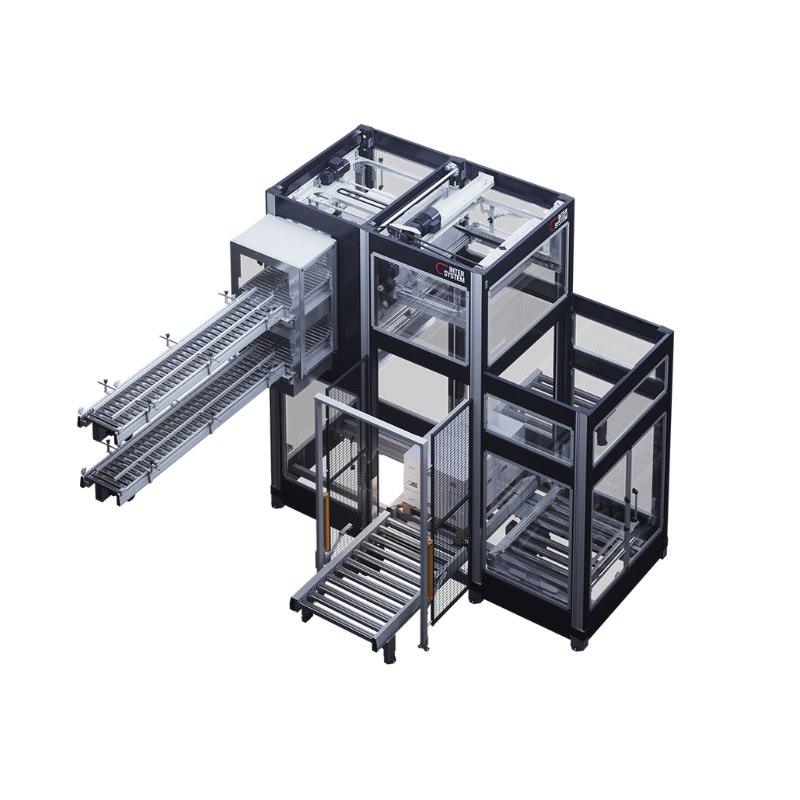
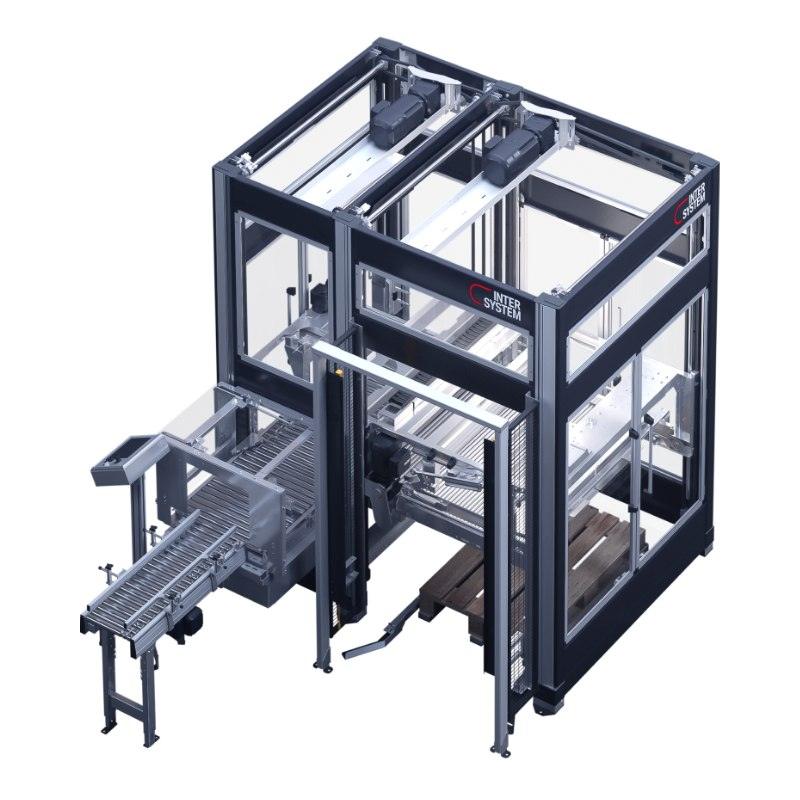
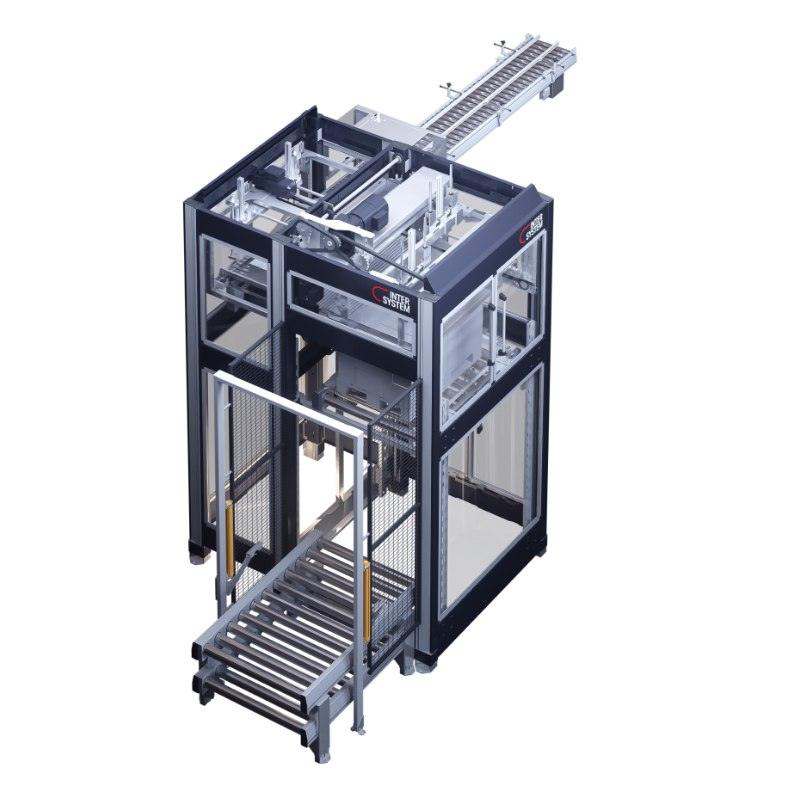
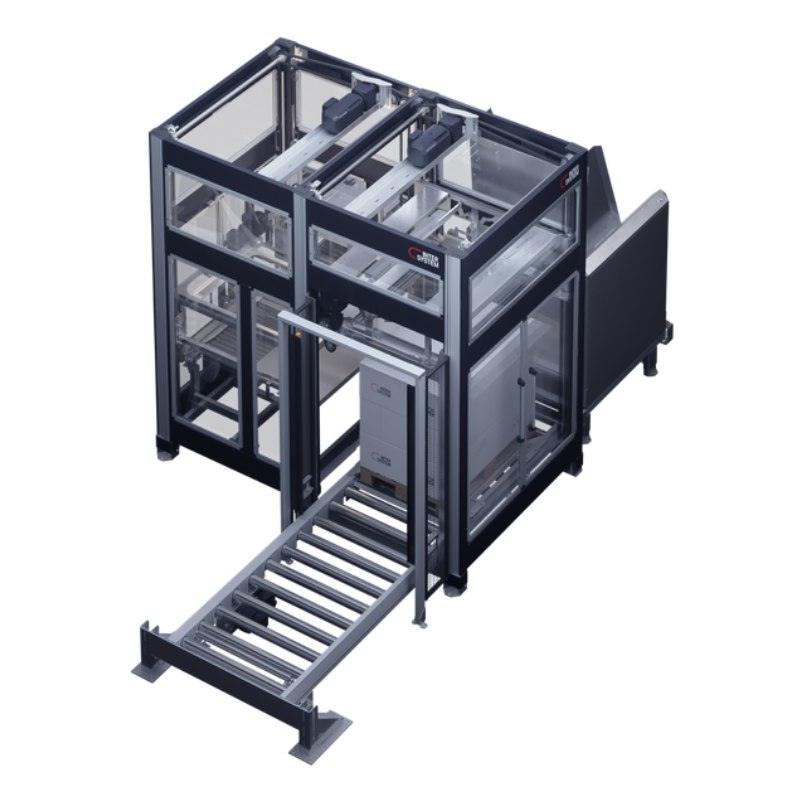
The InterSystem MAX Palletiser is designed to meet the demands of high-capacity production environments, providing reliable, continuous palletising at maximum throughput. With a high product infeed and key features such as a pallet lift, continuous infeed pusher, and a fixed storage unit, the MAX Palletiser ensures smooth, uninterrupted operation. Positioned between the infeed conveyor and load layer, these components enable the efficient handling of large volumes while maintaining the quality and consistency required in high-demand applications.

  • High infeed and continuous pusher for sustained rates
  • Fixed storage unit evens the flow into layer build
  • Square, repeatable layers for stable pallets
  • Euro, CHEP and custom pallets with recipe-based patterns
Cases per minute confirmed at design stageSpecified, installed and supported from Dublin 11
Built for peak rates
Continuous-duty mechanics for high case rates
No micro-stops
Continuous infeed pusher holds takt through transfer
Even layer build
Fixed storage unit buffers and sequences product
Ireland-wide support
Specification, install and service from Dublin 11

High capacity palletising explained

What high capacity actually means here

Every palletiser has a headline rate, and most of them only hit it on a good day with a forgiving pack. The MAX is built for sustained case rates rather than peak ones: continuous-duty mechanics, industrial drives and a layout that removes the pauses where throughput usually leaks away. Real throughput is confirmed as cases per minute during design, once pack size and pattern are known, because those two variables move the number far more than the machine badge does.

01

Why the infeed sits high

A high product infeed is not a styling choice. It simplifies the upstream conveyor design at speed, keeps the run into the layer area gravity-assisted, and gives you height to work with when the line ahead of the palletiser is already congested. On fast lines the alternative usually means a longer, flatter approach run and more places for product to jam.
02

The continuous infeed pusher

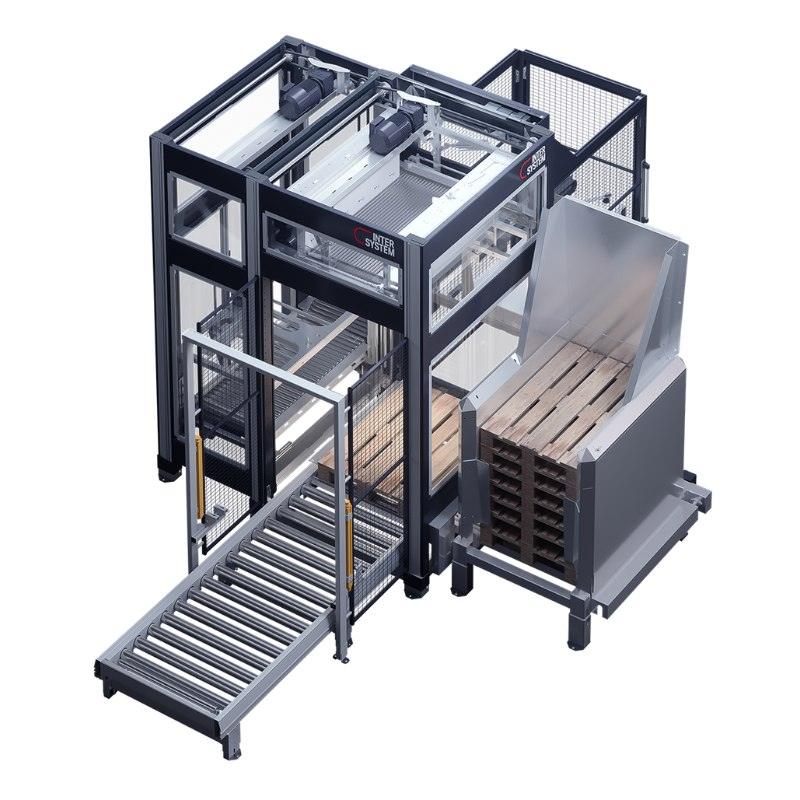
Product transfers from the infeed to the layer table without stopping. That matters more than it sounds: a palletiser that pauses on every transfer loses a fraction of a second each cycle, and at high rates those micro-stops are exactly what separates the quoted figure from the one you actually get across a shift. Continuous motion holds takt instead of constantly rebuilding it.

03

The fixed storage unit

Sitting between the infeed conveyor and the layer build, the fixed storage unit buffers and sequences incoming product so layers form evenly rather than in bursts. Uneven arrival is the usual cause of ragged layers, and ragged layers are the usual cause of unstable pallets. Buffering upstream of the layer table is what keeps stack quality intact when the line is running flat out.

04

Layer quality and pallet stability

Square, repeatable layers are not a cosmetic goal. They interlock properly, they take less film to secure, and they survive being moved, stacked and transported without the load shifting. Euro, CHEP and custom pallet sizes are handled through recipes, with brick, pin-wheel and mixed patterns selected at the HMI, and the right pattern is chosen against how the load will actually travel rather than how it looks on the outfeed.

05

Where it sits in the range

MAX is the answer when a single line needs high rates on its own. Where the requirement is two or three lines into one cell instead, the multi-line palletiser is the better shape, and where product arrives as a continuous stream the FLOW palletiser is designed around that. At lower volumes the semi-automatic palletiser and the COMPACT automatic palletiser do the same job at a smaller scale and a smaller footprint.

06

Changeovers and options

Changeovers are recipe-based, so speeds, timings and pattern logic adjust in minutes, with optional guides and stops where a mechanical tweak is still the quickest route. Options include pallet dispensers, slip and layer sheet placement, automatic outfeed, wrapper handshakes, and barcode or label verification and vision checks on the completed load. Most installations run straight into pallet wrapping on that handshake.

Safety, maintenance and integration

Guarding, interlocks, e-stops and beacons are CE compliant, and drives and sensors are placed for access rather than buried, which is what makes a preventative maintenance plan realistic on a multi-shift operation. Standard PLC and HMI I/O or fieldbus connects upstream conveyors and downstream wrappers, with WMS or MES data exchange for counts, faults and OEE. LVP Automation specifies, installs and supports palletising cells from Finglas, Dublin 11 as part of our wider automation services.

Where High Capacity Palletisers Excel

Peak-Throughput End-of-Line

Designed for very high case rates, MAX pairs a high infeed with continuous pusher motion to eliminate layer-build bottlenecks.

Consistent Layers, Better Pallets

The fixed storage unit evens product flow, enabling square, repeatable layers that improve pallet stability and reduce rework.

Heavy Duty, Low Downtime

Industrial components, accessible drives and preventative-maintenance design deliver sustained uptime on multi-shift operations.

FAQs about the MAX Palletiser

Quick answers on speeds, products, layouts, changeovers, options, safety and integration.

How fast can the MAX Palletiser run?

Throughput depends on pack size and pattern, but MAX is engineered for very high capacities. We confirm cases/min during design.

Why a high infeed?

High infeed simplifies upstream conveyor design at speed and enables continuous, gravity-assisted flow to the layer area.

What does the continuous infeed pusher do?

It transfers product smoothly from the infeed to the layer table without pauses, maintaining takt and reducing micro-stops.

What’s the role of the fixed storage unit?

It buffers and sequences incoming product so layers form evenly, improving stack quality at high rates.

Which products can MAX handle?

Cases, trays, crates and many bagged goods. Tooling and motion profiles are tailored to your packaging.

Can it run multiple pallet sizes and patterns?

Yes—recipes cover Euro/CHEP/custom sizes with brick, pin-wheel and mixed patterns selectable on the HMI.

How easy are changeovers?

Recipe-based changeovers adjust speeds, timings and pattern logic in minutes; optional guides/stops aid mechanical tweaks.

What options are available?

Pallet dispensers, slip/layer sheet placement, automatic outfeed, wrapper handshakes, barcode/label verification and vision checks.

How does MAX integrate with my line and systems?

Standard PLC/HMI I/O or fieldbus to upstream conveyors and downstream wrappers; data exchange with WMS/MES for counts, faults and OEE.

What about safety and maintenance?

CE-compliant guarding, interlocks, e-stops and beacons. Maintenance access to drives/sensors is straightforward; we supply a preventative plan.

Similar Products

Let's Connect

Have a question about our conveyor systems or need a tailored automation solution for your business? Our team at LVP Automation is here to help. Fill out the form below with your details, and we’ll get back to you as soon as possible. Whether you need a quote, technical support, or more information on our products, we’re ready to assist.