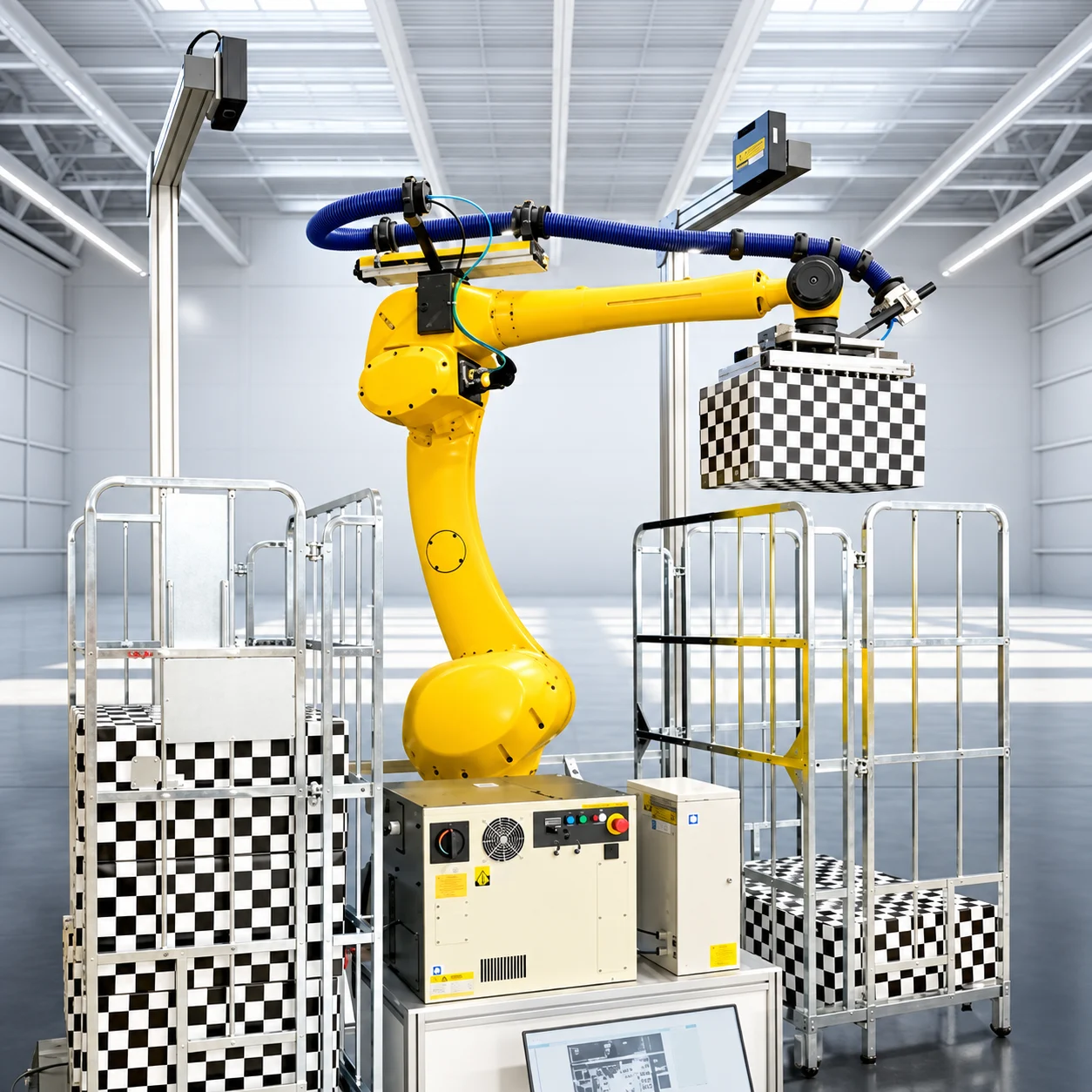
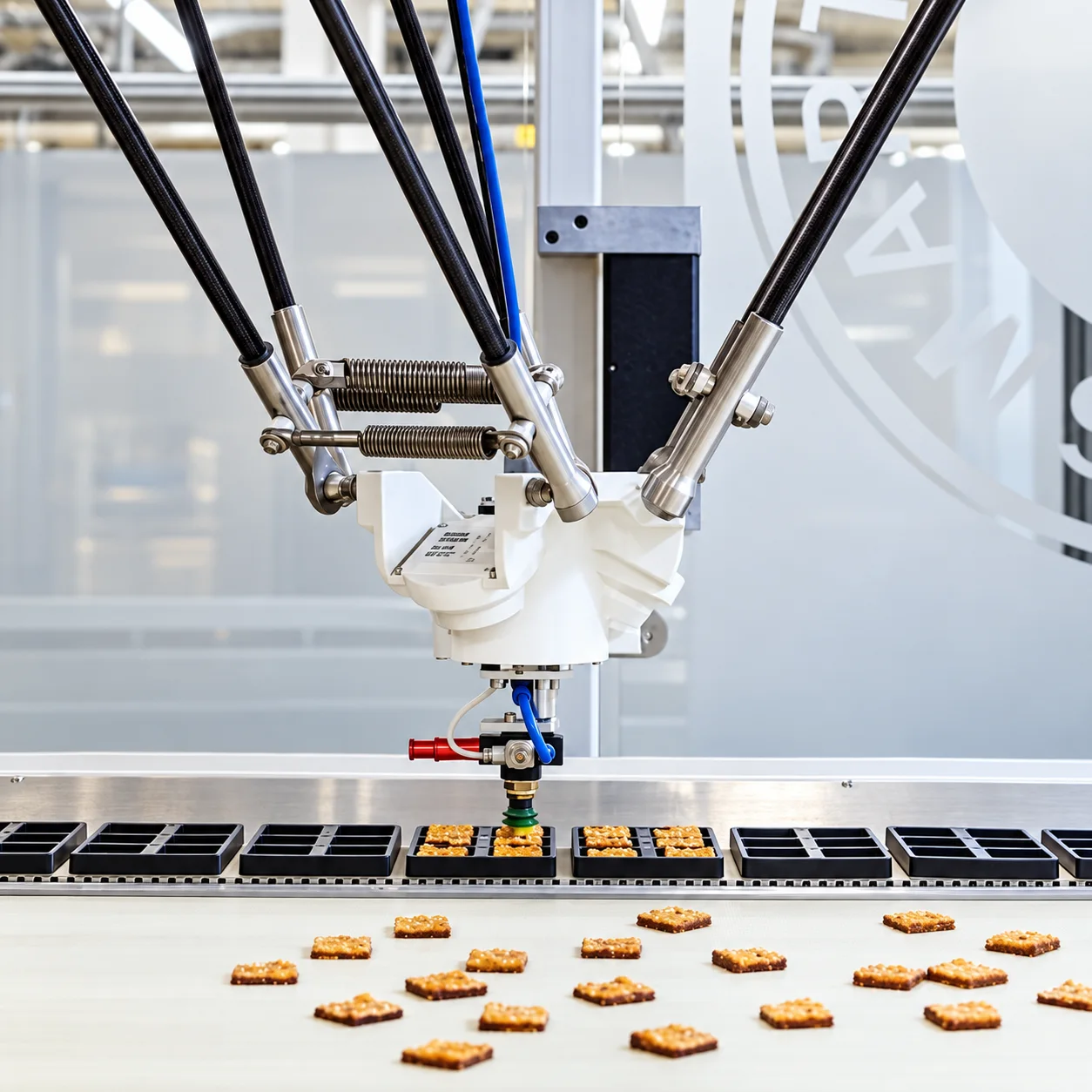
Pick and Place Machine

Robotic pick and place cells that handle uniform and irregular products with fast, gentle, repeatable motion. Delta and SCARA robots synchronise across lanes, with coordinated cells reaching up to 2,000 items a minute, lifting throughput while keeping placement consistent.

Robot types
Delta and SCARA
Peak throughput
Up to 2,000/min
Robots
Fanuc robots
Products handled
Pouches to trays
Gripper options
Vacuum, soft, mech
Pick rate modelled against your real infeedGripper proven on your product before build

Robotic pick and place explained

Delta, SCARA and what each shape is good at

Most high rate pick and place work is done by delta cells or SCARA cells, and the choice is mostly about reach, payload and the kind of motion the job needs. Delta robots are the fast, light option: overhead mounted, very short cycle times, small payloads, and ideal for picking single items off a moving belt into trays, flow wrap infeeds or cartons. SCARA robots are stiffer in the vertical axis and better where the part has to be placed into a pocket or fixture with force rather than dropped into it. Plenty of lines end up with both, a delta bank doing the volume and a SCARA doing the awkward final placement.

01

Up to 2,000 items a minute, and what that number really depends on

Coordinated multi robot cells can reach up to 2,000 items a minute, but that is a system figure, not a robot figure. It depends on product size, how tightly the items are spaced on the infeed belt, the pick pattern, and how many robots are sharing the flow. A single robot has a ceiling set by its cycle time and the distance it travels per pick. The way to raise throughput is usually to shorten that travel or add a robot, not to run one machine harder. Bring your real infeed rate and your worst case product spacing to the sizing conversation and the number that comes back will be one you can hold on the floor.
02

Grippers are where most of the risk sits

The robot is rarely the hard part. Tooling is matched to the product, so soft vacuum cups for pouches and bagged snacks, gentle mechanical fingers for bars, bakery items and cheese sticks, and purpose made end effectors for small components and trays. Multi pick tooling lifts several items in one cycle where the pattern allows it, which is often a cheaper route to rate than another robot. Anything sticky, dusty, wet, warm or variable in shape deserves a sample trial before the tooling is fixed, because a gripper that works on a good day and drops product on a bad one costs more than it saved.

03

Vision, and when you genuinely need it

Vision is recommended where product arrives randomly oriented or varies in size and position, because the robot has to be told where the item is and which way it is facing before it can pick it. Where orientation is already fixed by a lane, fixture or guide, mechanical laning can be enough and is cheaper to own. Beyond locate and orient, machine vision can also check for defects, reject before packing, and balance counts across several robots so no one cell is starved while another is overloaded.

04

Tracking a belt that never stops

Products are picked on the move, so the robot has to know exactly where the belt is at every instant. That comes from encoders on the conveyor feeding position data to the robot controller, with modular belt or timing belt conveyors preferred because they track steadily and do not creep. This is why the conveyor specification matters as much as the robot one. A belt that slips or surges will show up as missed picks long before anyone blames the drive, so the conveyor is part of the accuracy budget, not just transport.

05

Changeover is a recipe, not a reprogramme

Operators select the recipe or SKU on the HMI and the system adjusts pick points, patterns and speeds for it. In practice that means changeover is a supervisor level task rather than an engineering one, and no robot programming is needed to run a product the cell already knows. New products do need to be taught once, with tooling checked against them, so build that into the plan if your range changes often. The gap between a line that changes over in minutes and one that needs an engineer is almost always how much work was done up front on recipes.

06

Food, washdown and hygienic build

Food applications are common on these cells, and food grade materials, hygienic frame designs and IP rated robots are available for washdown zones. What matters is being specific about the cleaning regime early. A cell that will be hosed down at the end of every shift needs different guarding, drainage and cable management from one sitting in a dry ambient area, and retrofitting that later is expensive. Guarding, light curtains and safe access for the picking area are designed in at the same time.

Adding robots later, and what upkeep looks like

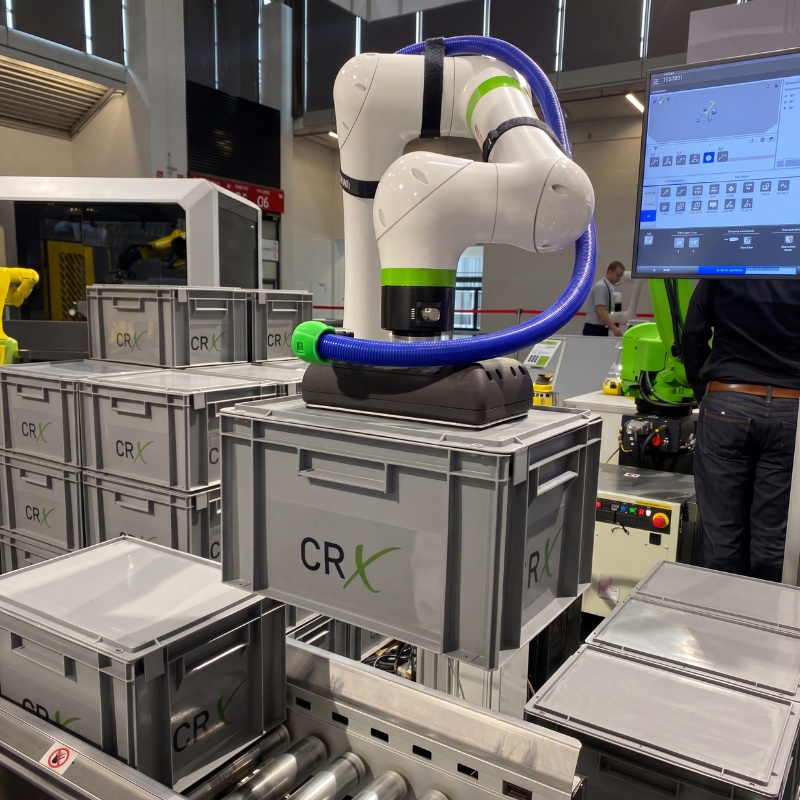
These systems scale by adding robots or lanes and rebalancing the picks in the synchronisation software, so a cell specified with headroom in the frame and controls can grow with demand rather than being replaced. Day to day maintenance is routine: grippers, vacuum cups, filters and wear parts checked on a schedule, with robot servicing to the manufacturer's intervals and remote diagnostics available for faults. Downstream, picked product usually goes on to cartoning or end of line packing, and the same robots family covers palletising, depalletising and machine tending. LVP Automation specifies, installs and supports robotic pick and place cells from Finglas, Dublin 11 as part of our wider automation services.

Specification

Robot types
Delta and SCARA cells, selected on reach, payload and placement force
Peak throughput
Up to 2,000 items a minute across a coordinated multi robot cell
Robots
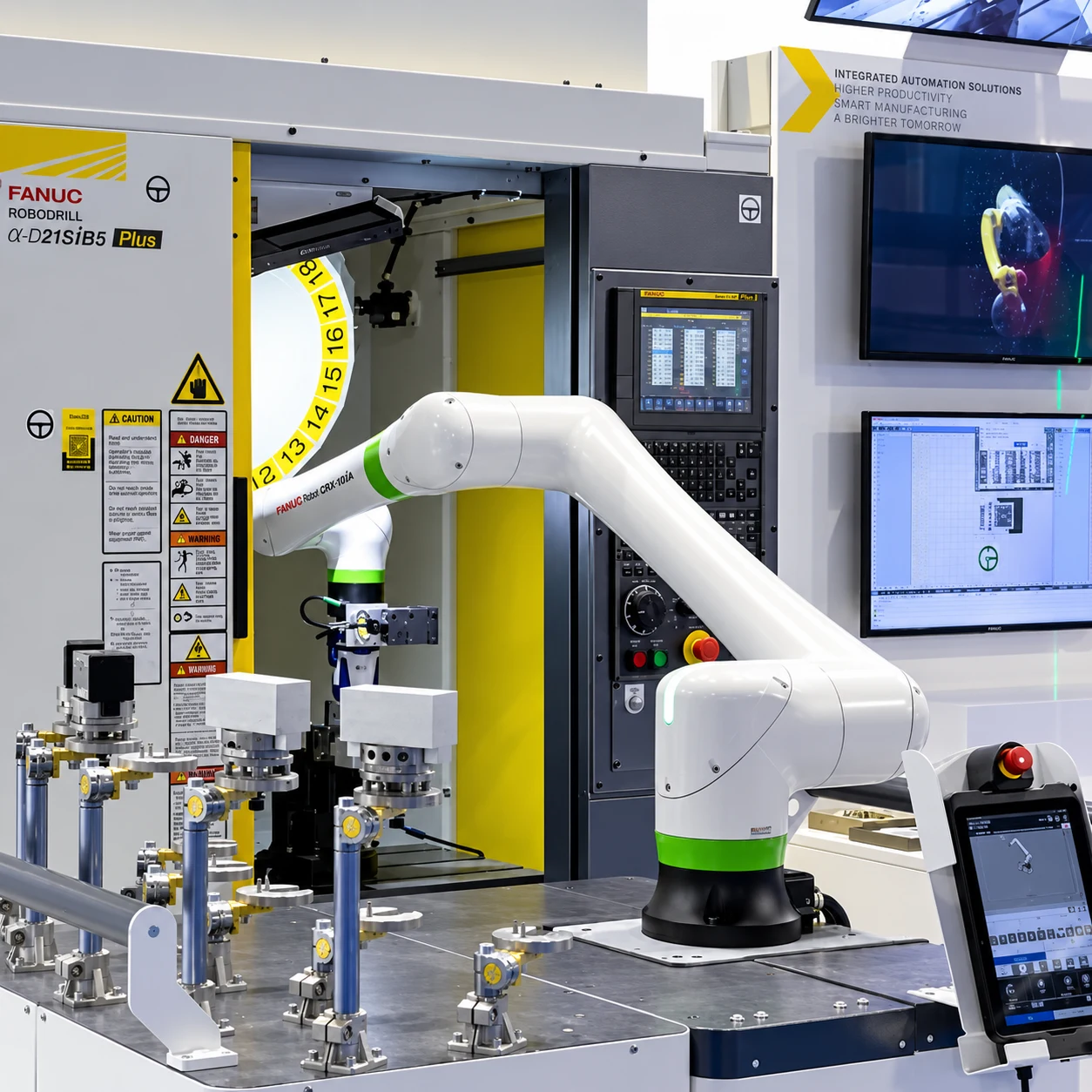
Fanuc, in single robot cells or synchronised multi robot banks
Products handled
Pouches, bars, bakery items, cheese sticks, trays and small components
Gripper options
Vacuum cups, soft grippers and mechanical fingers, matched to the product
Vision
Locate and orient, defect reject and count balance across robots
Belt tracking
Modular belt or timing belt conveyors with encoder synchronisation to belt speed
Changeover
Recipe or SKU selected on the HMI, adjusting pick points, patterns and speeds
Hygiene options
Food grade materials, hygienic frame designs and IP rated robots for washdown zones
Scalability
Add robots or lanes and rebalance picks in the synchronisation software

Where the Pick and Place Machine Excels

High-Speed Delta and SCARA Cells

Ultra-fast kinematics with conveyor tracking for flow-wrap infeed, tray loading and sorting, keeping primary and secondary packaging lines fed at pace.

Product Versatility and Gentle Handling

Accurately picks pouches, bars, bakery items, cheese sticks and small components using application-matched grippers (vacuum, soft, mechanical).

Smart Coordination and QA

Integrated vision for locate/orient, defect reject and count balance across multiple robots; synchronised with upstream belts and downstream wrappers.

FAQs about the Pick and Place Machine

Quick answers on speeds, product types, vision, hygiene, changeovers, footprint and integration.

How fast can a pick and place machine run?

With coordinated multi-robot cells, throughput can reach up to 2,000 items/min, subject to product size, spacing and pick pattern.

Can it handle irregular or delicate items?

Yes, tooling is matched to the product (e.g., soft vacuum cups, gentle mechanical fingers) and vision ensures accurate orientation.

Do we need vision systems?

Vision is recommended for randomly oriented or variable products. For fixed orientation, fixtures/laners may be sufficient.

How are changeovers managed?

Operators select a recipe/SKU on the HMI; the system adjusts pick points, patterns and speeds, typically no reprogramming required.

Is it suitable for food applications?

Yes, food-grade materials, hygienic designs and IP-rated options are available for washdown zones.

What conveyors work with pick and place?

Typically modular belt or timing belts for steady tracking; the robots synchronise to belt speed via encoders.

Can it do inspection and reject?

Yes, inline vision can check presence/position/defects and trigger gentle reject or recirculation before packing.

What’s the typical footprint?

Compact cells are possible; final size depends on lanes, accumulation, robot count and pack/outfeed equipment.

How scalable is the system?

Yes, add robots or lanes and rebalance picks with synchronisation software as demand grows.

What maintenance is required?

Routine checks on grippers, cups, filters and wear parts; scheduled robot service per OEM guidance. Remote diagnostics are available.

Similar Products

Let's Connect

Have a question about our conveyor systems or need a tailored automation solution for your business? Our team at LVP Automation is here to help. Fill out the form below with your details, and we’ll get back to you as soon as possible. Whether you need a quote, technical support, or more information on our products, we’re ready to assist.