Roller Conveyor

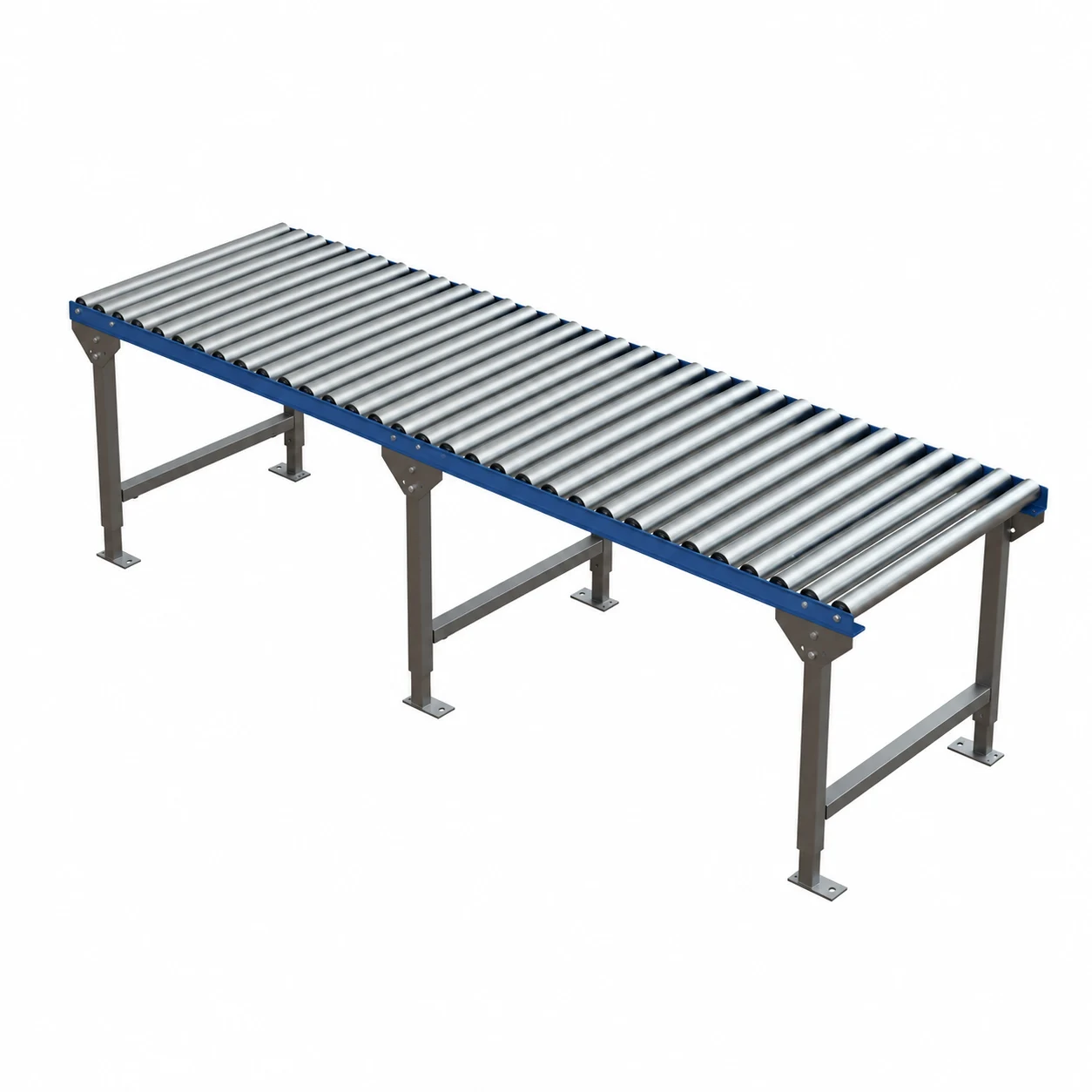
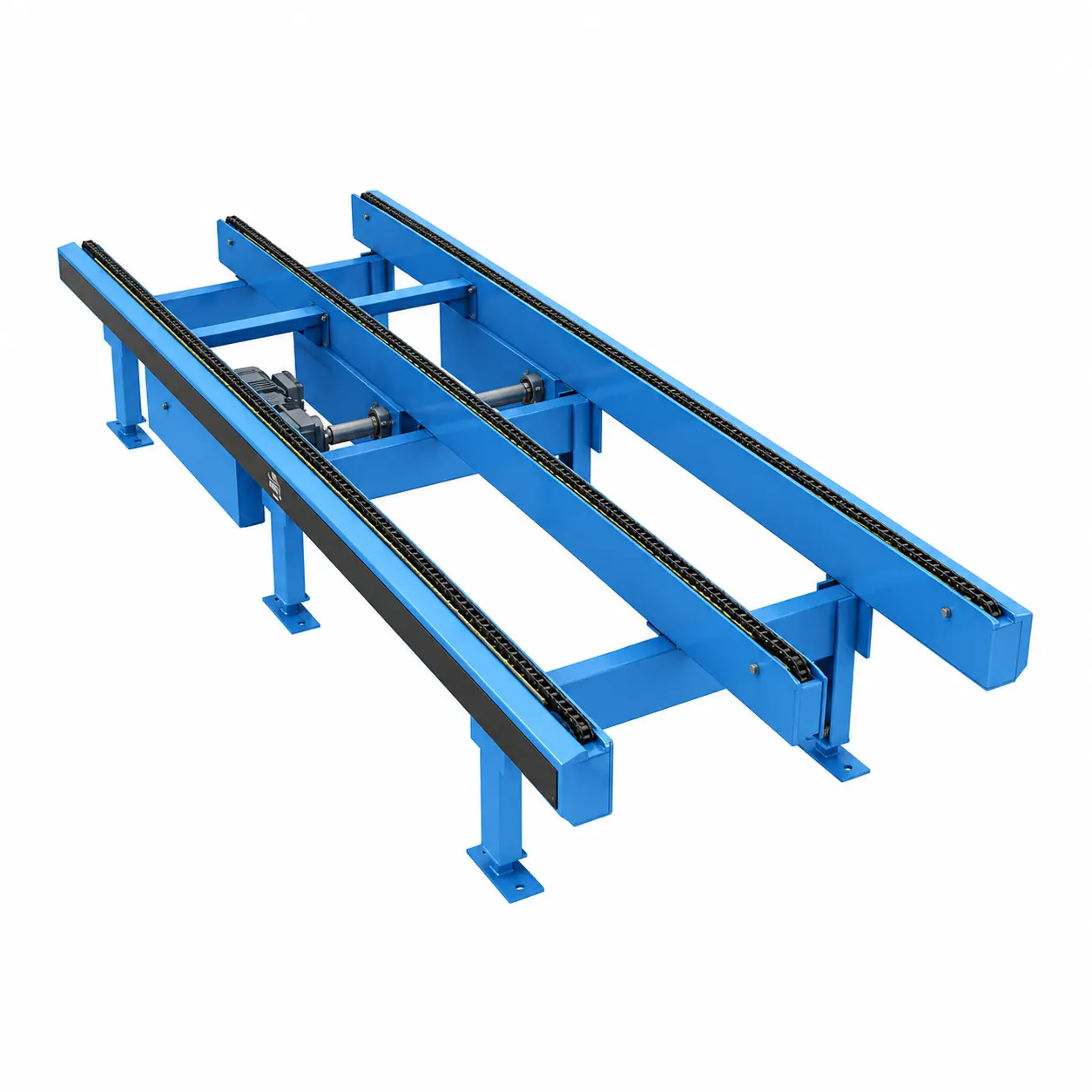
Painted steel pallet roller conveyor for heavy-duty handling, with tangential chain-driven rollers inside a 4 mm steel side channel to minimise backlash and keep chain tensioning accessible. Up to 1,500 kg per pallet at 12, 15 or 18 m/min, in 100, 125 or 150 mm roller pitch and lengths from 1,050 mm to 6,000 mm.

Load capacity
1,500 kg per pallet
Speeds
12, 15 or 18 m/min
Roller pitch
100, 125 or 150 mm
Standard lengths
1,050 to 6,000 mm
Drive
Tangential chain
Roller pitch checked against your palletSpeed set to your downstream limits

Pallet roller conveyor explained

Where a roller conveyor is the right choice

A driven roller conveyor is the workhorse for moving pallets between processes: infeed and outfeed to wrapping and palletising, buffer lanes, cross-dock, manufacturing cells and warehouse staging. It suits stable base pallets and heavy loads that need robust, low maintenance conveying over long runs, with predictable tracking and gentle starts and stops. The decision against a chain conveyor comes down to the pallet: rollers for standard pallets with good deckboards, and where accumulation is needed; chain for very heavy or uneven bases and harsh duty.

01

Roller pitch, and the three roller rule

Pitch options are 100 mm, 125 mm and 150 mm. The rule of thumb is that at least three rollers must be under the pallet at all times, so 100 mm suits uneven bases or smaller footprints and 125 to 150 mm covers standard pallets. This is the single most common thing to get wrong on a pallet line, because a pitch chosen for a good pallet will drop a tired one between rollers. If your pallet pool is mixed, or your inbound pallets are whatever your supplier sends, specify for the worst one in circulation rather than the nominal size.
02

Load capacity, per pallet and cumulative

The conveyor supports up to 1,500 kg per pallet with a maximum cumulative capacity of 4,500 kg. Both numbers matter and they answer different questions: the per pallet figure sizes the rollers and the frame under a single unit load, and the cumulative figure limits how many loaded pallets can sit on one driven section at once. If you are planning a buffer lane, the cumulative figure is the one that decides how long that lane can be before it needs to be split into separately driven zones.

03

Tangential chain drive, and why it matters

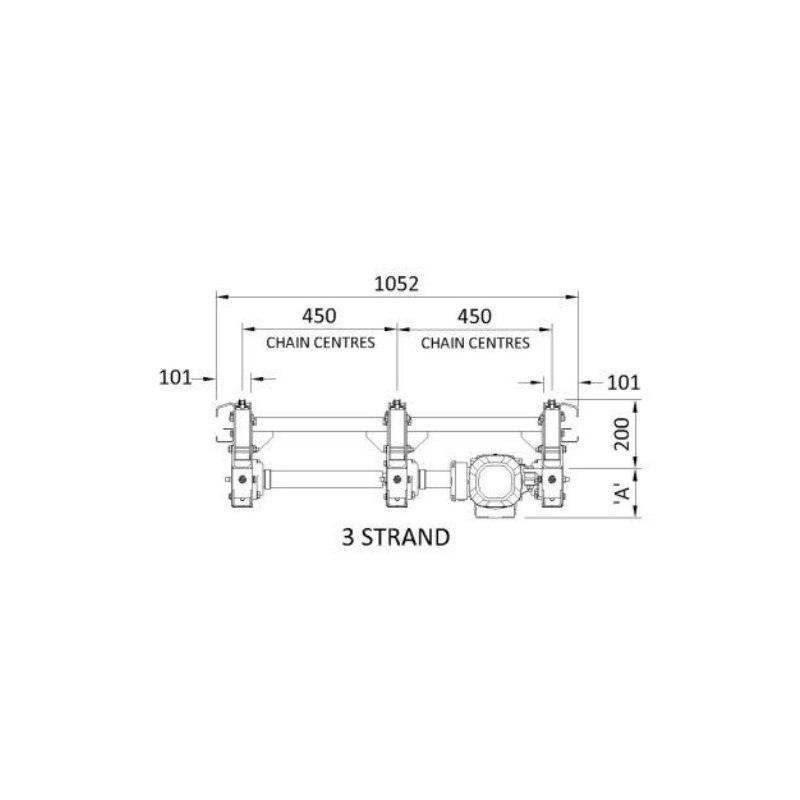
Rollers are driven by a tangential chain inside a 4 mm thick steel side channel. The chain runs against each roller sprocket in turn, which gives consistent torque to every roller in the zone rather than daisy chaining drive from one roller to the next. In practice that means less backlash, more even starts under load, and chain tensioning that is accessible from the side of the conveyor rather than needing the bed stripped. Motor options run from 0.37 kW to 1.5 kW, sized against load, speed and the length of the driven section.

04

Speeds, lengths and layout

Standard speeds are 12, 15 or 18 m/min, and standard lengths run from 1,050 mm to 6,000 mm, so most layouts are built from catalogue sections rather than specials. Speed is set to match throughput, stopping distances and the limits of whatever sits downstream, which is usually the real constraint. A conveyor delivering pallets faster than a wrapper can take them is not throughput, it is a queue, so the sensible starting point is the slowest machine on the line and the pallet rate it can actually sustain.

05

Accumulation and zone control

Roller conveyors accumulate well. Photo-eyes and zone control give managed accumulation, and where true zero pressure between pallets is required the control logic and stops are designed for it rather than assumed. Accumulation is worth designing in deliberately: a buffer of two or three pallets ahead of a wrapper absorbs the wrapper's cycle and stops the upstream line pausing every time it wraps. For lighter product where zero pressure is the whole point, zero line pressure conveying is the dedicated answer.

06

Painted steel, stainless and the environment

The standard build is painted steel, which is intended for dry industrial settings. For washdown areas or anywhere corrosive, specify stainless construction from the outset, because it changes the frame, the fixings and the cost rather than being a finish applied later. Maintenance on a painted steel line is periodic chain tension and lubrication, checks on bearings, sprockets and sensors, and keeping debris out of the bed, and components are selected so those checks can be done without dismantling sections.

Sensors, safety and what it connects to

Custom sensor mounts handle presence detection, accumulation and jam detection, linked to PLC and HMI for line control. Safety is guarding, pull-cords, e-stops, interlocked gates and beacons or sounders to CE standards, integrated into your existing site safety system rather than bolted on beside it. Typical interfaces are palletisers, pallet wrappers, storage and retrieval systems, weighing and checkweighing, and barcode scanning. Where the load does not need driving at all, gravity roller conveyor is the cheaper option. LVP Automation designs, builds, installs and supports pallet roller conveyor from Finglas, Dublin 11 as part of our wider automation services.

Specification

Load capacity
Up to 1,500 kg per pallet, 4,500 kg maximum cumulative on a driven section
Speeds
12, 15 or 18 m/min, set against throughput, stopping distance and downstream limits
Roller pitch
100 mm, 125 mm or 150 mm, with at least three rollers under the pallet at all times
Standard lengths
1,050 mm to 6,000 mm
Drive
Tangential chain drive, consistent torque across the zone with accessible chain tensioning
Side channels
4 mm thick steel
Motor options
0.37 kW to 1.5 kW, sized on load, speed and driven length
Pallets handled
Euro, CHEP and custom pallets with sound runners and deckboards
Construction
Painted steel for dry industrial areas, stainless for washdown or corrosive environments
Configurations
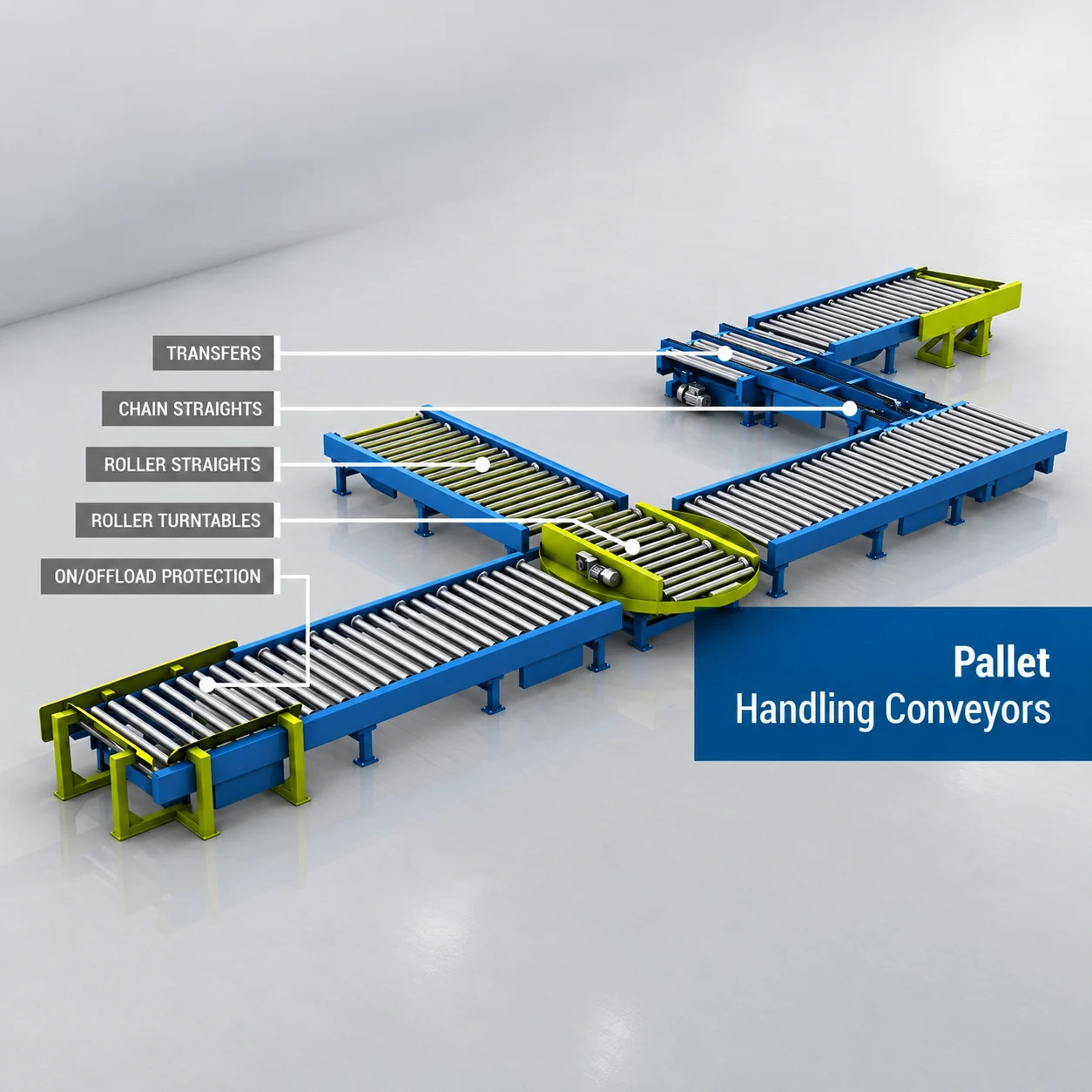
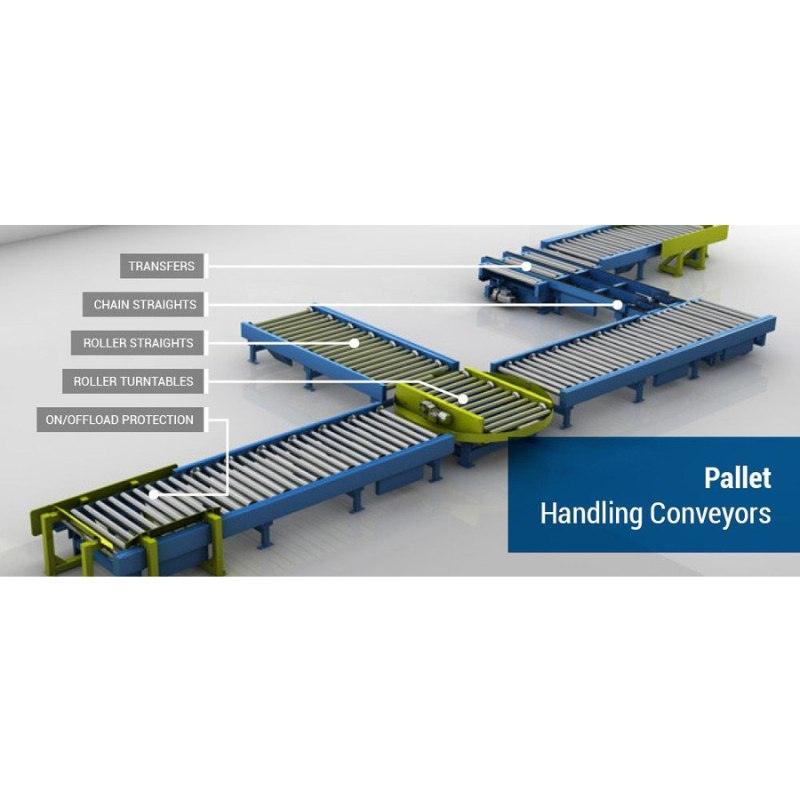
Straight runs, accumulation zones, transfers, turntables and stops, with custom sensor mounts

Where the Roller Conveyor Excels

When to Choose Roller

Best for stable-base pallets and heavy loads that need robust, low-maintenance conveying over long runs, with predictable tracking and gentle starts/stops.

Configurations and Integrations

Straight runs, accumulation zones, transfers, turntables and stops. Clean interfaces to palletisers, wrappers, AS/RS, weigh/check, scanners and safety systems.

Typical Applications

Infeed/outfeed to wrapping and palletising, buffer lanes, cross-dock, manufacturing cells and warehouse staging where high uptime is critical.

FAQs about the Roller Conveyor

Quick answers on pallets, pitch, speeds, maintenance, safety and when to pick rollers over chain or belt solutions.

Which pallet types are suitable?

Euro, CHEP and custom pallets with sound runners/deckboards. We confirm roller pitch and frame spacing to support your base pattern.

How do I choose the right roller pitch?

Use 100 mm for uneven bases or smaller footprints; 125–150 mm for standard pallets. Rule of thumb: at least three rollers under the pallet at all times.

Why tangential chain drive?

It provides consistent torque to all rollers in the zone, minimises backlash and keeps maintenance simple with accessible chain tensioning.

Can roller conveyors accumulate pallets?

Yes, use photo-eyes and zone control for managed accumulation. For true zero-pressure between pallets we design appropriate control logic and stops.

What speeds are typical?

12, 15 or 18 m/min are standard. We set speed to match throughput, stopping distances and downstream equipment limits.

What maintenance is required?

Periodic chain tension/lubrication, checks on bearings, sprockets and sensors, and debris cleaning. Components are selected for easy access.

Are these suitable for wet or corrosive areas?

Painted steel is for dry industrial settings. Specify stainless constructions for washdown or corrosive environments.

How are sensors integrated?

We provide custom sensor mounts for presence detection, accumulation and jam detection, linked to PLC/HMI for line control.

Roller vs chain conveyors, when to choose each?

Roller for most standard pallets with good deckboards and where accumulation is needed; chain for very heavy or uneven bases and harsh duty.

What safety features are available?

Guarding, pull-cords, e-stops, interlocked gates and beacon/sounders to CE standards; integrated into your site safety system.

Similar Products

Let's Connect

Have a question about our conveyor systems or need a tailored automation solution for your business? Our team at LVP Automation is here to help. Fill out the form below with your details, and we’ll get back to you as soon as possible. Whether you need a quote, technical support, or more information on our products, we’re ready to assist.