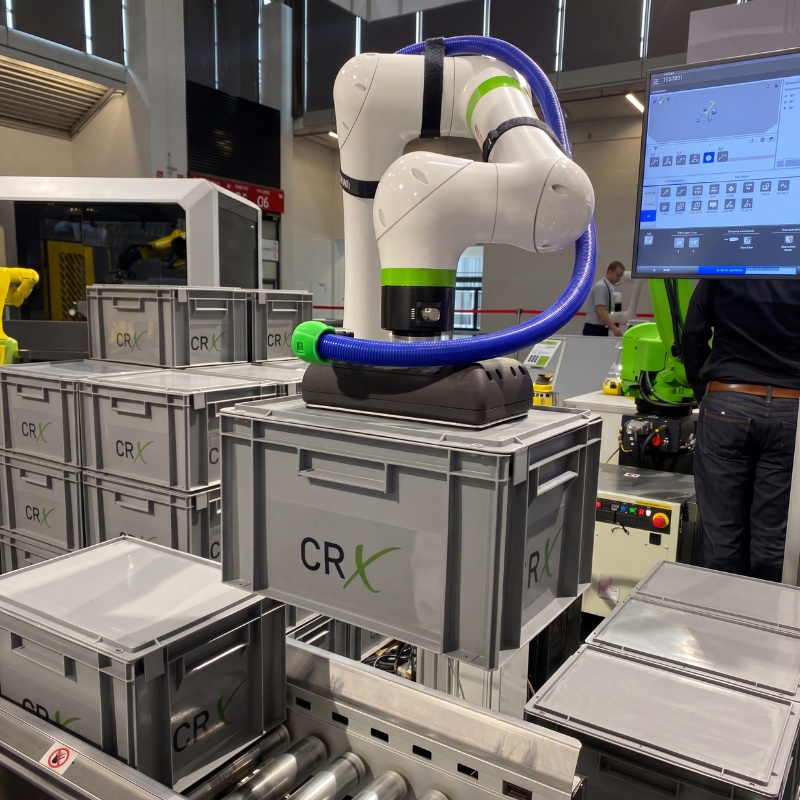
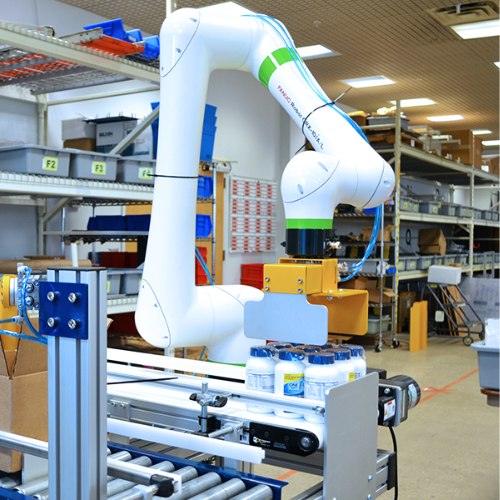
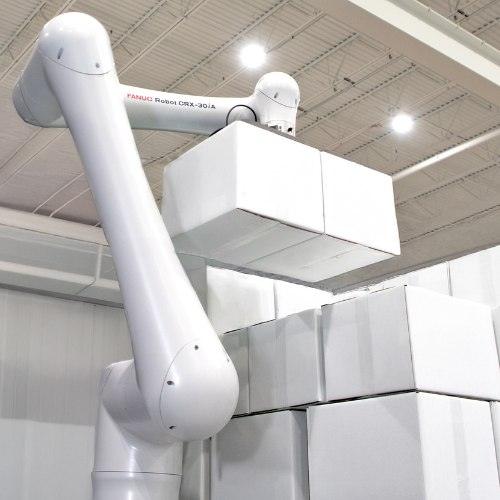
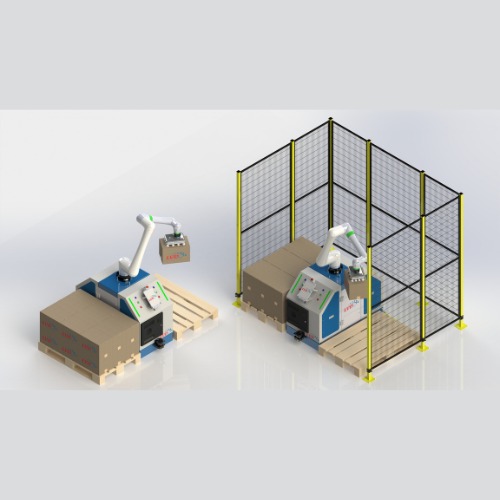
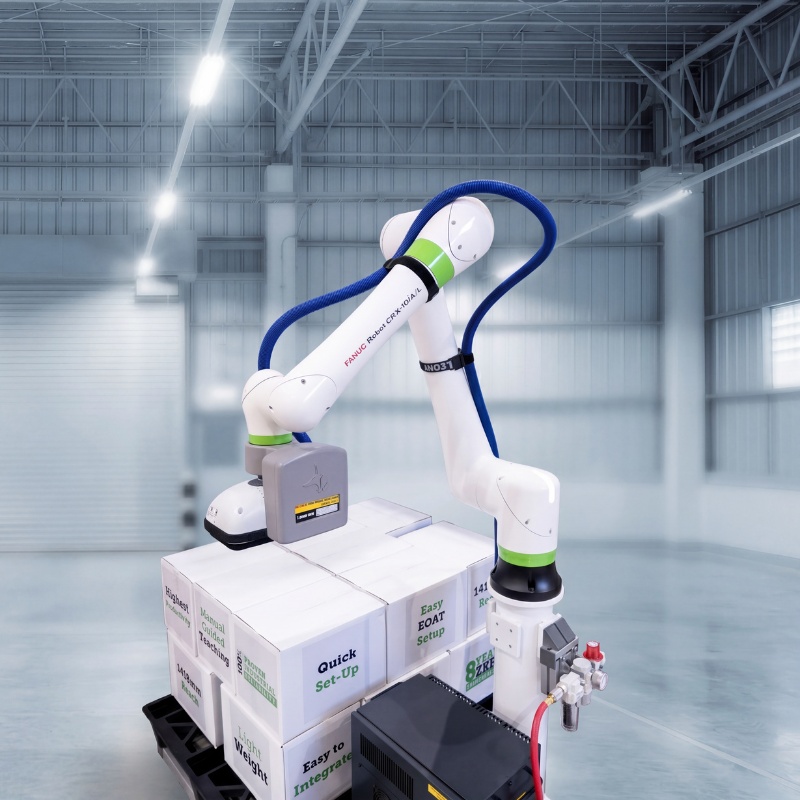
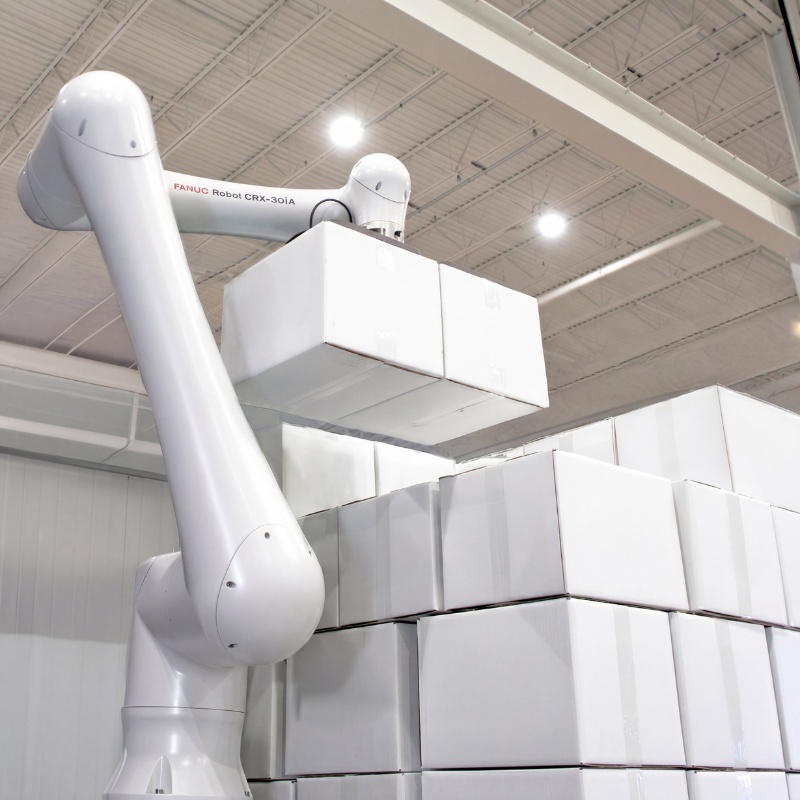
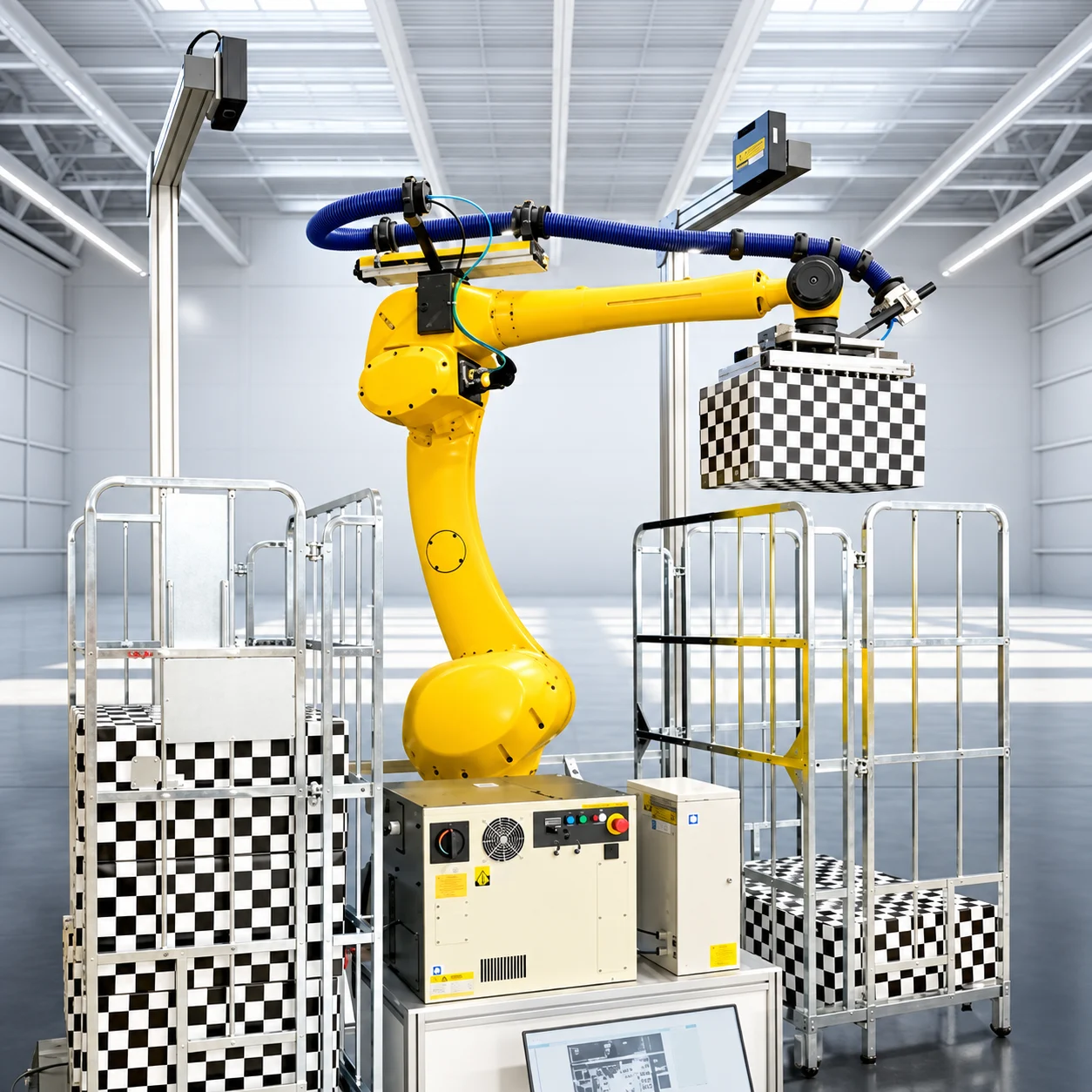
Cobot palletisers that build pallets beside your people instead of inside a fenced cell. The CPF-10 Series runs a FANUC CRX-10iA/L at 10 kg including the gripper, 5 cycles a minute collaborative or 10 in robot mode, to a 1,500 mm build height on EURO or CHEP pallets. Cases, totes, trays and bundles, with heavier FANUC cobots available where the load demands it.
Pallet matrix checked before you orderGripper matched to your packaging
Cobot palletising explained
What a cobot palletiser is, and where it fits
A cobot palletiser is a collaborative robot on a compact base that builds pallets beside the people already working the line, rather than inside a fenced cell of its own. The trade is straightforward: you give up the top end of speed and payload, and you get back floor space, a much simpler installation and a machine an operator can work next to. For a line running one or two shifts at moderate rate, where the alternative is a person lifting cases all day, that trade usually favours the cobot.
01
The CPF-10 cell in numbers
The CPF-10 Series is built on a FANUC CRX-10iA/L as standard, with an alternative robot confirmed after an application assessment. Maximum load is 10 kg including the gripper, maximum pallet build height is 1,500 mm, and it handles cases, totes, trays and bundles. Pallet formats are EURO at 1,200 x 800 mm and UK, CHEP or industry at 1,200 x 1,000 mm, the latter with a robot change. The 10 kg figure is the one to check first, because it is the case plus the tooling, not the case alone.
02
Collaborative mode or robot mode
The same cell runs two ways. In collaborative mode it does 5 cycles a minute, and in robot mode 10, both depending on load and pallet matrix. Collaborative mode is speed limited by design so the robot can share space with people; robot mode doubles the rate but needs the area managed as a robot cell. It is worth deciding this early rather than late, because it changes the guarding, the floor layout and the throughput you can promise, and a cell bought for one mode and run in the other will disappoint on one of those three.
03
The robot itself, and the range behind it
The CRX-10iA/L is a six axis cobot with 1,418 mm reach, 10 kg payload, repeatability of plus or minus 0.04 mm, IP67 body and wrist, a 0 to 45 degree operating range and floor, inverted or angled mounting. If your cases are heavier or your pallet is taller, the wider FANUC range goes well beyond it: CRX-5iA at 5 kg and 994 mm through CRX-20iA/L at 20 kg and CRX-25iA at 25 to 30 kg with 1,889 mm reach, and the CR series from the CR-4iA up to the CR-35iB at 35 to 50 kg. Sizing the robot to the heaviest case you actually run, plus tooling, is the whole job.
04
Pallets, patterns and build height
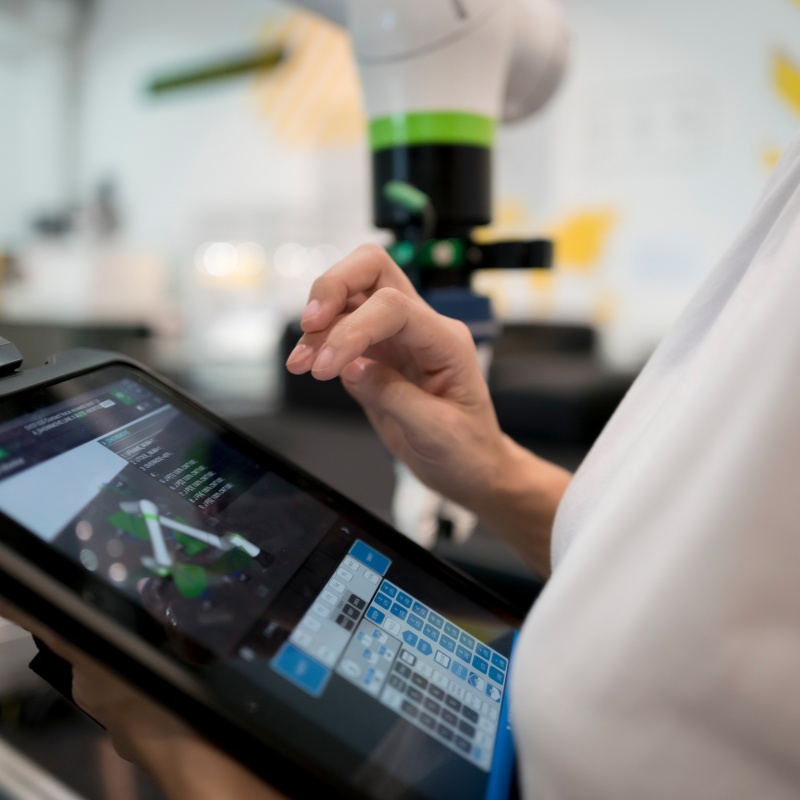
Pattern building software creates the stack and can optimise it, and operators select a new SKU or pattern from the HMI with no reprogramming, so a changeover is minutes rather than an engineering visit. Build height is where cobot cells most often run out of road: 1,500 mm is a full pallet for most case work but short of a 2,000 mm distribution pallet, so if your customers expect a taller build, that is the point at which a conventional layer palletiser or a fenced robot cell becomes the right answer instead.
05
Grippers for cases, totes, trays and bundles
Gripper options are vacuum, mechanical or hybrid, confirmed against your product rather than assumed, with slip sheet and pallet handling added where the pattern needs it. Packaging surface, porosity and stiffness decide which works: a vacuum tool that lifts a laminated case will struggle on unlined kraft, and a bundle that flexes needs support underneath rather than suction on top. Prove the tooling on real samples before the cell is built, because on a 10 kg budget the gripper weight matters as much as the grip.
06
Safety, guarding and hygiene
Cells are supplied to CE standards with fixed guarding, interlocked doors, e-stops and beacons, and area scanners or light curtains as options; the CPF-10 also offers safety scanner and fencing options and GMP features for easy cleaning. The cobot's own protection is IP54 as standard with IP67 optional on the body and standard on the wrist. Which combination you need comes out of the risk assessment and the way people move around the pallet, not from a preference for collaborative or fenced, and it is cheaper to settle at layout stage than after installation.
Integration, upstream and downstream
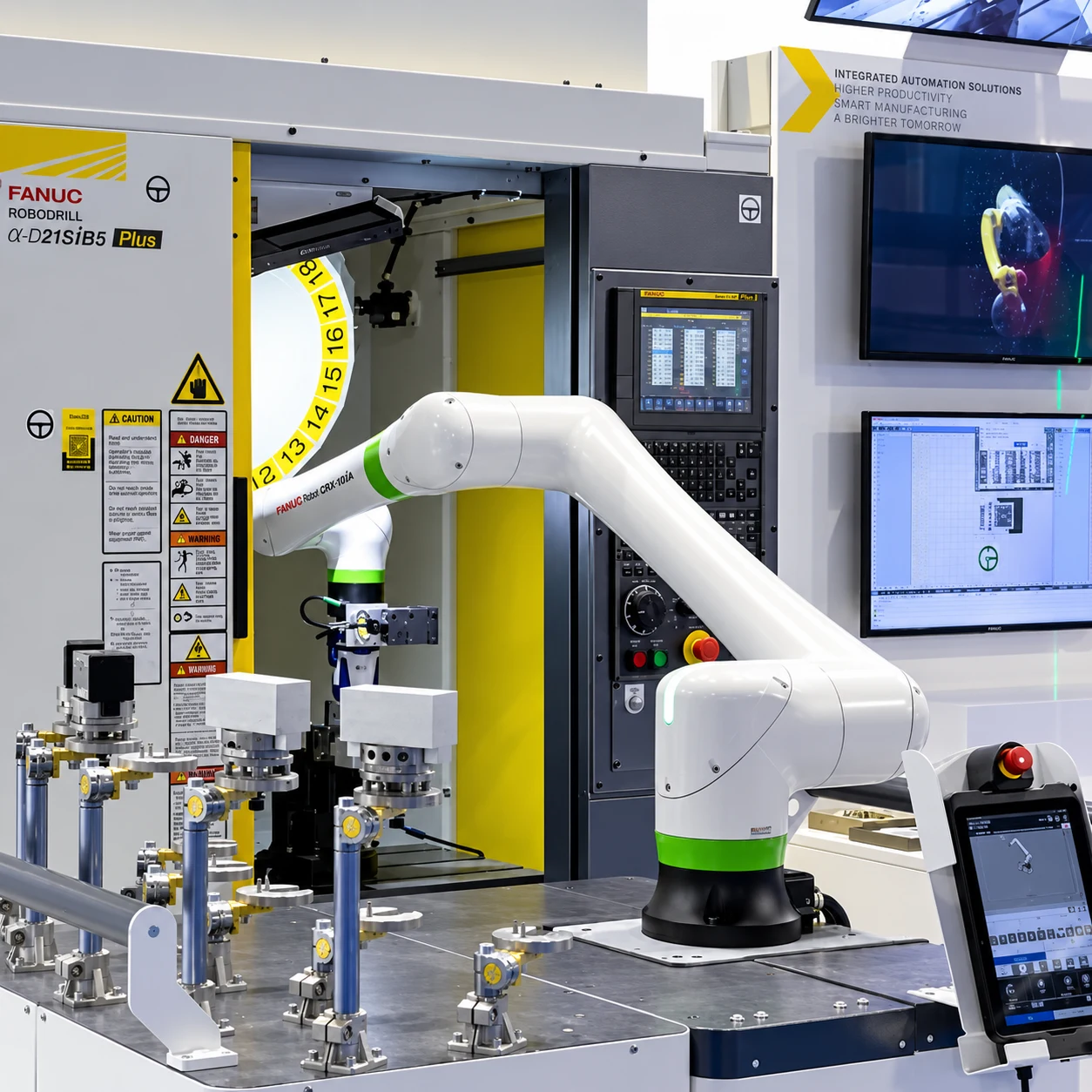
Control is by PLC and HMI with I/O or network comms to upstream and downstream equipment, wrappers and warehouse systems, so the cell can hand off cleanly rather than sitting as an island. In practice that means conveyor infeed, pallet magazines and slip sheet stations on one side and a pallet wrapper on the other, with the footprint set as much by those as by the robot, which is why a layout drawing comes first. Maintenance is routine checks on grippers, pads, filters and wear parts, with scheduled robot servicing and remote diagnostics available. The same robots also cover depalletising, pick and place and machine tending. LVP Automation specifies, installs and supports cobot palletising cells from Finglas, Dublin 11 as part of our wider automation services.
Specification
Cell
CPF-10 Series, FANUC CRX-10iA/L as standard with an alternative robot confirmed on application assessment
Maximum load
10 kg including the gripper
Cycle rate
5 cycles a minute in collaborative mode, 10 in robot mode, depending on load and pallet matrix
Pallet formats
EURO 1,200 x 800 mm and UK, CHEP or industry 1,200 x 1,000 mm with a robot change
Max build height
1,500 mm
Products handled
Cases, totes, trays and bundles
Gripper options
Vacuum, mechanical or hybrid, confirmed against your product, plus slip sheet and pallet handling
Robot
CRX-10iA/L, 6 axis, 1,418 mm reach, repeatability +/-0.04 mm, 40 kg, floor, inverted or angled mounting
Wider cobot range
CRX-5iA to CRX-25iA and CR-4iA to CR-35iB, 4 to 50 kg payload, 550 to 1,889 mm reach
Protection and hygiene
IP54 standard, IP67 optional on the body and standard on the wrist, with GMP features for easy cleaning
Where the Cobot Palletiser Excels
When to Choose a Cobot Palletiser
Ideal when throughput, labour availability, and consistency matter. Handles frequent changeovers, multi-SKU runs, and mixed-case patterns with minimal downtime.
Case/bag/crate palletising, mixed-case retail pallets, multi-line consolidation, and end-of-line cells for FMCG, food and beverage, pharma/medical, and logistics.
FAQs about the Cobot Palletiser
Answers to common questions on payloads, rates, mixed-case capability, safety, changeovers, and integration.
What payloads can the palletiser handle?
From light cartons to heavy bags/crates. We select the robot model and gripper to match your max product weight and cycle rate.
How fast can a robotic palletiser run?
Single-pick cells commonly reach 8–20 picks/min (pattern-dependent). Layer palletisers go higher. We size the cell to your throughput.
Can it build mixed-case retail pallets?
Yes. Pattern-building software (and optional vision) creates stable mixed loads and can auto-optimise patterns.
How are changeovers handled?
Operators select new SKUs/patterns from the HMI, no reprogramming required. Changeovers typically take minutes.
What gripper types are available?
Vacuum, clamp, fork, bag, and layer grippers, plus slip-sheet and pallet handling, matched to packaging, porosity, and surface.
What about safety and guarding?
Cells include fixed guarding, interlocked doors, e-stops, and beacons to CE standards; area scanners/light curtains optional.
How much floor space is needed?
Compact footprints are possible; exact area depends on pallet magazines, slip-sheets, conveyors, and wrapper. We layout/simulate first.
Can it integrate with existing lines and WMS/ERP?
Yes, PLC/HMI control with I/O or network comms to upstream/downstream equipment, wrappers, and warehouse systems.
What maintenance is required?
Routine checks on grippers, pads, filters, and wear parts; scheduled robot servicing per OEM guidance. Remote diagnostics available.
What are typical lead times?
Lead times vary by robot/gripper set. We’ll confirm current timelines at quotation and can stage installs to minimise downtime.
Have a question about our conveyor systems or need a tailored automation solution for your business? Our team at LVP Automation is here to help. Fill out the form below with your details, and we’ll get back to you as soon as possible. Whether you need a quote, technical support, or more information on our products, we’re ready to assist.
We use cookies to see how our website is used and improve it. They're only set if you accept them. You can change your mind at any time. Read our cookie policy