Flexible Conveyors

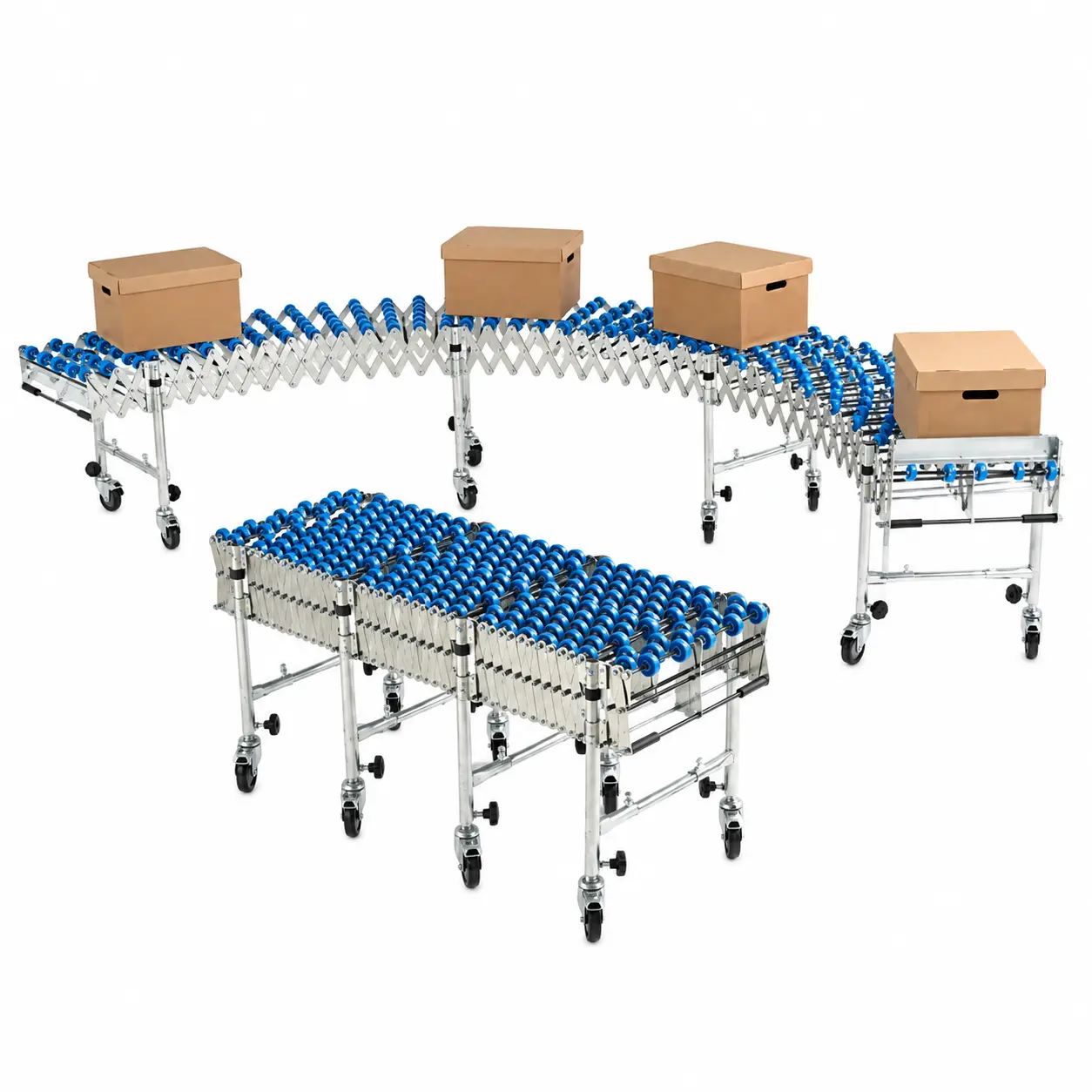
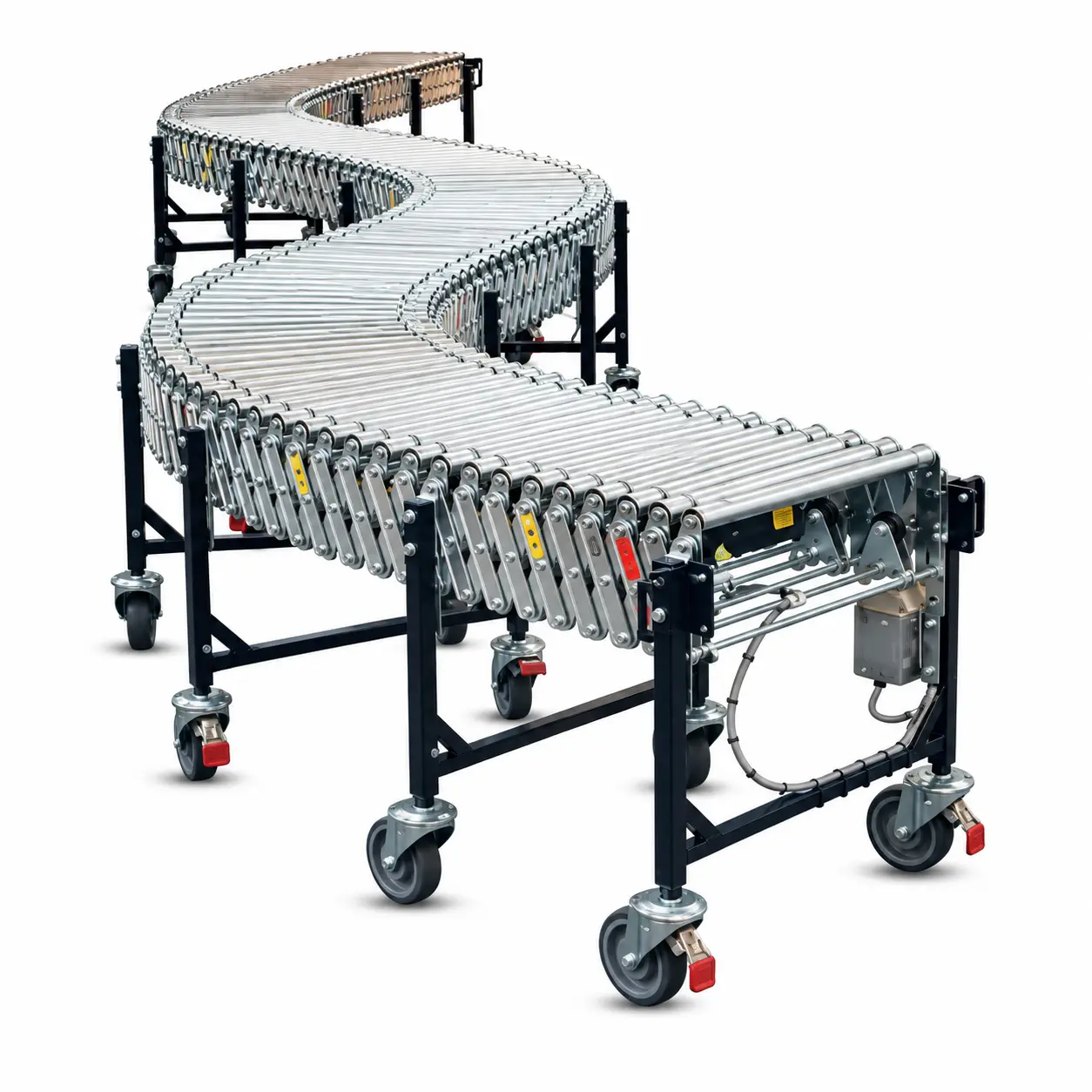
The Expandaveyor is a highly mobile and flexible conveyor system designed for quick setup and easy storage. Capable of being wheeled into place and expanded in minutes, it can be arranged straight or around bends as needed. With lattice side frames for smooth navigation through corners and tight spaces, the Expandaveyor is ideal for a variety of settings, from stores and warehouses to assembly lines. Customisable and versatile, this conveyor works independently or as part of an existing system, making it an indispensable asset for dynamic work environments.

Models
Standard to powered
Conveying surface
Skate or roller
Bearings and materials
Steel or stainless
Layout
Straight or curved
Set-up
Minutes, no tools
Sized to your heaviest carton and run lengthWheel and bearing spec matched to product

Flexible conveyors explained

A conveyor you can move

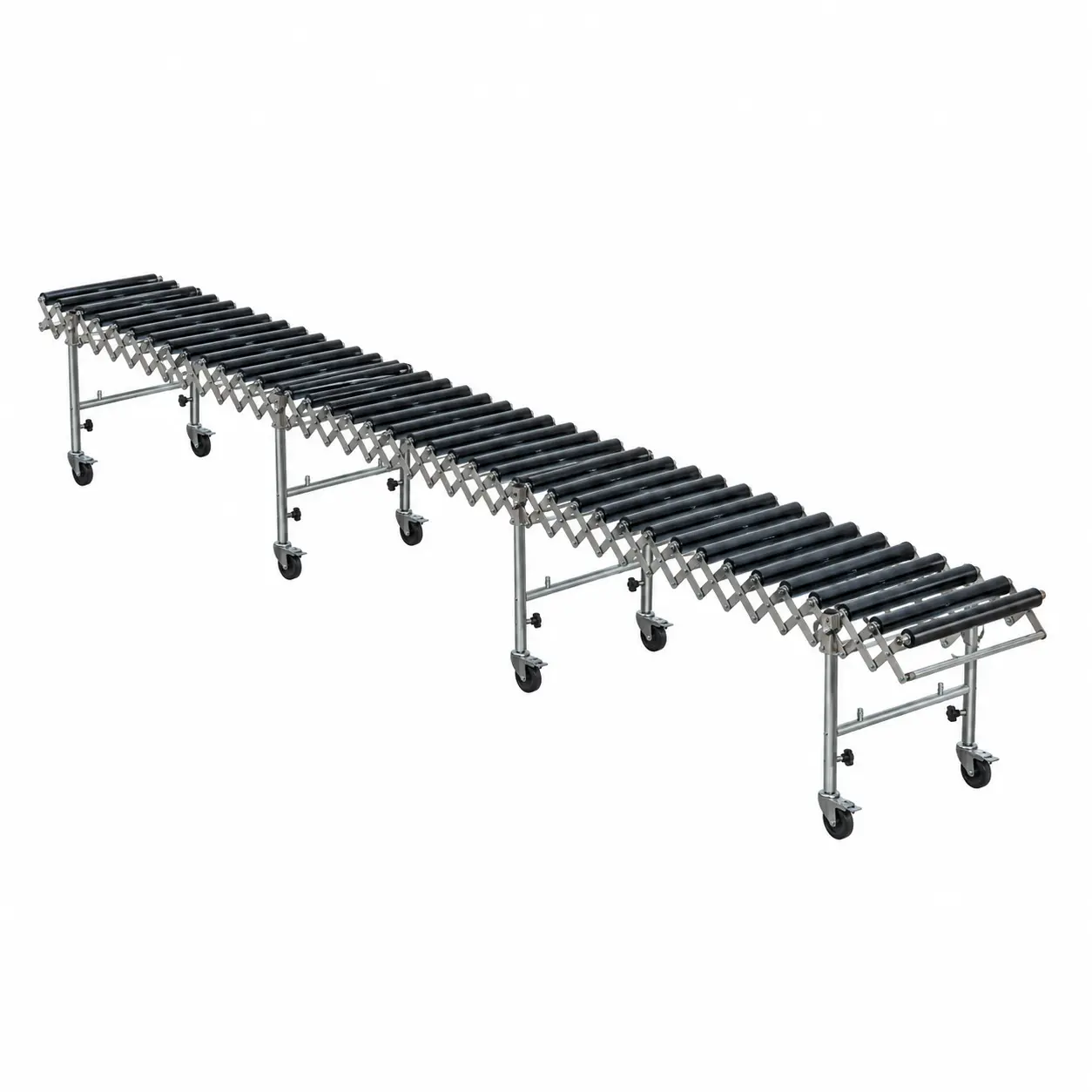
A flexible conveyor is a run of skate wheels or rollers on a lattice side frame that concertinas. You wheel it into position, unlock the castors, pull it out to length and it is working. When the job is done it collapses back to a fraction of its length and goes against a wall. There is no install, no anchoring and no commissioning, which is the whole reason it exists. LVP Automation supply this as the Expandaveyor, in standard, heavy duty and powered versions.

01

It bends, which is what fixed conveyor cannot do

The articulated sections and lattice frame let the run curve, including S-curves, so it can snake around a pillar, follow a wall or turn into a bay. A fixed line needs a transfer or a curve module to do the same thing, and both need floor space you have already committed. If the obstacle is a rack leg or a doorway rather than a design decision, a conveyor that bends around it is the cheaper answer.
02

Skate wheels or rollers

This is the specification that actually matters. Skate wheels have very low inertia, so light cartons start moving with almost no push and keep going. Rollers give broader support across the base, which suits varied product footprints and heavier items. Pick wheels for a uniform, light carton mix; pick rollers where the product base is inconsistent or the weight is up. Both are available in plastic or steel, and bearings in mild steel or stainless.

03

Standard, heavy duty or powered

Standard units cover most manual loading and unloading. Heavy duty handles higher load and a harder duty cycle. Powered versions add controlled speed, which matters when the flexible section is feeding a fixed line rather than a person, because a powered unit can be speed-matched to what it connects to. Capacity is not a single published figure: it depends on model, width and support spacing, so we size the unit against your heaviest carton and the working length you actually need.

04

Where it earns its keep

Pop-up packing zones, seasonal peaks, returns processing and ad-hoc line changes: anywhere you need flow now and do not want a permanent installation. It also works as a mobile bridge between two static lines, or standing alone at an inbound or outbound bay. Because it stores flat, one unit can serve several areas across a week rather than sitting idle in one.

05

Connecting it to what you already have

End stops or transition plates connect a flexible unit to gravity or powered lines, and powered flexible sections can be speed-matched so product does not bunch at the join. Practically, the things to get right are the height match at both ends and whether the receiving line can take the rate the flexible unit delivers.

06

Hygiene and maintenance

Rollers, wheels and bearings can be specified in stainless steel where the environment demands it, which is worth confirming rather than assuming, since the standard build is mild steel. Maintenance is light: periodic checks on wheels or rollers, bearings and castors, keeping debris clear, and verifying locks and brakes. There is no belt to track and no drive to align on the unpowered models, which is a large part of why they survive being moved around.

When something else is the better tool

Flexible conveyor works for container and trailer work, but it is not the best answer for it. For sustained vehicle loading and unloading, the reach and ergonomics of a telescopic unit win, and that is covered on our vehicle loading conveyors page. For a permanent run that will not move, roller conveyor and gravity conveyors are cheaper per metre and better supported. For accumulation without back pressure, use zero line pressure conveying. And where the product is small and light enough that a full roller bed is overkill, look at very light conveyors. LVP Automation specify, supply and support all of these from Finglas, Dublin 11 as part of our wider automation services.

Specification

Models
Standard, heavy duty and powered versions, matched to load, duty cycle and speed
Conveying surface
Low-inertia plastic or steel skate wheels, or plastic or steel rollers
Bearings and materials
Mild steel or stainless steel bearings, with stainless rollers and wheels available for hygienic areas
Layout
Straight, curved or S-shaped runs; articulated sections and lattice side frames navigate corners, pillars and narrow aisles
Set-up
Wheel into position, unlock the castors and extend to length, in minutes and with no tools
Storage
Concertinas to a fraction of its working length, so it stores along a wall or in a small bay
Capacity
Depends on model, width and support spacing, so the unit is sized to your heaviest carton and required working length
Integration
End stops or transition plates connect to gravity or powered lines, and powered versions can be speed-matched
Applications
Pop-up packing zones, seasonal peaks, returns processing, ad-hoc line changes and inbound or outbound bays
Maintenance
Periodic checks on wheels, rollers, bearings and castors, keeping debris clear and verifying locks and brakes

Where Flexible Conveyors Excel

Fast, Temporary Moves

Ideal for pop-up packing zones, seasonal peaks, returns processing and ad-hoc line changes where you need flow now without permanent install.

Tight Footprints and Corners

Articulated sections and lattice frames let you snake through corners, pillars and narrow aisles while maintaining smooth product travel.

Complement or Standalone

Use as a mobile bridge between static lines, or standalone at inbound/outbound bays. Pair with powered sections when you need controlled speed.

FAQs about Flexible Conveyors

The essentials on layouts, load capacity, models, maintenance and when to choose a telescopic unit for vehicle loading.

How quickly can it be set up?

Typically a few minutes, wheel into position, unlock the castors and extend to length. No tools required.

Can it handle bends and S-curves?

Yes. The articulated design and lattice side frames allow smooth curves and navigation around obstacles.

What’s the difference between skate wheels and rollers?

Skate wheels offer very low inertia for lighter cartons and faster starts; rollers provide broader support for varied product bases and weights.

Do you offer heavy-duty or powered versions?

Yes, standard, heavy-duty and powered models are available to match load, duty cycle and speed requirements.

Is it suitable for container or vehicle loading?

It works, but for optimal performance and reach we recommend the Telescopic Expressway for container/vehicle loading and unloading.

What load can it carry?

Capacity depends on model, width and support spacing. We’ll size the unit to your heaviest cartons and required working length.

Can it integrate with our existing conveyors?

Yes, use end stops or transition plates to connect with gravity or powered lines; powered flexible versions can be speed-matched.

How much storage space is needed?

Units concertina to a fraction of their working length, making them easy to store along a wall or in a small bay.

What maintenance is required?

Periodic checks on wheels/rollers, bearings and castors; keep debris clear and verify locks/brakes. Very low upkeep.

Are stainless options available for hygiene?

Yes, rollers/wheels and bearings can be specified in stainless for hygienic environments; consult us for the right configuration.

Similar Products

Let's Connect

Have a question about our conveyor systems or need a tailored automation solution for your business? Our team at LVP Automation is here to help. Fill out the form below with your details, and we’ll get back to you as soon as possible. Whether you need a quote, technical support, or more information on our products, we’re ready to assist.