Automated Warehouse Robots

Scalable automated warehouse robots that take on picking, packing, transport and palletising. With advanced navigation, vision and WMS integration, they boost throughput, cut errors and work safely alongside people. Engineered, integrated and supported in Ireland.

  • AMRs, pallet movers, tuggers, pick-assist and robot arms
  • SLAM navigation, no rails, wires or floor tape
  • Safety-rated LiDAR and 3D vision for shared aisles
  • Missions from your WMS by API, confirmed in real time
Pilot one area before you scaleSpecified, installed and supported from Dublin 11
Right robot per task
Carry, tow, follow or pick, matched to the job
No floor works
SLAM maps from natural features, not infrastructure
Safe beside people
Slow and stop zones with dynamic rerouting to CE
Ireland-wide support
Specification, install and service from Dublin 11

Warehouse robots explained

"Warehouse robot" covers several different machines

The term is doing a lot of work. In practice it means autonomous mobile robots carrying totes or racks, pallet AMRs, tugger AMRs towing trains, pick-assist carts that follow an operator, and robotic arms for case handling or palletising. These are not competing options so much as different answers, and most sites end up with two or three types rather than one. The first useful conversation is about which tasks you want taken off people, not which robot looks best in a video.

01

Payload and travel path decide the type

What the robot has to move, and how far, narrows the field faster than anything else. Small totes and shelves suit a carrying AMR; full pallets up to around a tonne need a pallet AMR or an autonomous forklift; trolleys and trains that already exist are better towed than rebuilt. Distance matters too, because a long haul makes a tugger pulling several carts more sensible than several robots each carrying one.
02

Navigation without fit-out

Most of these use SLAM maps built from natural features, so there are no rails, no wires and no floor tape. QR codes or reflectors can be added in the hard cases, long featureless aisles or difficult lighting, but as an option rather than a precondition. That is what keeps deployment to a matter of days for a pilot area and avoids a shutdown to install infrastructure you may want to move later.

03

Safety in shared aisles

These robots work alongside people and manual forklifts, so LiDAR, 3D cameras and safety-rated controls provide obstacle detection, slow and stop zones and dynamic rerouting to CE standards. The part that gets underestimated is the zone map: deciding where robots must slow, who has right of way at junctions and what happens when an aisle is blocked is design work, not commissioning work.

04

Goods-to-person, or follow the picker

Two different models. Goods-to-person brings totes or racks to an ergonomic station, which suits dense, high-line-count picking and takes the walking out entirely. Pick-assist keeps the picker in the aisle with a robot following and carrying, which suits lower density or a layout you are not ready to rebuild. Lines per hour usually improves either way, but the capital and the change to how people work are very different.

05

Storage robots are a different animal

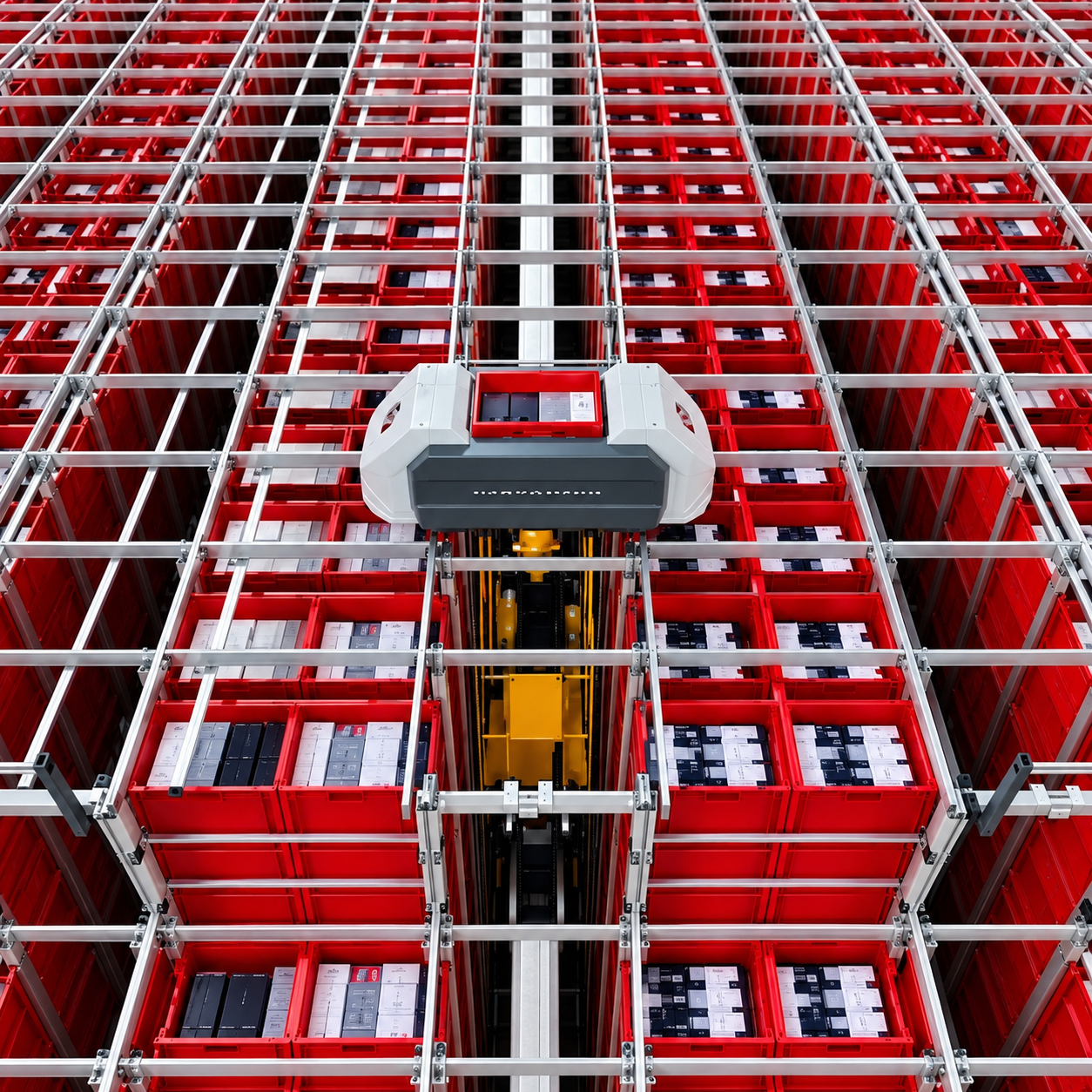
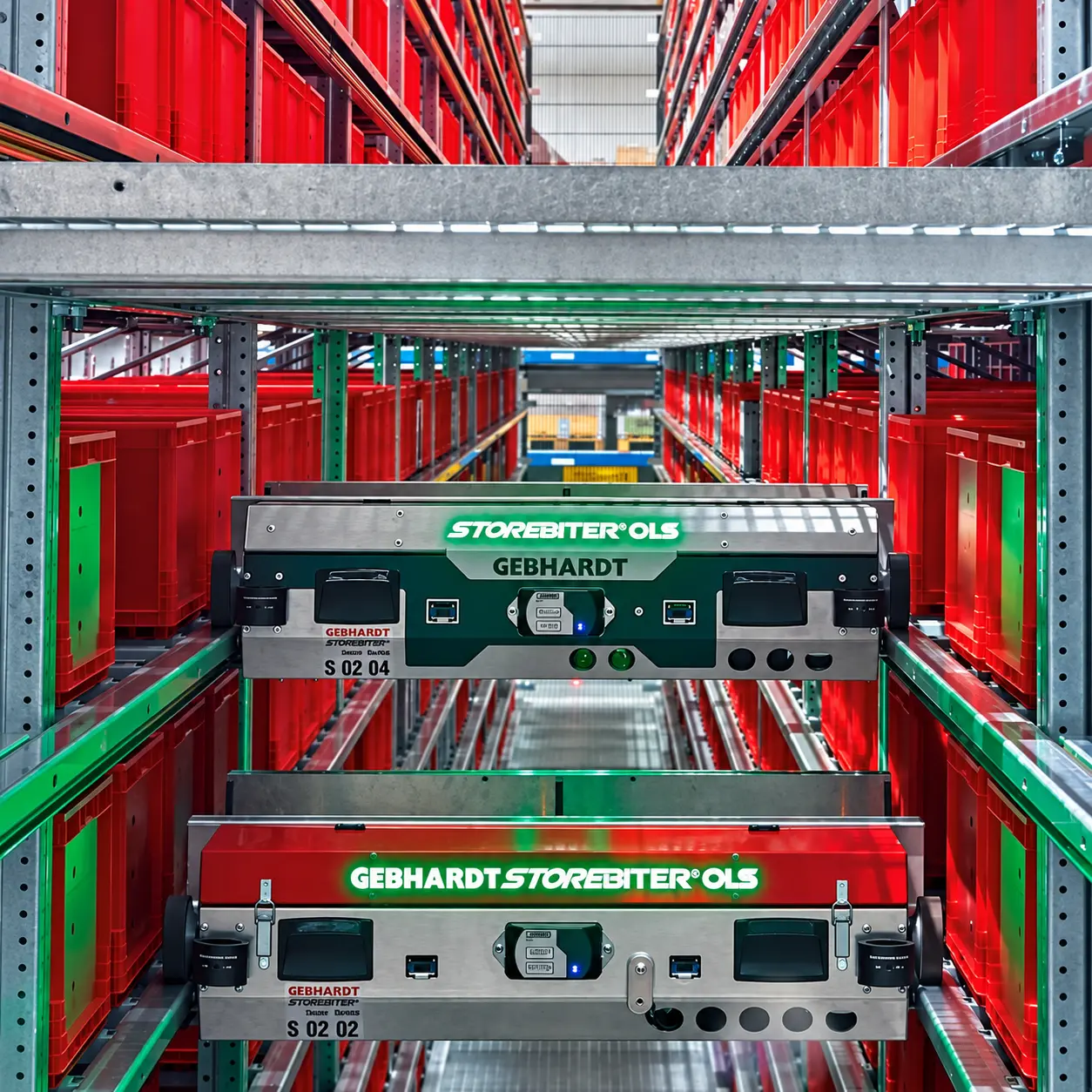
Where the requirement is dense storage rather than transport, a system like GEBHARDT Upstream puts robots inside the racking: containers up to 50 kg on a 600 x 400 mm footprint, storage heights to 18 m, systems up to 100 m long, with provisioning of a container in under two minutes and 48 V ultracap energy storage. That is closer to shuttle systems and automated storage and retrieval than to a mobile robot on the floor.

06

Talking to your WMS, and handling peaks

A fleet manager or WES takes orders from your WMS or ERP by API and turns them into missions, returning confirmations that update inventory and task status in real time. For seasonal peaks you can add temporary robots, extend station hours or let the software reprioritise on SLA rather than order sequence. Downstream this usually meets sorting technology before dispatch.

Batteries, maintenance and support

Charging is auto-dock and scheduled around peaks rather than parked at shift end, so uptime holds through the day. Maintenance is routine checks on wheels and sensors, software updates and battery health monitoring, with remote diagnostics to shorten downtime. Start with a pilot area and add robots, stations and missions as it proves out. LVP Automation specifies, integrates and supports warehouse robotics from Finglas, Dublin 11 as part of our wider automation services.

Where Automated Warehouse Robots Excel

Goods-to-Person & Picking

AMRs bring totes/racks to ergonomic stations or follow pickers for pick-assist, improving lines per hour and reducing travel.

Intralogistics & Transport

Autonomous point-to-point moves (receiving → put-away, replenishment, returns) replace manual runs and keep flow steady across shifts.

End-of-Line & Pallet Handling

Robotic arms and pallet-moving AMRs handle case stacking, pallet moves and wrapper infeeds, smoothing peaks without extra labour.

FAQs about Automated Warehouse Robots

Quick answers on safety, speeds, payloads, integration, scaling and maintenance.

What types of robots are available?

AMRs for totes/racks, pallet AMRs, tugger AMRs, pick-assist carts and robotic arms for case handling or palletising.

How do they navigate safely around people and forklifts?

LiDAR, 3D cameras and safety-rated controls enable obstacle detection, slow/stop zones and dynamic rerouting to CE standards.

Do I need markers or fixed infrastructure?

Most AMRs use SLAM maps (natural features) with optional QR/reflectors in tough areas. Deploy quickly with minimal fit-out.

What payloads can they carry?

From small totes to full pallets (up to ~1,000+ kg) depending on model. We match robot type to your loads and travel paths.

How do robots talk to my WMS/ERP?

Via a WES/fleet manager or direct APIs—orders become missions; confirmations update inventory and task status in real time.

What productivity gains are typical?

Sites commonly see higher lines/hour, reduced travel time and fewer picking errors. Exact uplift depends on layout and SKUs.

Can I start small and expand later?

Yes—begin with a pilot area, then add robots, stations and missions. Fleet managers balance traffic as you scale.

How are batteries managed?

Smart charging with auto-dock. Schedules avoid peak times and maintain uptime through the shift.

What about peak seasons?

Add temporary robots, longer missions or extended station hours; software can reprioritise tasks based on SLAs.

What maintenance is required?

Routine checks (wheels, sensors), software updates and battery health monitoring. Remote diagnostics shorten downtime.

Downloads

Similar Products

Let's Connect

Have a question about our conveyor systems or need a tailored automation solution for your business? Our team at LVP Automation is here to help. Fill out the form below with your details, and we’ll get back to you as soon as possible. Whether you need a quote, technical support, or more information on our products, we’re ready to assist.