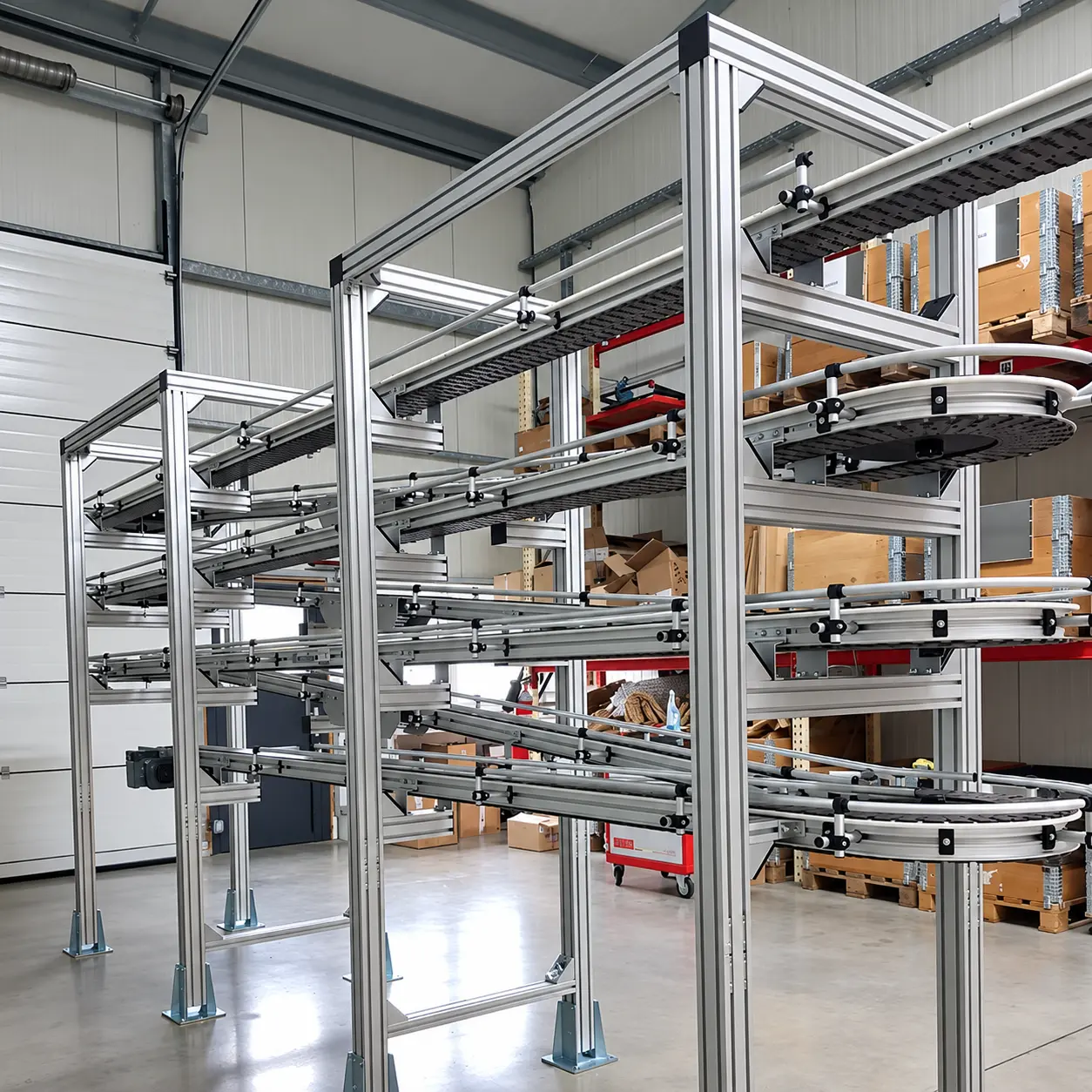
Vertical Slat Conveyors

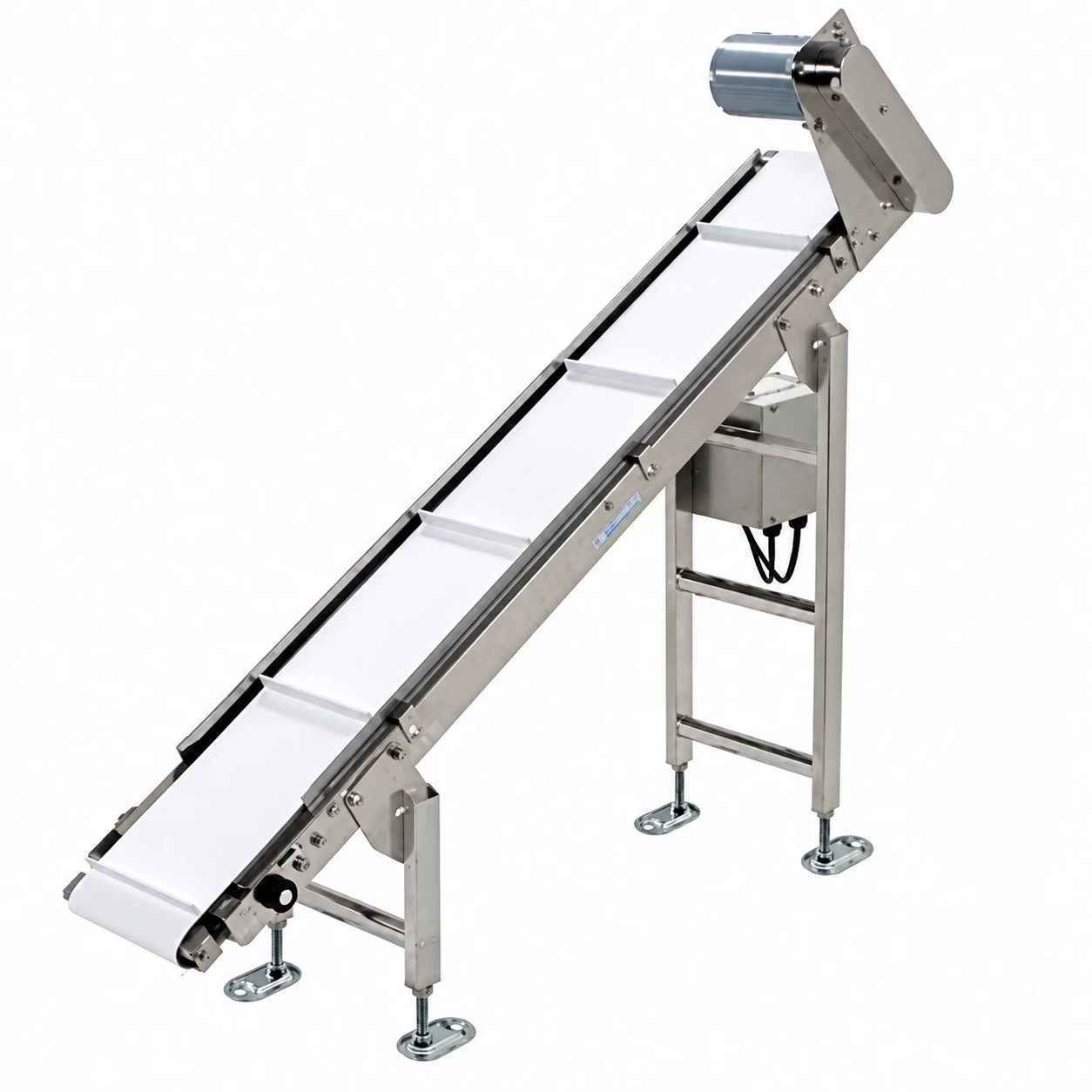
Carryline vertical slat conveyors bridge height differences fast where a long incline will not fit. Three configurations: side-grip for continuous flow on slopes to around 90 degrees, lift-style that indexes like an elevator and can buffer, and friction chain with a top brush as the economical option for light products. Bottles, cans, jars, cartons, pouches and small packs.

Configurations
Three configurations
Side-grip slope
Up to 90 degrees
Lift-style
Elevator with buffer
Friction chain
Light products
Grip control
Adjustable pressure
Configuration chosen for your productGrip pressure set to avoid scuffing

Carryline vertical slat conveyors explained

Three ways to go up, and how to choose

This is really three products under one heading, and picking the right one is most of the job. Side-grip holds the product from both sides and carries it up a steep slope in continuous flow. Lift-style indexes like an elevator, stepping product up or down, and can buffer. Friction chain with a top brush is the economical option for light product on a steep slope. Continuous flow, buffering or budget: pick which of those three matters most on your line and the configuration follows from it.

01

Side-grip, up to 90 degrees

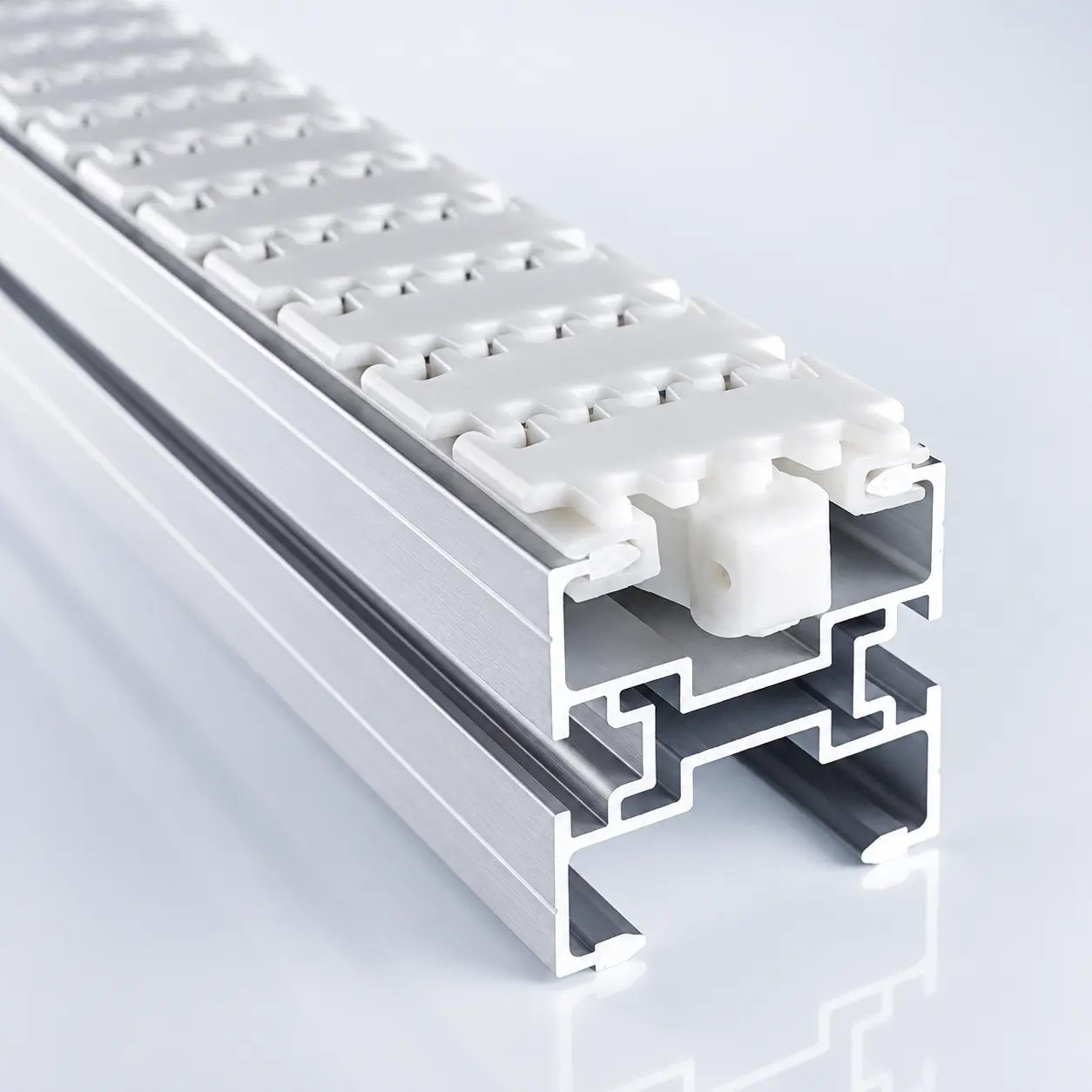
Side-grip conveyors grip the product from the side to move it up or down slopes as steep as roughly 90 degrees, with no stops and no transitions on the way. That last part is the real benefit. A product that is gripped the whole way keeps its spacing and orientation, so what leaves the top of the elevator is in the same order and pitch as what entered the bottom, and the machine downstream does not have to re-find anything. Grip pressure is adjustable, which is what makes it usable on packaging that would crush under a fixed setting.
02

Lift-style, when you also need a buffer

A lift-style vertical works like an elevator: it steps product upward or downward rather than carrying it continuously, and it can be built with buffer levels. That buffering is the reason to choose it. If the machine above runs in bursts and the line below runs steadily, something has to absorb the difference, and a lift with buffer levels does it inside the same footprint instead of asking for a separate accumulation lane. Where flow is steady and there is nothing to absorb, side-grip is simpler.

03

Friction chain with top brush

The friction chain option pushes product against a friction chain with a brush from above, which maintains the slope without gripping from the sides. It is the economical answer for light products on steep slopes. The honest limitation is in the name: it depends on friction, so the achievable angle is product dependent rather than fixed, and anything heavy, slippery or top-heavy belongs on side-grip instead. It is worth trialling with real product rather than assuming from the packaging drawing.

04

Products, grip pressure and damage

Typical products are bottles, cans, jars, cartons, pouches and small packs, with the chain or grip style and the guide settings specified to your product geometry and surface. Damage is prevented by adjustable side-grip pressure, smooth transfers and product-matched guides rather than by running slowly. Set the pressure to the weakest pack you run, not the sturdiest, and check it again after a packaging change, because a lighter carton on the same settings is exactly how scuff marks start appearing without anything on the line having been touched.

05

Footprint, and what it replaces

The footprint is much smaller than a long incline conveyor, and vertical units are designed to fit tight spaces and to wrap around existing equipment where the layout demands it. That is the whole reason they exist: bridging a height difference quickly, without giving up metres of floor to a shallow ramp. Where the elevation needs to happen gradually and there is room for it, a spiral slat conveyor is the gentler alternative and holds product flat throughout.

06

Throughput and what actually sets it

Throughput depends on product size, spacing and elevation height rather than on a headline speed, so chain speed and grip pressure are sized to your target rate. The Carryline system as a whole runs between 5 and 50 m/min, with higher or lower on request, and works from -20 C to +60 C. Bring the rate you need and the height you need to climb, and the configuration and speed come out of those two rather than being chosen first.

Controls, safety and upkeep

Photo-eyes and encoders link to PLC and HMI for start and stop, jam detection, spacing and handshakes with upstream and downstream equipment, alongside adjustable guides, safety guarding and sensors. Maintenance is routine inspection of chains, grips, brushes, guide wear strips and safety devices, with cleaning made straightforward by accessible frames and covers. Typical duties are feeding upper mezzanines, multi-level packaging lines, elevation into case packers and palletisers, and returns down to lower conveyors. Related Carryline products are aluminium slat conveyors, stainless steel slat conveyors and compact corner conveyors, with modular belt where a flat carrying surface suits the product better. LVP Automation specifies, installs and supports Carryline vertical conveyors from Finglas, Dublin 11 as part of our wider automation services.

Specification

Configurations
Side-grip, lift-style and friction chain with top brush
Side-grip slope
Up to approximately 90 degrees, continuous flow with no stops or transitions
Lift-style
Indexes like an elevator, with optional buffer levels to absorb speed differences
Friction chain
Economical option for light products on steep slopes, with a top brush maintaining traction
Grip control
Adjustable side-grip pressure with product-matched guides and smooth transfers
Products handled
Bottles, cans, jars, cartons, pouches and small packs
Materials
Anodised aluminium or stainless steel across the Carryline system, with food-approved plastic chain
Speed range
5 to 50 m/min across the Carryline system, higher or lower on request
Temperature
-20 C to +60 C, higher or lower on request
Controls
Photo-eyes and encoders to PLC and HMI for start/stop, jam detection, spacing and handshakes

Where the Vertical Slat Conveyor Excels

When to Choose Vertical Slat

Use when you must bridge height differences quickly without long inclines, maintain spacing through transfers, or free up floorspace in tight production areas.

Options and Configurations

Side-grip (variable pressure), lift-style with accumulation/buffer levels, friction-chain with top brush, adjustable guides, safety guarding, sensors and PLC/HMI control.

Typical Applications

Feeding upper mezzanines, multi-level packaging lines, elevation to case packers/palletisers, returns to lower conveyors, and compact elevation around machinery.

FAQs about the Vertical Slat Conveyor

Quick answers on slopes, products, throughput, buffering, footprint, safety and maintenance.

How steep can a vertical slat conveyor run?

Side-grip models can handle very steep slopes (up to ~90°), while friction-chain solutions suit steep but product-dependent angles.

Which products are suitable?

Bottles, cans, jars, cartons, pouches and small packs. We specify chain/grip style and guide settings to match your product geometry and surface.

What’s the difference between side-grip and lift-style?

Side-grip offers continuous flow on steep slopes; lift-style indexes like an elevator and can buffer to absorb speed differences between machines.

When is friction-chain the right choice?

For light products where an economical, compact steep-slope elevation works, paired with a top brush to maintain traction.

Can the system buffer products?

Yes, lift-style verticals can include buffer levels, and continuous systems can be paired with accumulation upstream/downstream.

How fast can it run?

Throughput depends on product size, spacing and elevation height. We size chain speed and grip pressure to meet your target rate.

What footprint is required?

Much smaller than long incline conveyors. Vertical slat units are designed to fit tight spaces and wrap around existing equipment if needed.

How are products protected from damage?

Adjustable side-grip pressure, smooth transfers and product-matched guides prevent scuffing and deformation.

How does it integrate with controls?

Photo-eyes and encoders link to PLC/HMI for start/stop, jam detect, spacing and handshakes with upstream/downstream equipment.

What maintenance is involved?

Routine inspection of chains/grips/brushes, guide wear strips and safety devices; cleaning is straightforward with accessible frames and covers.

Downloads

Similar Products

Let's Connect

Have a question about our conveyor systems or need a tailored automation solution for your business? Our team at LVP Automation is here to help. Fill out the form below with your details, and we’ll get back to you as soon as possible. Whether you need a quote, technical support, or more information on our products, we’re ready to assist.