01Where the cost saving actually lands
People assume the saving is the motor itself. It is not, or not mainly. It is everything attached to a motor: the starter, the cabling, the containment, the commissioning time and the annual maintenance point. Strip a layout from a dozen drives down to two or three and you remove all of that a dozen times over. On long runs with a lot of ancillary modules, this is why lineshaft still wins on price against more modern alternatives.
02Low pressure, not zero pressure
Lineshaft accumulates gently. The bands slip when a roller is held, so product can queue without the drive fighting it, and that is enough to protect most cartons. It is low-pressure accumulation, not zero pressure: boxes still touch. If your product genuinely cannot touch, or you need to release items individually on a timed sequence, that is a zero line pressure conveyor job. Being clear about which one you need at design stage is cheaper than discovering it after installation.
03Duty, and what sets capacity
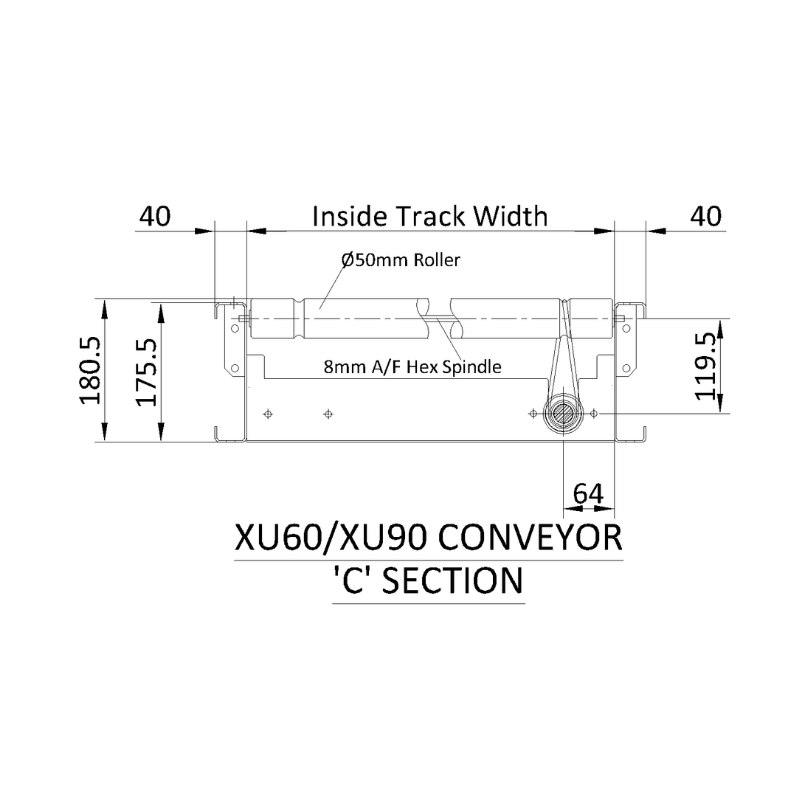
Lineshaft covers light, medium and heavy duty configurations, and per carton it sits in the light to medium range. The number that matters is not a headline load figure but the combination of conveyor width, roller pitch and speed, which is why capacity is calculated against your product rather than quoted from a brochure. The same applies to how many modules a single motor will drive: it depends on load, speed, how many accumulation zones there are and what ancillaries hang off it, so it is worked out at design to balance torque against room for future expansion.
04Bends, merges and mitres
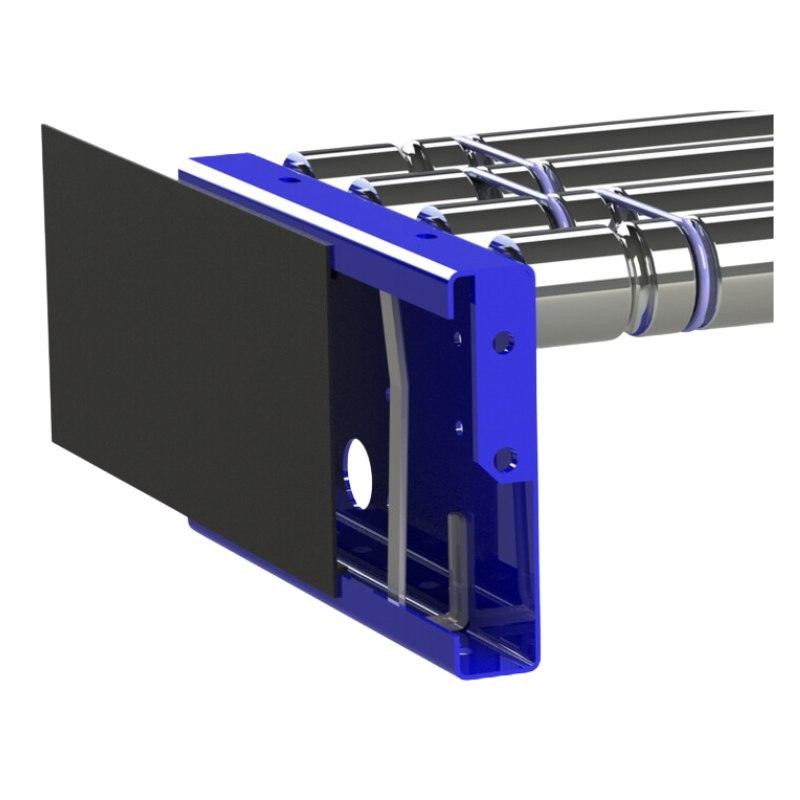
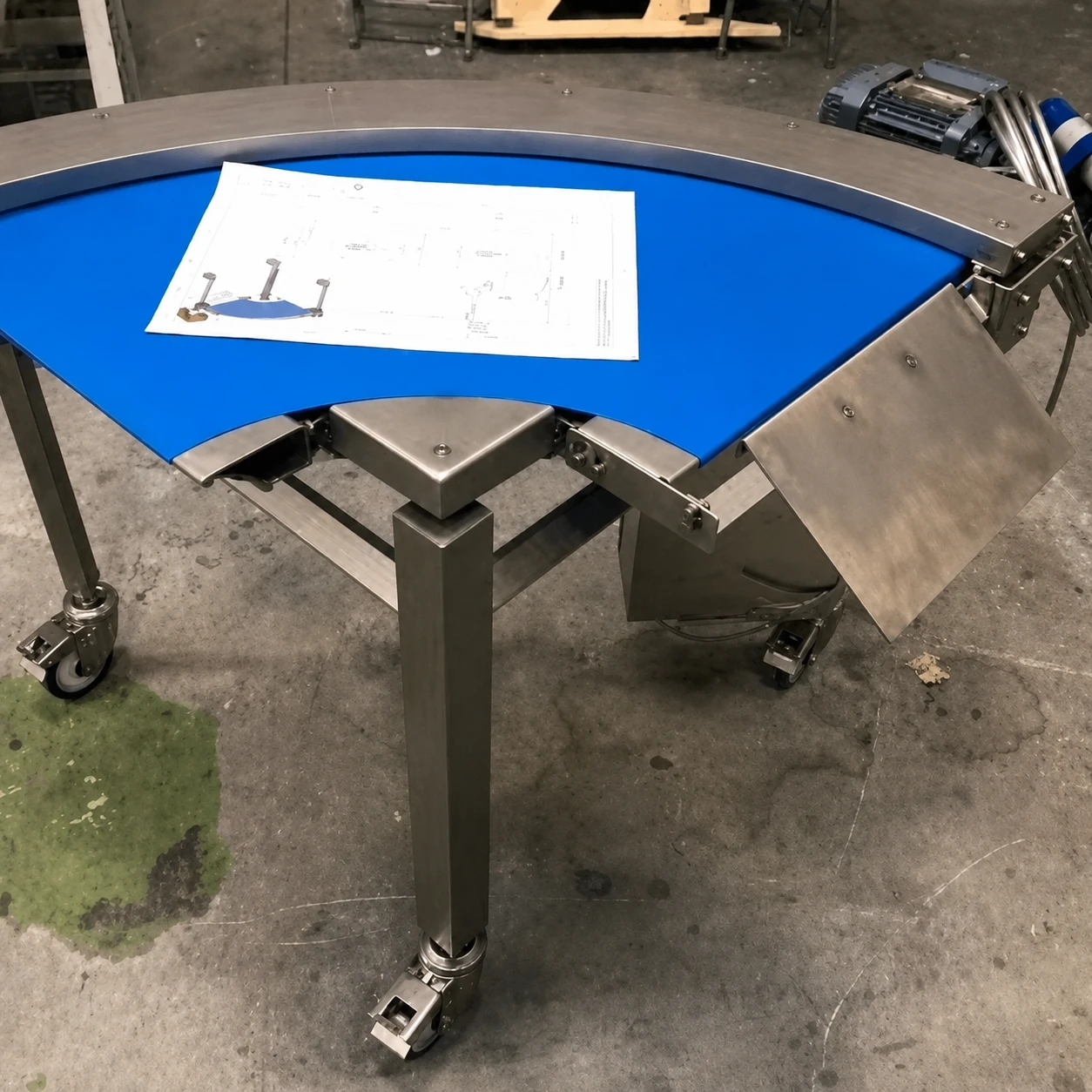
Layouts are not limited to straight lines. Heavy-duty corner belts drive product through bends, merges and mitres, so a lineshaft system can turn corners and combine feeds without a separate powered transfer at each junction. Combined with the modular frame and standard components, this is what makes it straightforward to reconfigure a line later rather than rebuilding it.
05Quiet, which matters more than it sounds
Lineshaft runs noticeably quieter than chain-driven alternatives, with typical installations below about 70 dB(A) depending on load, speed and layout. In a picking or packing hall where people stand beside the line for a full shift, that is a working-conditions issue and a noise-exposure duty, not just a comfort one.
06What it carries and where it belongs
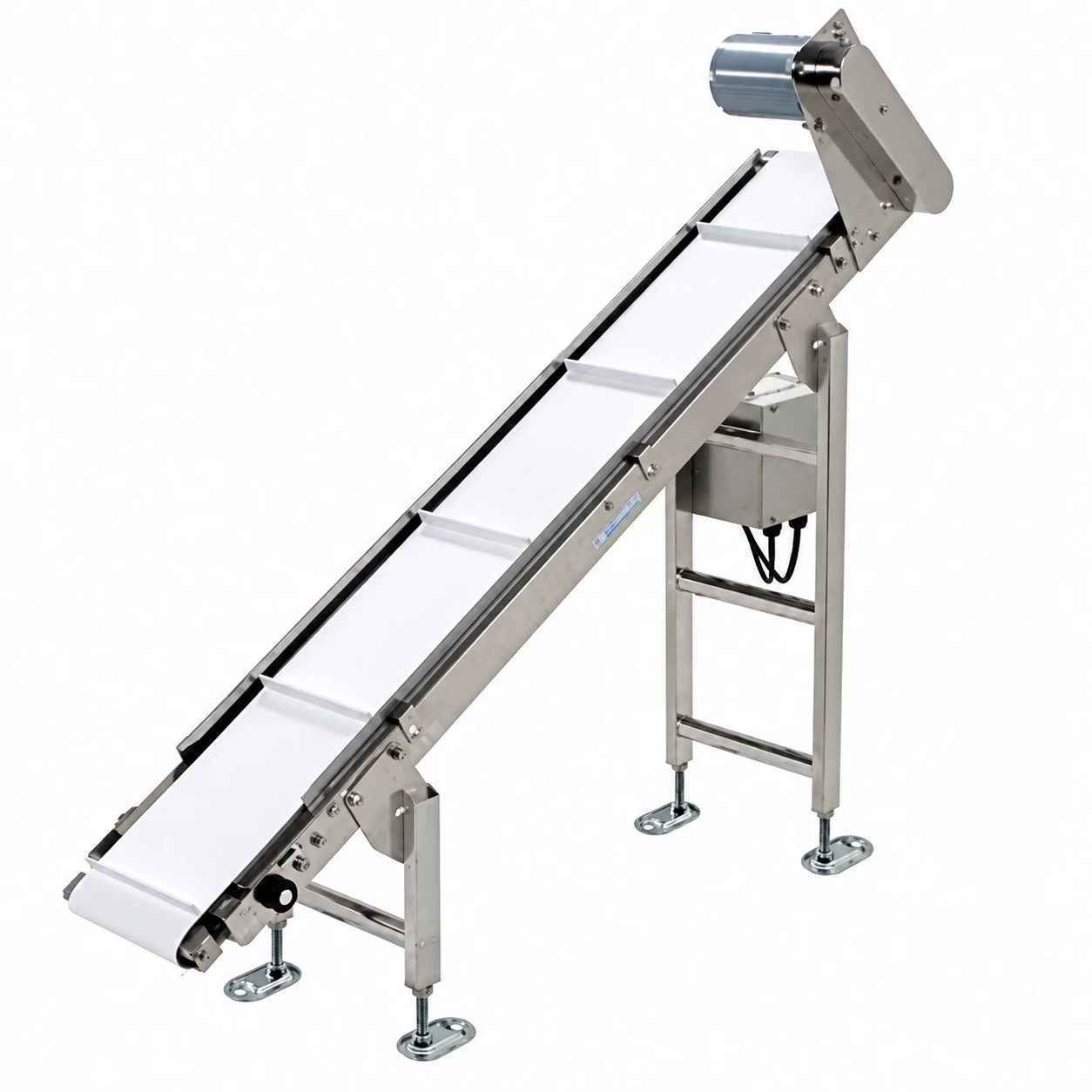
Cartons, totes and trays with flat, rigid bases are the natural traffic. Soft, irregular or unstable items run better on belt or modular belt conveyors, which support the whole base rather than bridging rollers. The frame is powder coated for durability, and the environment limit is firm: lineshaft is for dry areas. Anywhere that gets washed down needs stainless belt or modular belt with IP-rated components instead.
07Maintenance
Routine checks on the bands, the rollers and the shaft tension, keeping the line clean, inspecting bearings and verifying guards and safety circuits. The advantage compounds here too: fewer drives means fewer maintenance points, and bands are a cheap consumable rather than a drive replacement.
Choosing between the roller conveyor options
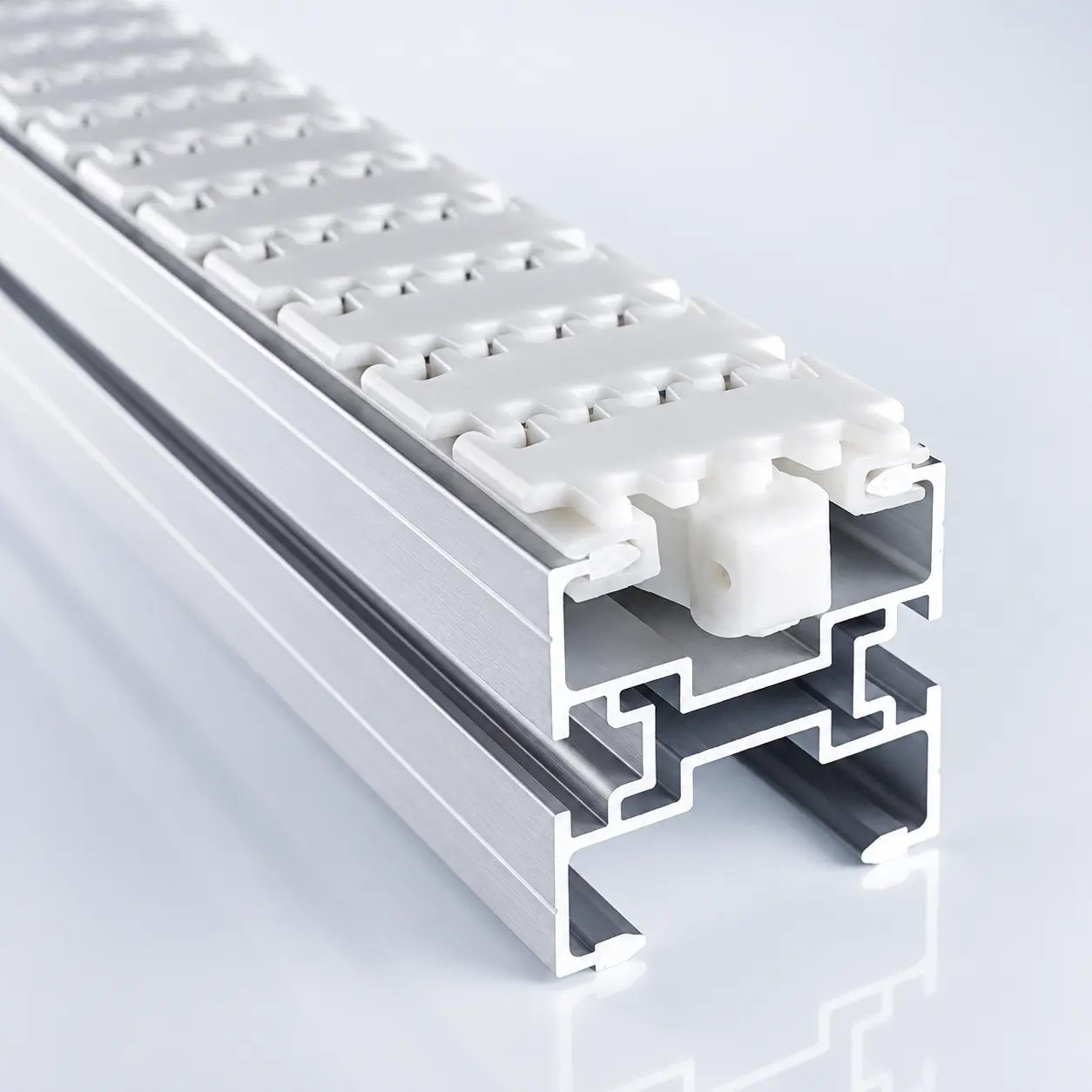
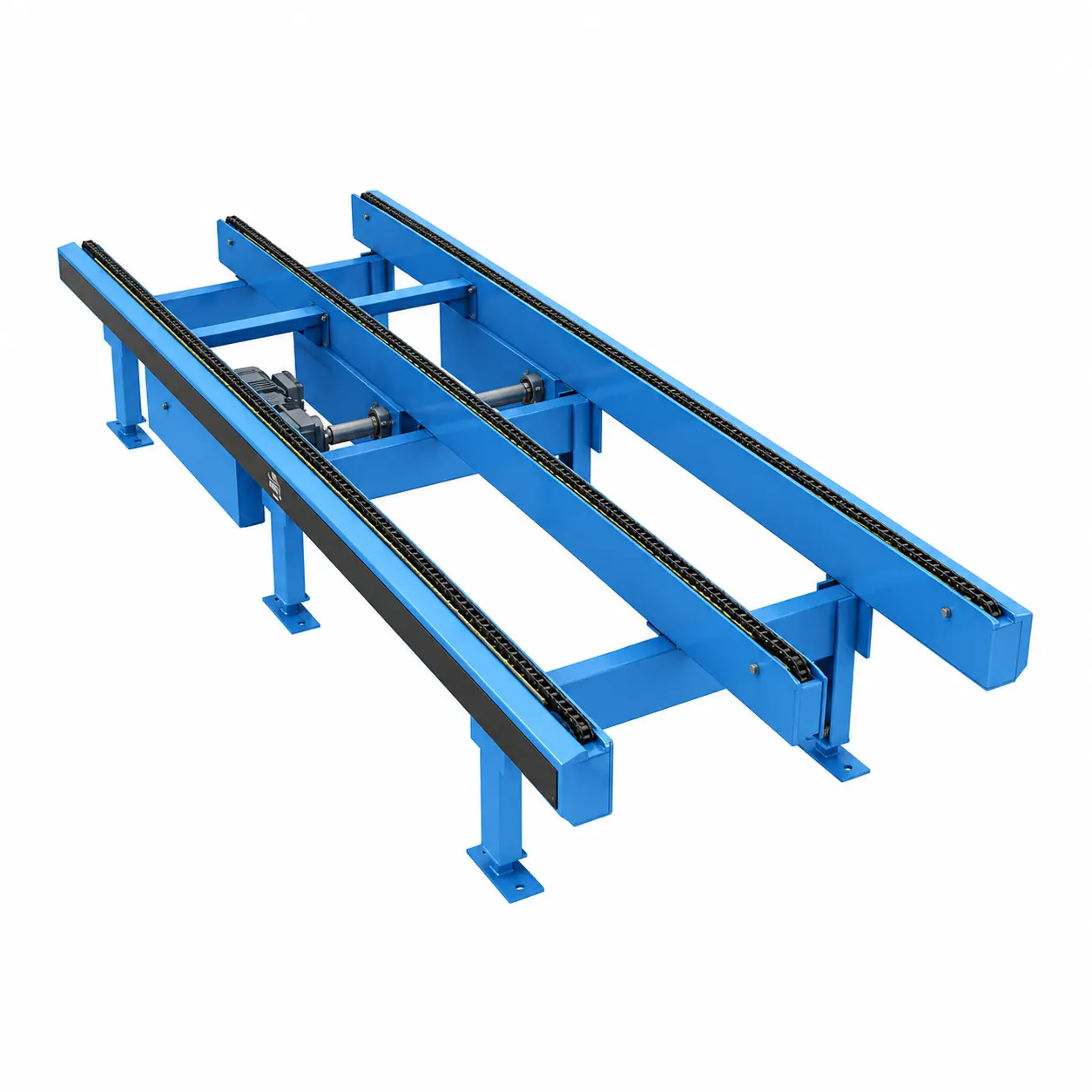
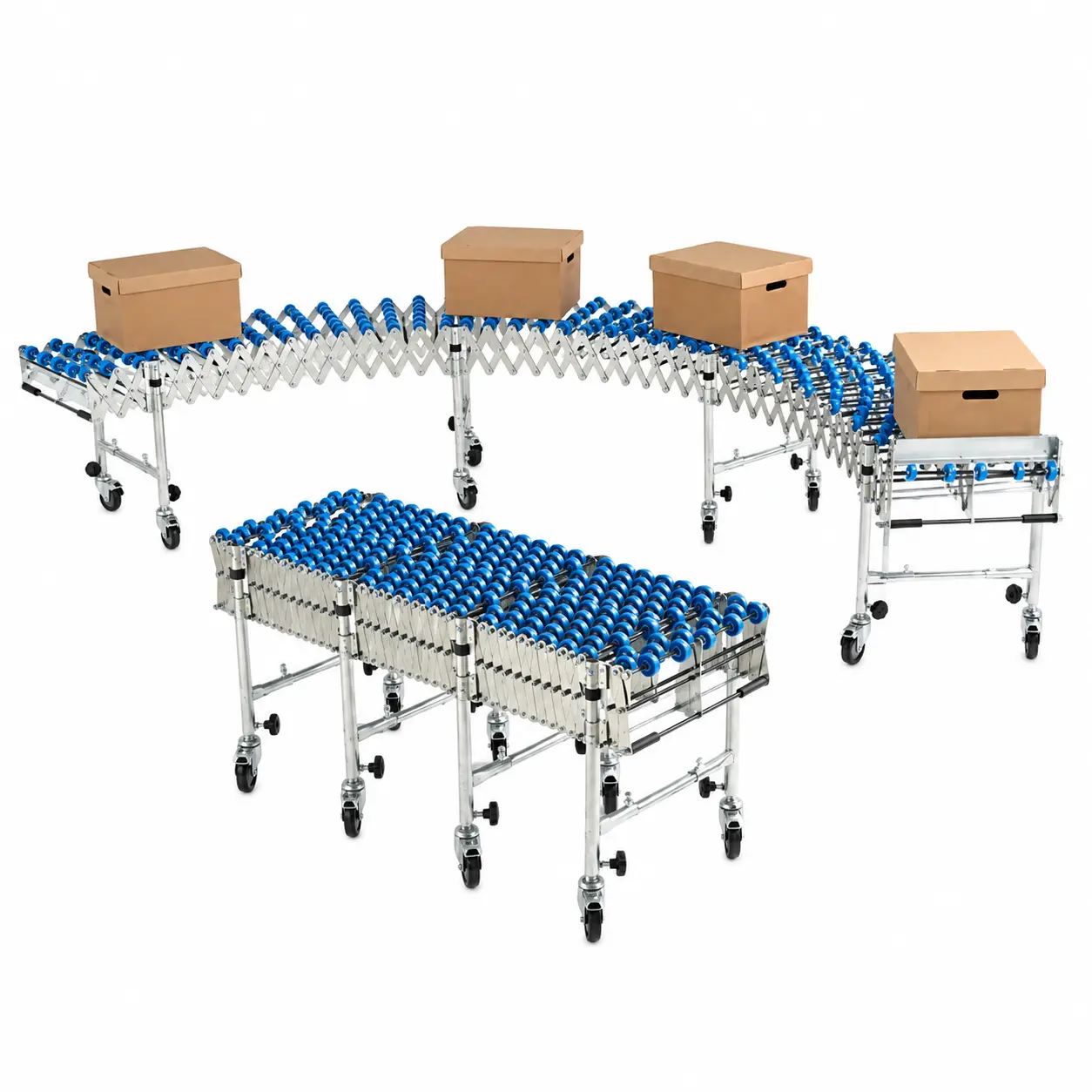
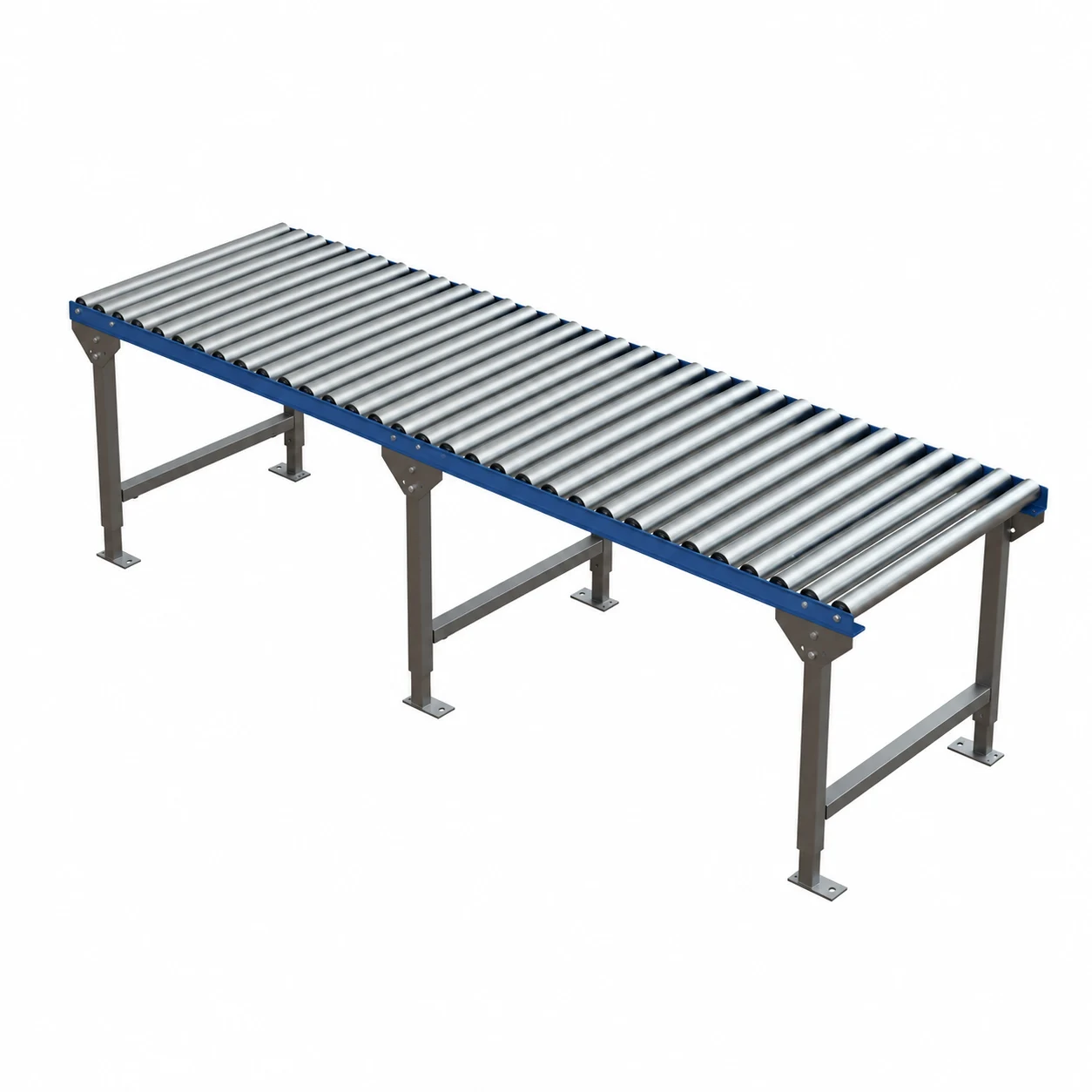
For very heavy loads and pallets, use roller conveyor or chain conveyor built for pallet weights. For true zero-pressure accumulation and per-zone control, 24V motor-driven roller is the answer. For steep inclines or soft bases, belt or modular belt. And where a stretch of line only has to move product downhill from A to B, gravity roller conveyors do it with no drive at all. Most good layouts use two or three of these together, gravity where nothing needs controlling, lineshaft for the long powered runs, and zero pressure only where the product demands it. LVP Automation specify, install and support all of them from Finglas, Dublin 11 as part of our wider automation services.