
Proof of Concept Development
Proving the Concept Before You Commit to a Build
Some automation projects are straightforward. Others involve a product that does not behave predictably, a process nobody has automated before, or a rate that nothing off the shelf claims to reach. Committing to a full system on the strength of a drawing is expensive when the assumption underneath it turns out to be wrong.
A proof of concept, sometimes called proof of principle, tests the uncertain part on its own before the rest of the project comes to depend on it. LVP Automation develops and proves concepts with customers whose process does not fit a standard solution: establishing whether the approach works at all, refining the process parameters, and providing something concrete to qualify the product against before a complete automation system is designed and built. We are based in Finglas, Dublin 11 and work with customers across Ireland.
What a Proof of Concept Covers
- The Uncertain Part First: We isolate the step nobody is confident about and prove that one, rather than discovering it at commissioning when everything else already depends on it.
- Developed With You: Concepts are worked out alongside the people who know the product and the process, rather than designed at a distance and presented finished.
- Process Parameters Refined: Speeds, forces, tolerances, orientation and handling are settled on evidence rather than assumption, then carried into the full design.
- Product Qualification: A working concept gives you something real to qualify the product against before a complete system is committed to.
- A Decision Point, Not a Commitment: A proof of concept is allowed to conclude that the approach will not work. Reaching that answer early is worth what it costs.
- It Feeds the Full Build: What the concept establishes becomes the basis of the system design, the control philosophy and the specification, so nothing has to be proven twice.
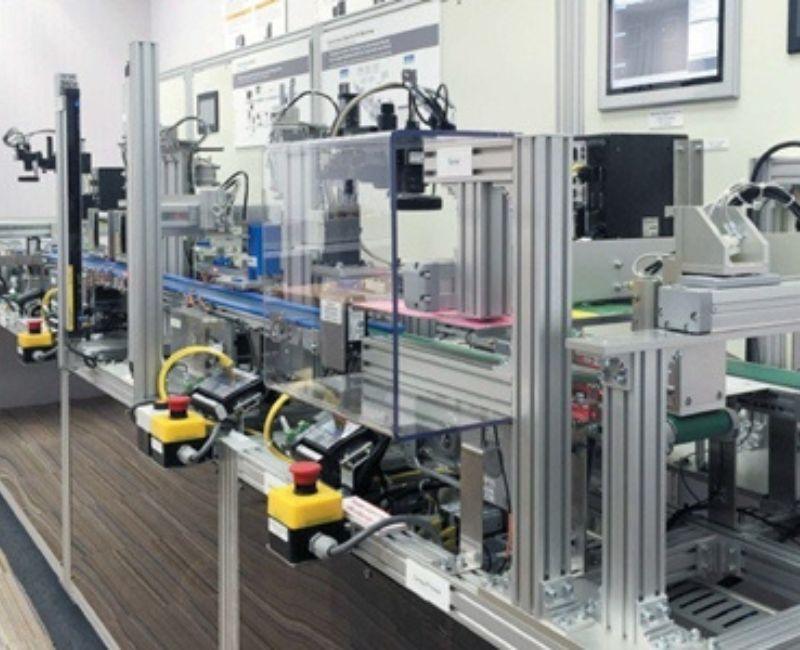
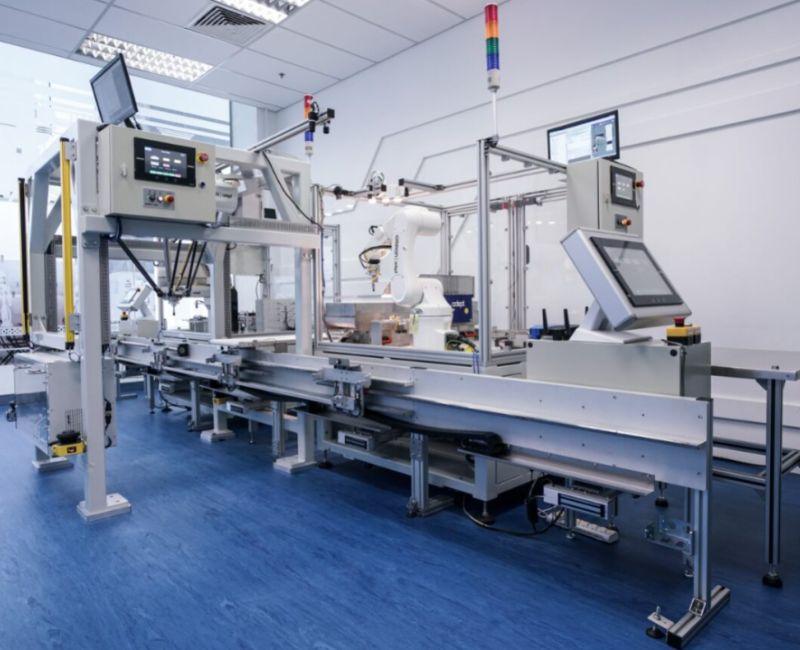
When a proof of concept earns its cost
It is worth doing where one assumption carries the project. Typically that is a product that behaves awkwardly — flexible, sticky, fragile, inconsistent in size, or presented in an orientation nothing can reliably pick up. It is also worth doing where the required rate sits close to the limit of what the approach can manage, where a process has never been automated in your industry, or where the cost of getting it wrong is measured in a production line rather than a purchase order.
It is not worth doing where the process is well understood and equipment already exists to do it. Proving what is already proven adds time and cost to a project without reducing its risk. Where that is the situation, we will say so and go straight to design.
What a proof of concept produces
An answer to the specific question that was asked, and the evidence behind it: whether the approach works, the conditions under which it works, and the parameters at which it stops working. Often the most valuable output is the boundary rather than the success. Knowing that a method handles the product reliably up to a certain rate, or with a tolerance held within a certain range, is what makes the full system specification honest.
The result is not a machine. It is the knowledge that lets a machine be specified with confidence.
How it fits into a project
A proof of concept sits before design rather than instead of it. What it establishes goes on to become the input for system design, and the parameters it settles are what a functional design specification is written from. Where the uncertainty is about throughput and flow rather than about handling a product, a simulation model is often the cheaper way to answer it, and the two are frequently used together: simulation for the rate, a physical concept for the handling.
Related services
Once a concept is proven, the work continues through conveyor system design, PLC programming and control panel building, with the specification and qualification records handled under documentation services. The wider picture is on our automation services page.
Common questions
What is the difference between a proof of concept and a simulation? A simulation answers questions about flow, rate and interaction between sections, and it does so on screen. A proof of concept answers questions about whether something physically works — whether a gripper holds that product, whether a process step is repeatable. Projects that are uncertain on both counts usually need both.
How long does a proof of concept take? It depends entirely on the question being answered, which is why the first conversation is about narrowing that question down. A tightly framed question is answered quickly. A vague one absorbs an unlimited amount of time.
What if it shows the idea does not work? Then it has done its job. That result costs a fraction of discovering the same thing after a full system has been built, and it usually points at what would work instead.
Do we have to buy the full system from you afterwards? No. A proof of concept is a discrete piece of work with its own output.
Can you work on a process you have not automated before? That is generally the situation a proof of concept exists for. Where an established solution already fits, it is the cheaper answer and we will point you at it.
Where do you cover? We are based in Finglas, Dublin 11 and work with customers across Ireland.
Let's Connect
Have a question about our conveyor systems or need a tailored automation solution for your business? Our team at LVP Automation is here to help. Fill out the form below with your details, and we’ll get back to you as soon as possible. Whether you need a quote, technical support, or more information on our products, we’re ready to assist.