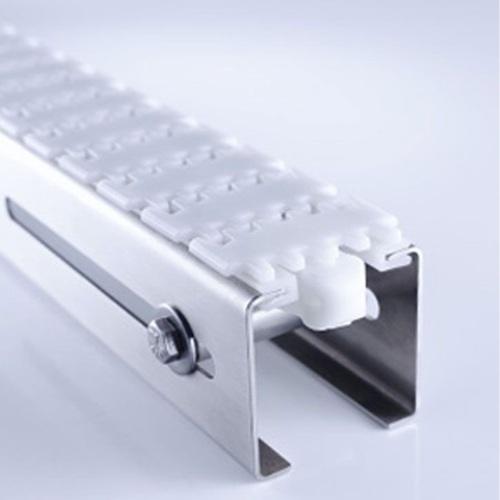
Stainless Steel Slat Conveyors

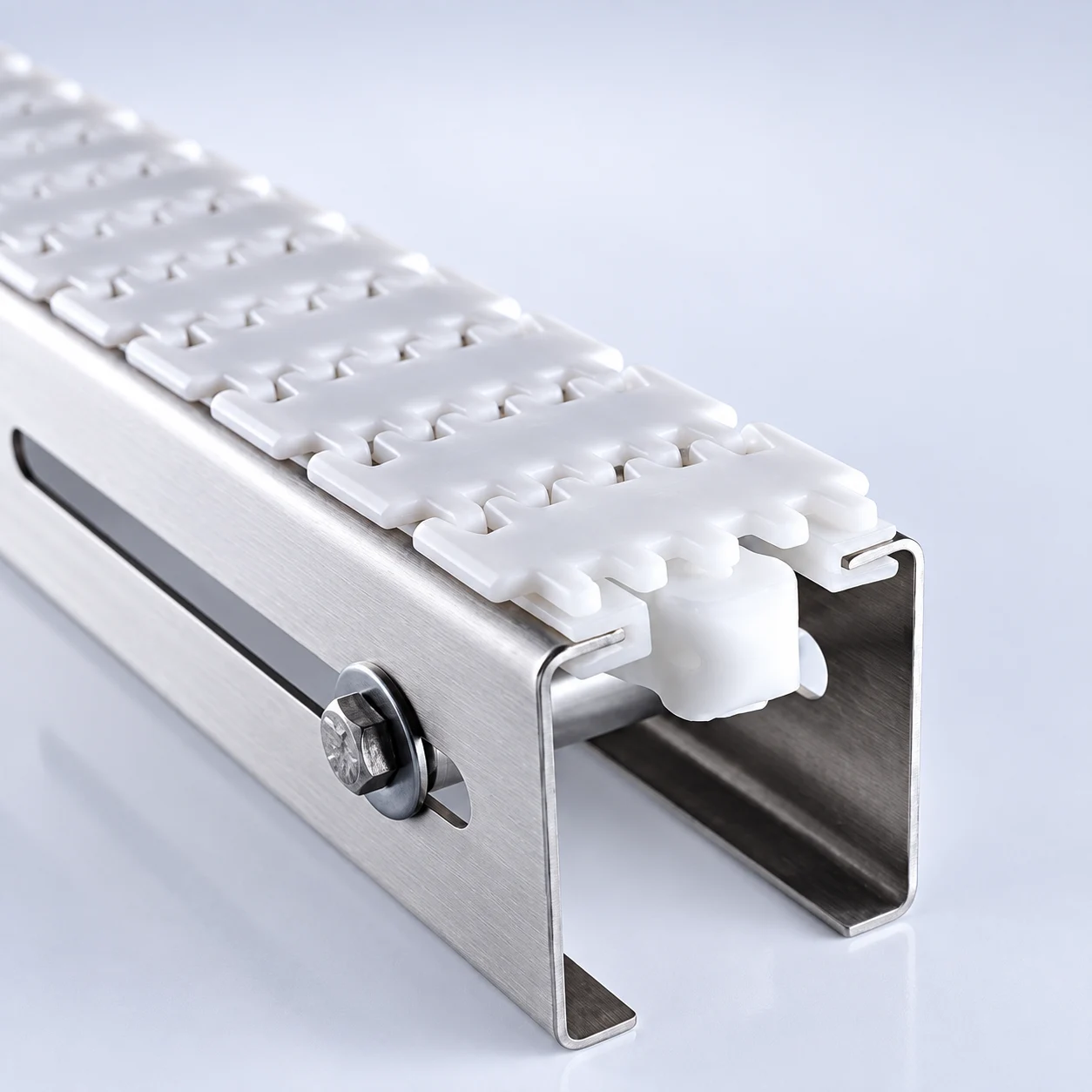
Carryline stainless steel slat conveyors for washdown lines in food, dairy and pharma, with drainage-channel beams so water leaves the profile instead of pooling in it. Four chain widths, S520 at 62 mm through to S560 at 220 mm, carrying 10 to 20 kg/m at 40 to 60 m/min, in stainless 1.4301, 1.4305 and 1.4307 with an acetal chain.

Types
S520 to S560
Chain widths
62 to 220 mm
Maximum speed
40 to 60 m/min
Load
10 to 20 kg/m
Horizontal bend radius
R150 to R600 mm

Quoting: S520 (62mm Wide)

Chain width sized to your productCurve radius checked in the layout

Carryline stainless steel slat conveyors explained

Where stainless slat earns its place

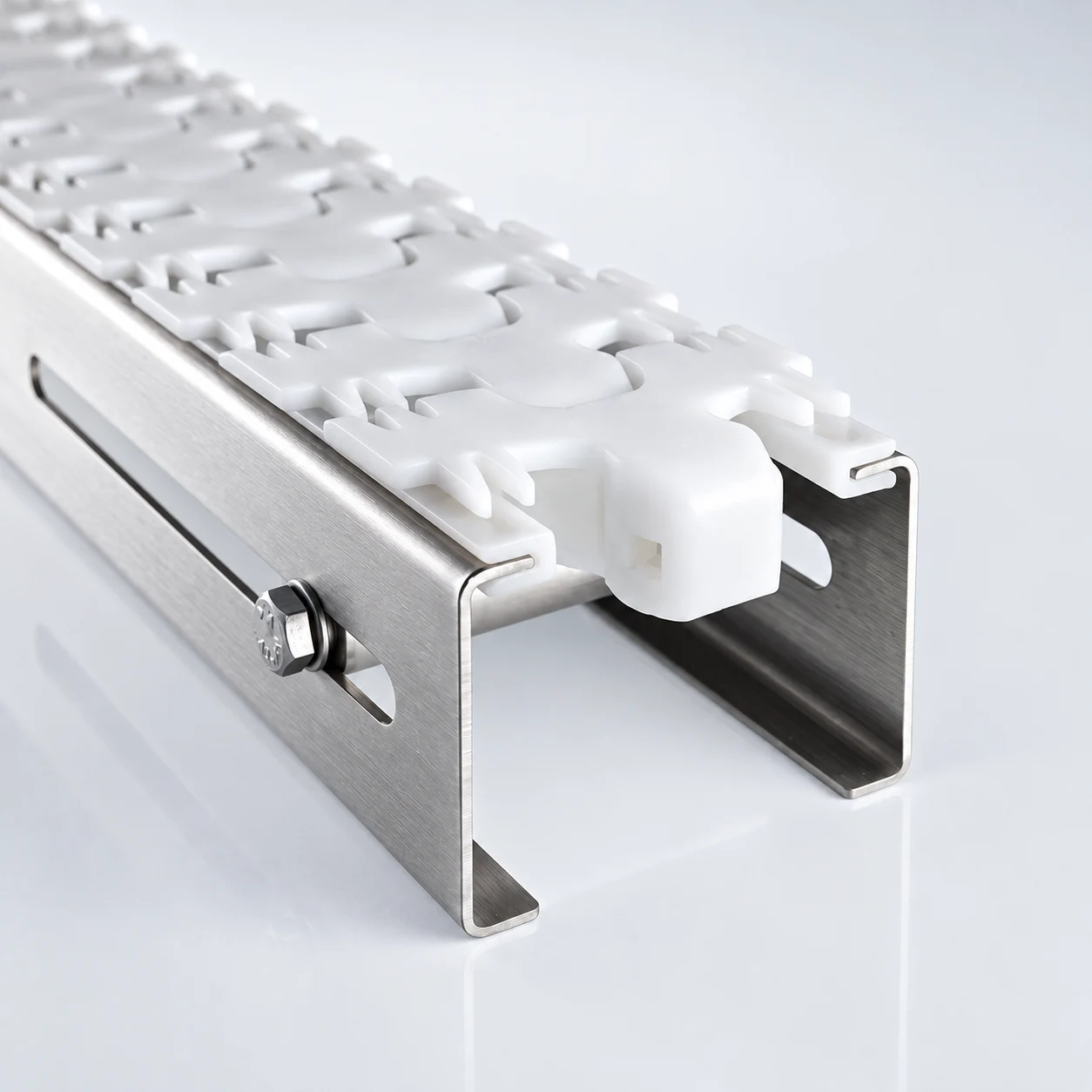
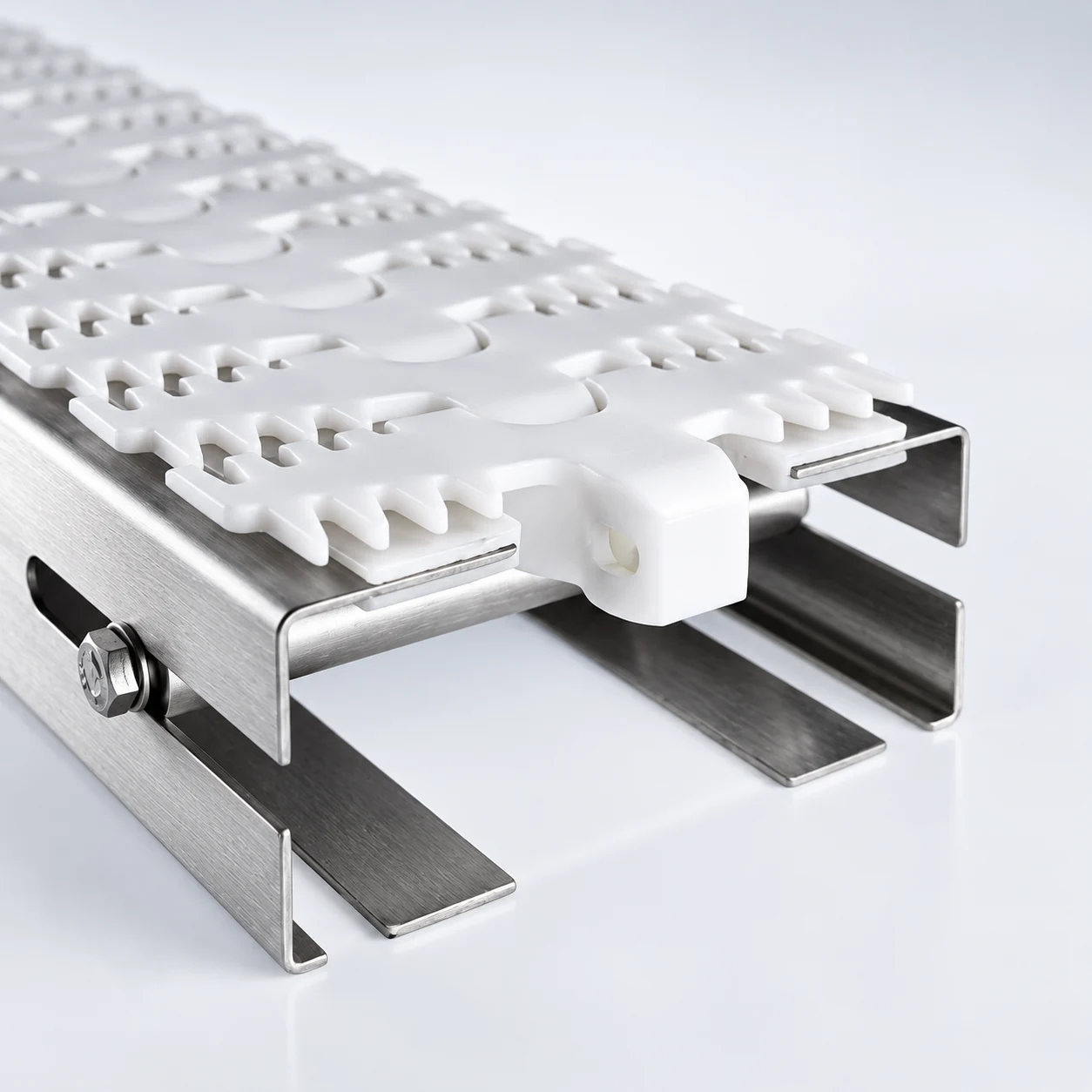
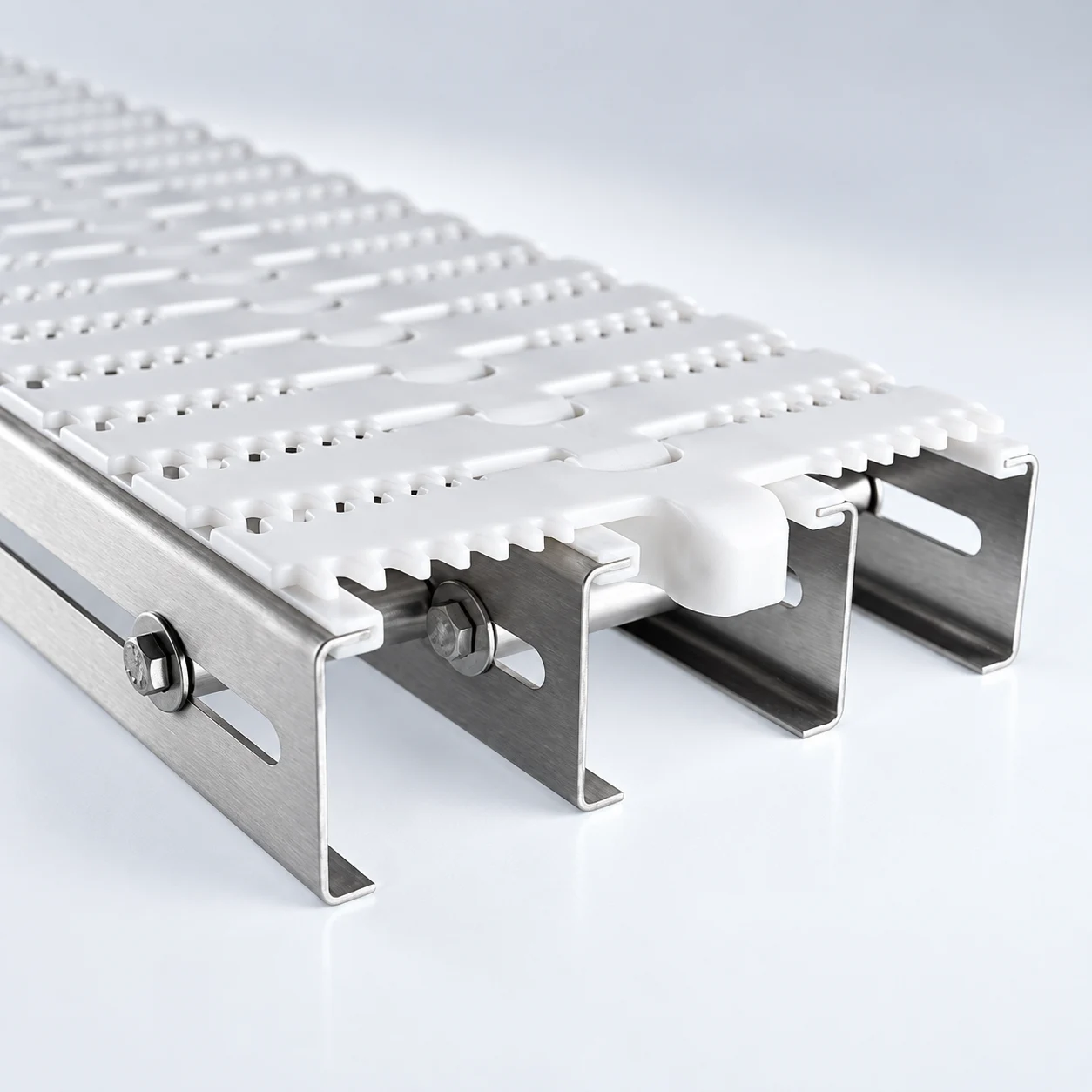
Stainless slat conveyor is what you specify when the line gets washed. The frame, the beams and the fixings are stainless, the chain is acetal, and the beam profiles carry drainage channels so water leaves rather than sitting in the structure. That is the difference from an aluminium build: not corrosion resistance as a general virtue, but a machine that survives a caustic wash at the end of every shift. Food, dairy and pharmaceutical lines are the usual home for it.

01

Four chain widths, and what changes with them

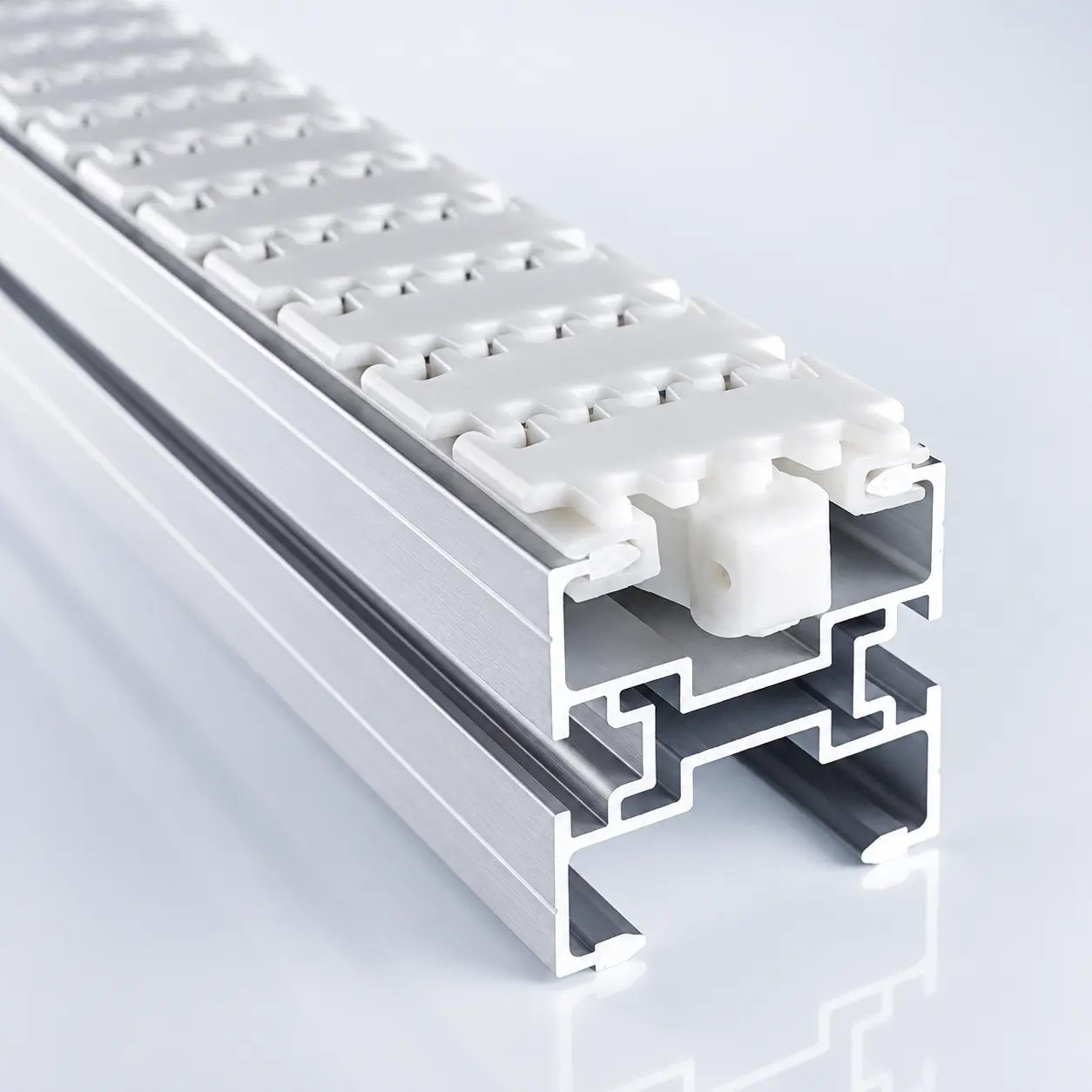
The range is S520 at 62 mm, S530 at 83 mm, S540 at 140 mm and S560 at 220 mm chain. Width is the first decision and it drags three others with it. The S520 has a 30 mm chain pitch and runs quietest; the other three share a 38 mm pitch. Profile width tracks the chain closely at 64, 86, 141 and 224 mm, so the space the conveyor occupies is roughly the chain width plus a couple of millimetres. Pick the width from the footprint of your product, then check what it costs you in the next two sections.
02

Curve radius is the layout constraint

Minimum horizontal bend radius is R191 mm on the S520, R150 mm on the S530, R300 mm on the S540 and R600 mm on the S560. Note that the S530 turns tighter than the narrower S520, which is not what most people assume. Vertical bend radius is R400 mm and R860 mm across the whole range. If your layout has to thread between existing machines, the horizontal radius of the width you have chosen is the number that decides whether it fits, so bring the floor plan to the sizing conversation rather than the product alone.

03

Load, traction and line length

The S520 carries approximately 10 kg/m with about 105 kg total on the conveyor and a maximum traction force of 500 N. The S530, S540 and S560 all step up to approximately 20 kg/m, about 200 kg total, and 1,250 N. Maximum conveyor length is about 20 m per drive unit across the range, so a longer run is built from multiple driven sections. Conveyor weight itself rises with width, from about 5 kg/m on the S520 through 7 and 8 kg/m to about 11.5 kg/m on the S560, which matters for the supporting structure on a mezzanine.

04

Speed, and the trade against width

Maximum speed falls as the chain widens: 60 m/min on the S520, 50 m/min on the S530 and S540, and 40 m/min on the S560. That is the honest trade. A wider chain carries bigger and heavier product but will not run as fast, so if your throughput target needs both width and speed it is worth checking the arithmetic early rather than discovering it at commissioning. Two narrower lanes sometimes beat one wide one.

05

Materials, cleaning and hygiene

Construction is stainless steel in grades 1.4301, 1.4305 and 1.4307 with an acetal chain. Drainage channels in the beams are the practical hygiene feature: they let wash water run off instead of pooling in the profile, which is where contamination hides on a conveyor that was not designed for washdown. Open construction and smooth surfaces make the rest of the cleaning routine straightforward. Where the environment is dry and a wipe down is enough, aluminium slat conveyors are the cheaper equivalent.

06

Drives, noise and temperature

Motor power is 0.18 to 0.47 kW on the S520 and 0.18 to 0.55 kW on the S530, S540 and S560, sized on load, speed and driven length. Every Carryline conveyor runs under 70 dB(A), which matters in a packing hall where several lines run side by side and noise exposure is a real duty. Working temperature is -20 C to +60 C with higher or lower on request, so chilled areas are within the standard range.

Where it fits in the Carryline range

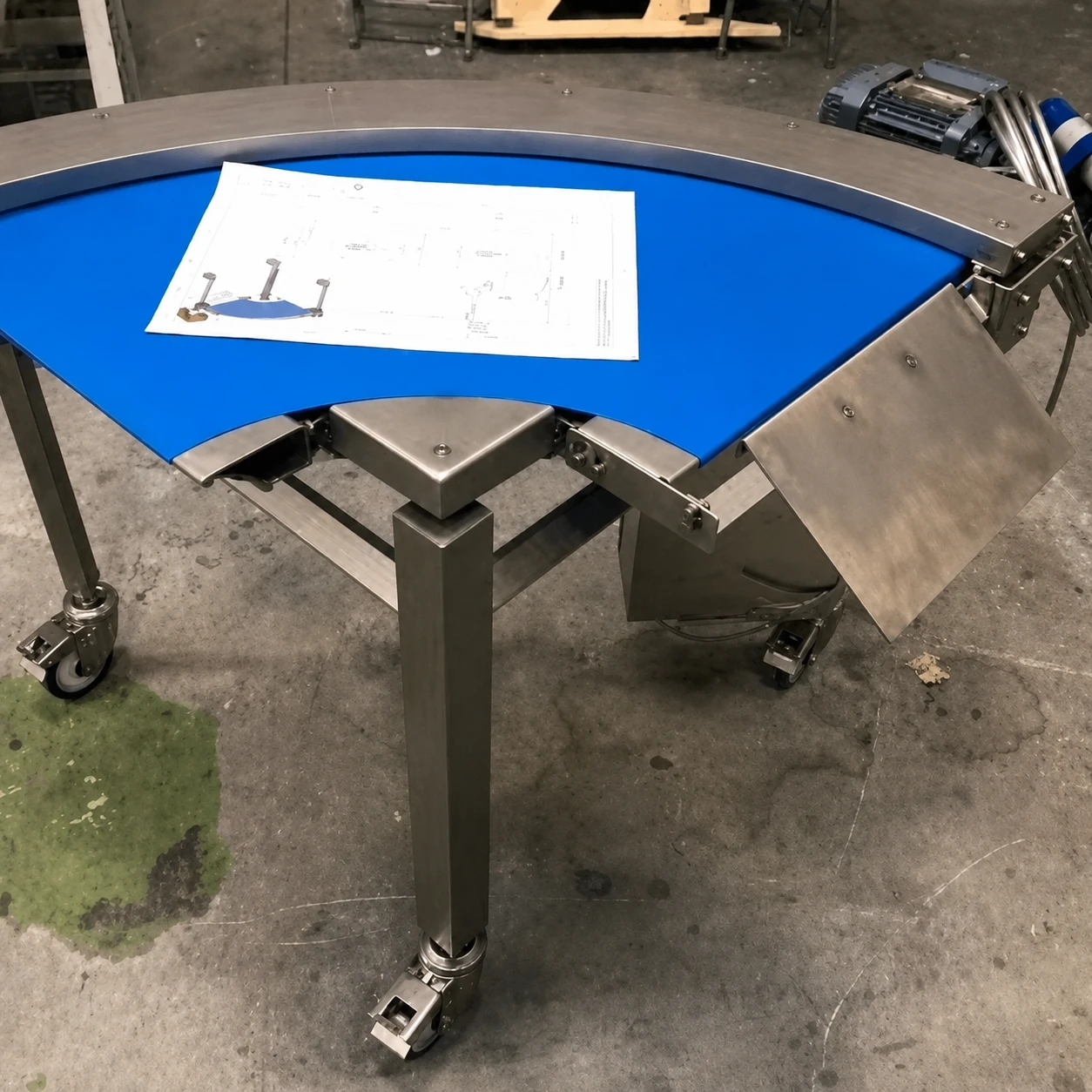
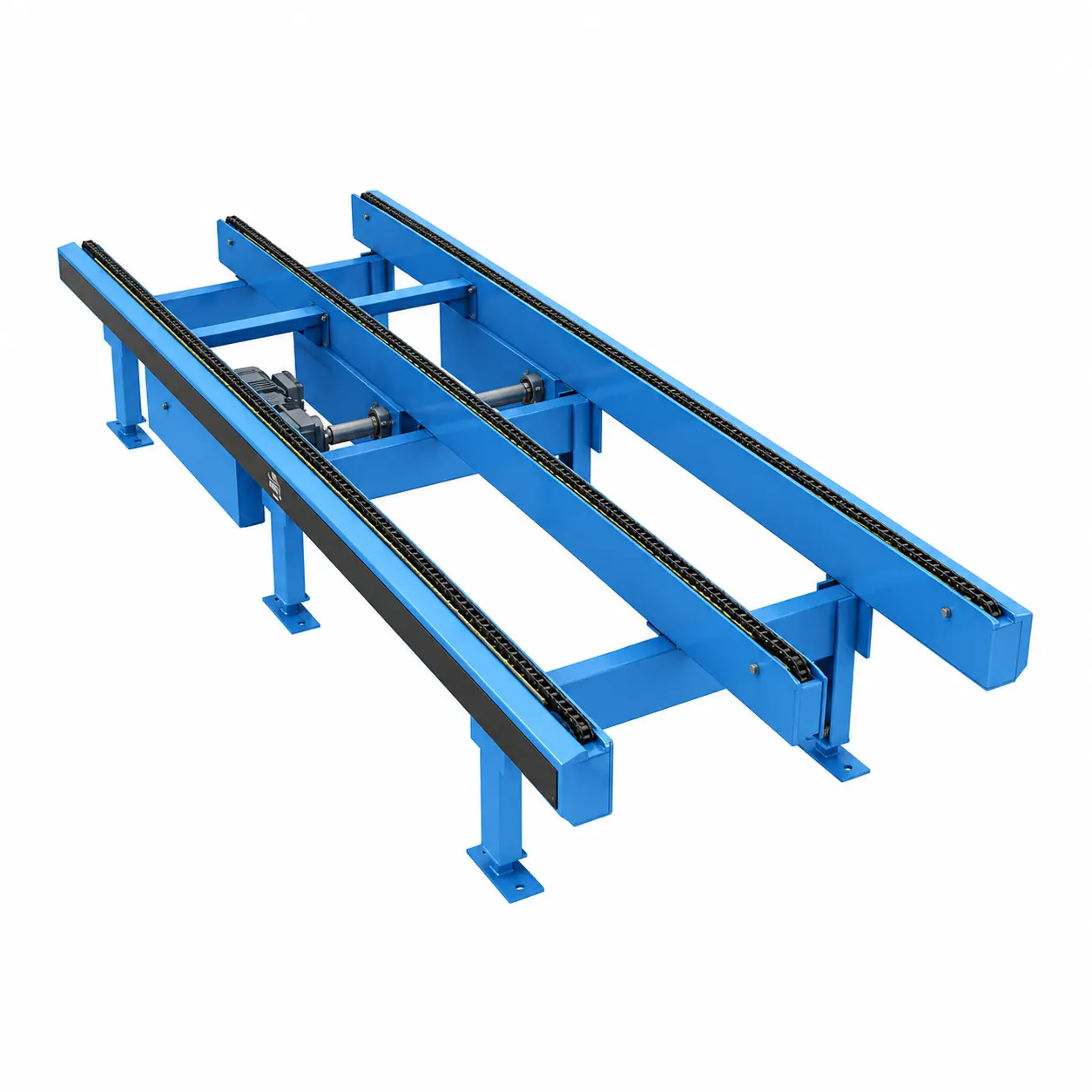
Straight runs, bends and twists all use the same chain, so a stainless slat line is assembled from a system rather than specified as a single machine. To change level, spiral slat conveyors take product up gradually while vertical slat conveyors bridge height fast in a small footprint, and compact corner conveyors handle tight direction changes. Where the product suits a flat carrying surface better than slats, modular belt is the alternative. LVP Automation specifies, installs and supports Carryline stainless conveyors from Finglas, Dublin 11 as part of our wider automation services.

Specification

Types
S520 62 mm, S530 83 mm, S540 140 mm and S560 220 mm chain
Chain widths
62 mm, 83 mm, 140 mm and 220 mm, with profile widths of 64, 86, 141 and 224 mm
Maximum speed
60 m/min on S520, 50 m/min on S530 and S540, 40 m/min on S560
Load
About 10 kg/m and 105 kg total on S520; about 20 kg/m and 200 kg on S530, S540 and S560
Horizontal bend radius
R191 mm on S520, R150 mm on S530, R300 mm on S540, R600 mm on S560
Vertical bend radius
R400 mm and R860 mm across the range
Traction force
500 N on S520, 1,250 N on S530, S540 and S560
Motor power
0.18 to 0.47 kW on S520, 0.18 to 0.55 kW on S530, S540 and S560
Materials
Stainless steel 1.4301, 1.4305 and 1.4307 with an acetal chain, and drainage-channel beams
Limits
About 20 m maximum length per drive unit, -20 C to +60 C, under 70 dB(A)

Where the Stainless Steel Slat Conveyor Excels

Hygienic and Washdown Environments

Open, easy-access frames and a drainage-channel beam support rapid cleaning and validated sanitation, ideal for dairy, bakery and ready-to-eat lines.

Corrosion-Resistant, Long-Life Duty

All-stainless fasteners, shafts and chain components resist chemicals and moisture, delivering dependable performance in aggressive CIP/foam-wash areas.

Flexible Builds and Retrofits

Choose welded frames for maximum rigidity or strip-assembled sections for quick reconfiguration as lines evolve, without full rebuilds.

FAQs about the Stainless Steel Slat Conveyor

Key answers on hygiene, cleaning, materials, layouts, integration and when to choose stainless slat-chain over other conveyor types.

What makes these conveyors hygienic?

Stainless construction, smooth surfaces, minimal harbourage points and a drainage-channel beam that sheds rinse water and debris for faster sanitation.

Which industries are they designed for?

Food and beverage (dairy, bakery), medical products and glass manufacturing, anywhere hygiene, moisture resistance and frequent cleaning are essential.

Can the system handle curves and elevation changes?

Yes, slat-chain supports tight-radius curves and controlled inclines/declines for compact, guided product transport.

Are all components stainless?

Yes, screws, nuts, shafts and pins are stainless to resist corrosion and maintain hygiene compliance.

What are the cleaning advantages of the drainage channel?

It routes rinse water and soils away from the product zone, reducing re-contamination risk and speeding dry-down between cycles.

Welded vs. strip-assembled, how do I choose?

Welded frames maximise rigidity and uptime; strip-assembled sections allow faster reconfiguration and expansion with less fabrication.

How do these compare to modular belt conveyors for hygiene?

Stainless slat-chain offers excellent guided transport and compact curves; modular belt can provide broader surface support and specific open-link sanitation benefits, choice depends on product and cleanability needs.

What products are best suited?

Bottles, jars, trays, wrapped goods and medical packs that benefit from continuous, stable support through curves and tight spaces.

Can they integrate with automation and inspection?

Yes, ready for PLC/HMI control, vision systems, checkweighers, metal detection and labelling/marking with appropriate guides and transfers.

What maintenance is required?

Routine cleaning and inspection of chain tension, wear strips and guides; stainless hardware minimises corrosion-related upkeep.

Downloads

Similar Products

Let's Connect

Have a question about our conveyor systems or need a tailored automation solution for your business? Our team at LVP Automation is here to help. Fill out the form below with your details, and we’ll get back to you as soon as possible. Whether you need a quote, technical support, or more information on our products, we’re ready to assist.