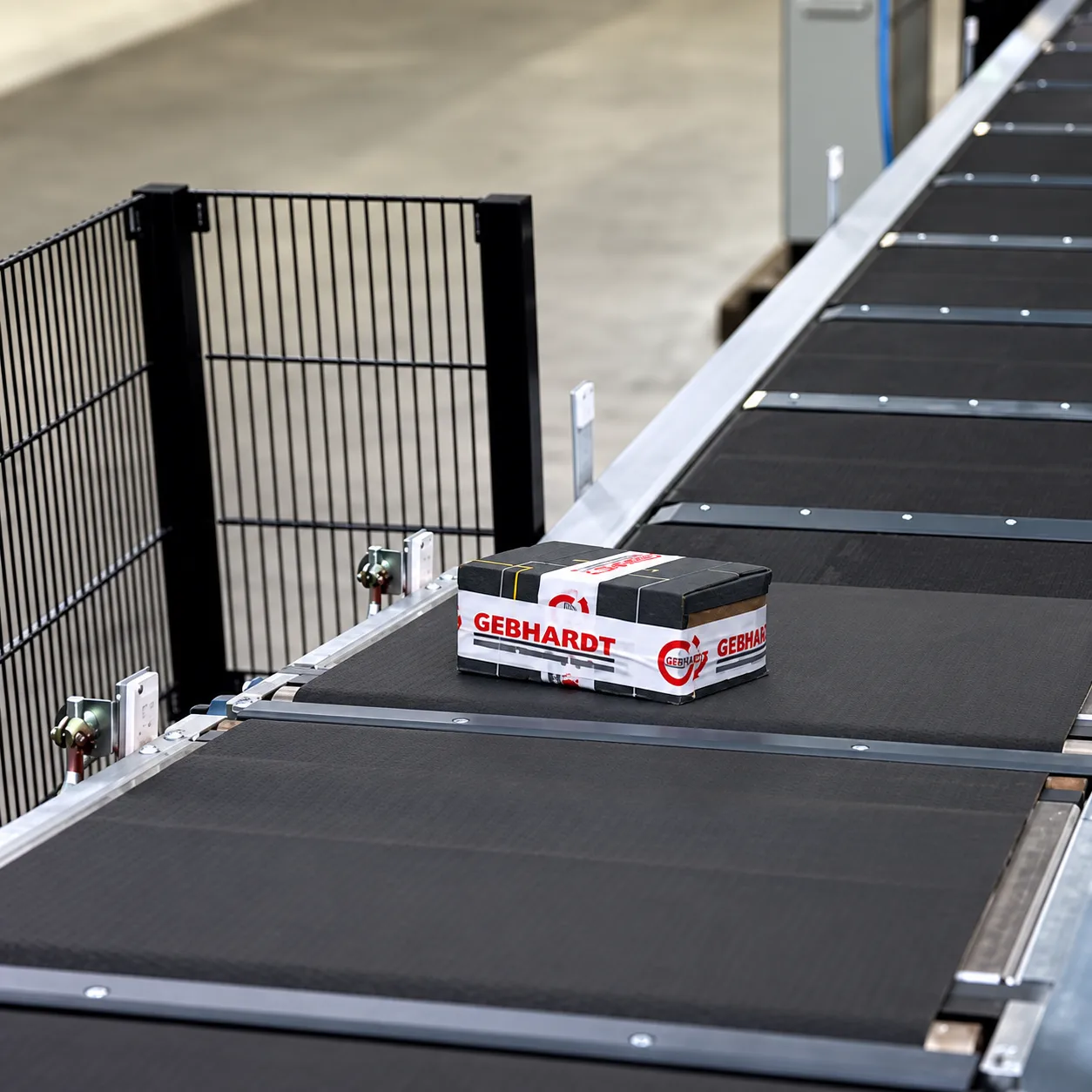
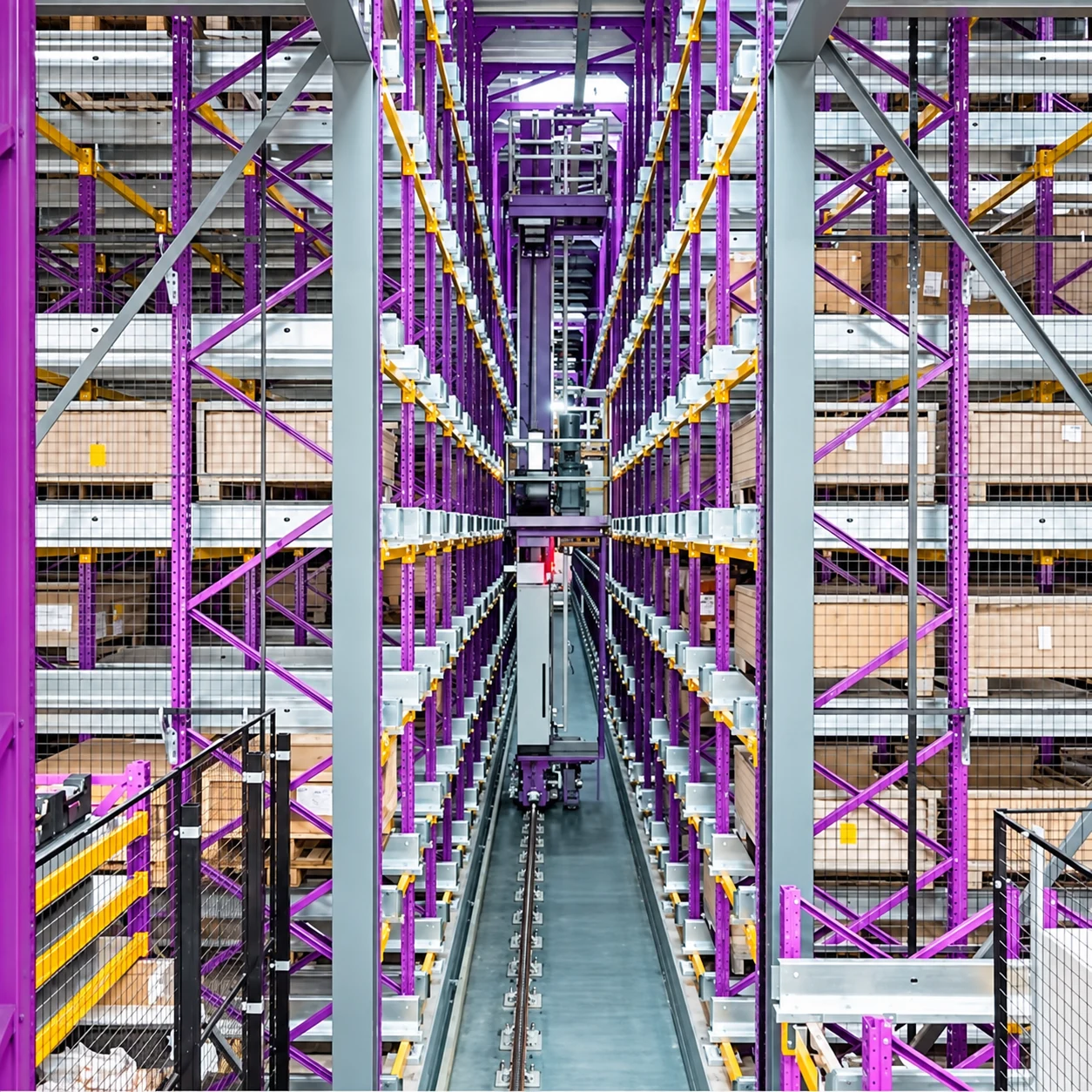
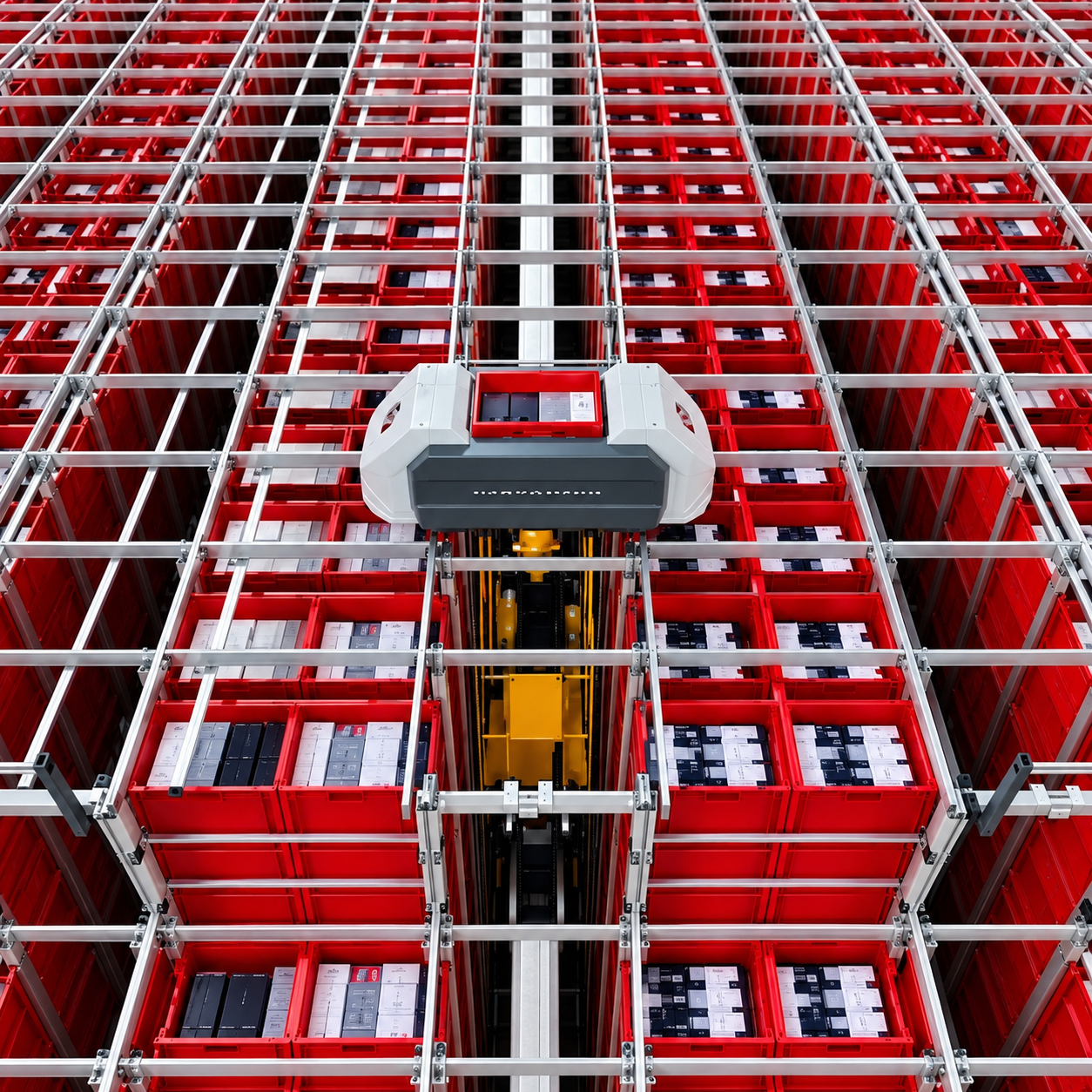
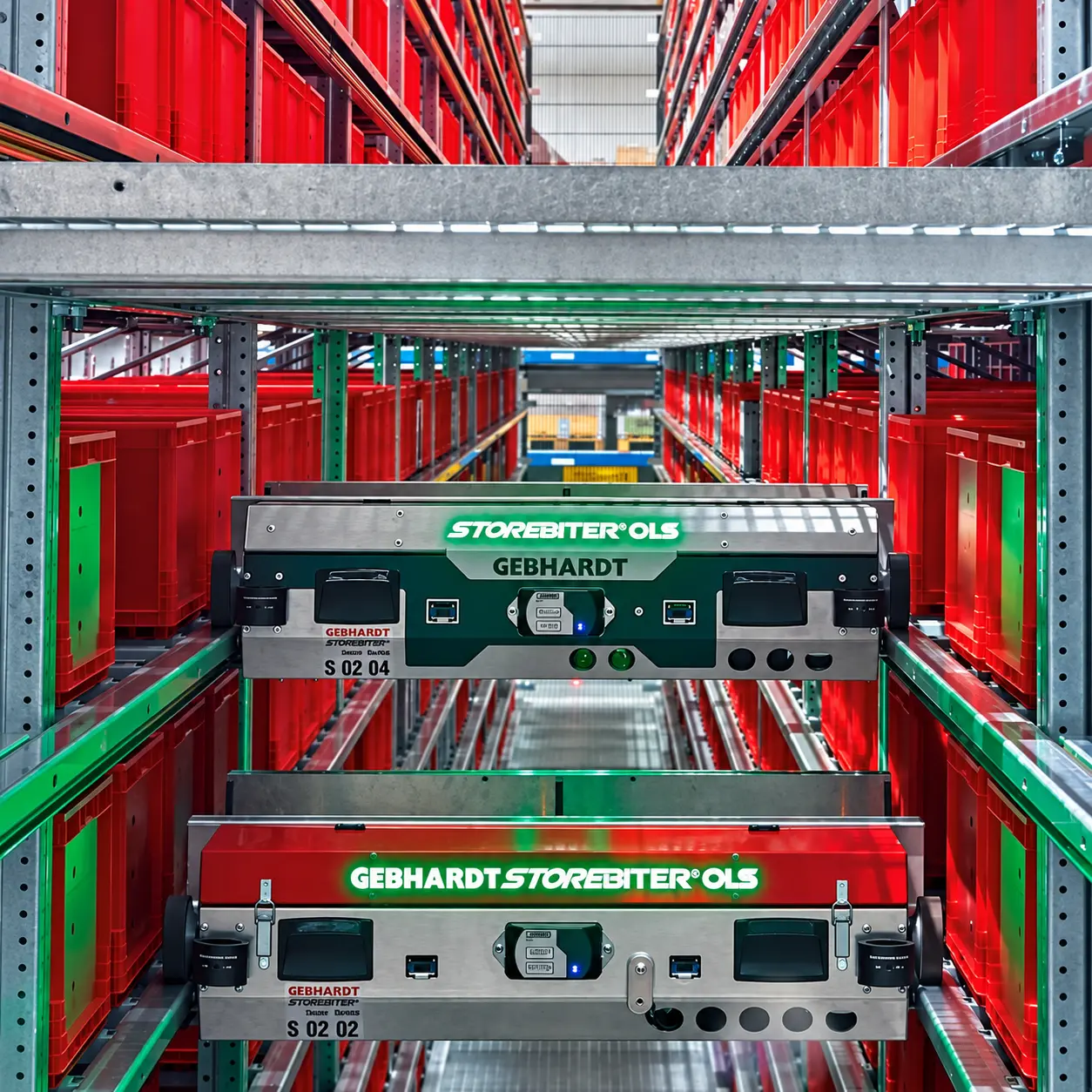
Our advanced sorting technology systems are designed to optimise sorting processes within warehousing and distribution environments, enhancing efficiency and reducing operational bottlenecks. With high-speed sorting capabilities, versatile item handling, and integrated software for real-time tracking, these systems ensure accuracy and streamline the flow of goods. The modular design allows for customisation and easy expansion, making it adaptable to evolving business needs.
Systems
ArmSorter, line, loop
Throughput
Up to 16,000/h
Item weight
0.1 to 35 kg
Item size, ArmSorter
To 1,200 x 800 mm
Item size, SpeedSorter
From 150 x 80 mm
The entry point into automated sortation. The GEBHARDT ArmSorter uses a swivel arm to divert standard formats at up to 2,500 parcels, polybags or paper bags per hour, running at 1.25 m/s.
It takes items from 200 x 150 x 10 mm up to 1,200 x 800 x 800 mm and weights from 0.1 to 35 kg, on a compact modular frame that suits smaller distribution centres and inbound sorting. Setup and commissioning are quick, maintenance is low, and the layout expands as volumes grow.
A vertical tray sorter that buys throughput without buying floor space. The GEBHARDT SpeedSorter line reaches 14,000 items per hour at up to 1.8 m/s, with infeed and destination points configured around the building rather than the other way round.
It handles containers, cartons, packets, polybags and paper bags from 150 x 80 x 10 mm up to 600 x 600 x 500 mm and up to 35 kg, with a double tray carrying items up to 1,200 mm long. Toploader infeed reaches around 12,000 items per hour, fully automatic around 2,500, semi-automatic around 1,500 and manual around 1,000. Controls are PROFINET and EtherCAT, and the system is Galileo IoT ready.
A fully automated horizontal crossbelt sorter for high-demand operations, handling up to 16,000 carriers per hour at up to 2 m/s, depending on carrier size and the goods being sorted.
The crossbelt principle places items rather than pushing them, which is what makes the loop suitable for mixed, fragile and irregular ranges, and it ties incoming goods, storage, order picking and dispatch into a single flow. Condition monitoring and GEBHARDT's digital tools give live insight into how the system is performing rather than a report after the fact.
Rates sized against your real item mixSpecified, installed and supported from Dublin 11
Three sorter types
Swivel arm, vertical tray and horizontal crossbelt
2,500 to 16,000/h
Entry level through to high-demand operations
Gentle on irregulars
Crossbelt and tray place items rather than push them
Ireland-wide support
Specification, install and service from Dublin 11
Sortation systems explained
Three sorters, one decision
The ArmSorter is the entry point: a swivel-arm machine for standard formats at up to 2,500 items an hour, compact enough for a small distribution centre or an inbound sort. The SpeedSorter line stands the sortation up vertically to save floor area and runs to 14,000 items an hour. The SpeedSorter loop is a horizontal crossbelt running to 16,000 carriers an hour at up to 2 m/s. Rate is the obvious difference; the less obvious one is that each handles a different item envelope, which is usually what settles it.
01
Throughput is set by the infeed, not the sorter
A sorter rated at 14,000 items an hour only sees that if the induction can feed it. A toploader gets to around 12,000, a fully automatic infeed to about 2,500, semi-automatic to about 1,500 and a manual station to roughly 1,000. So the honest question at design stage is not what the sorter is capable of but how many items an hour you can actually present to it, and how many induction points the budget and the space allow.
02
Item size is the real constraint
The ArmSorter takes items from 200 x 150 x 10 mm up to 1,200 x 800 x 800 mm. The SpeedSorter line works a smaller envelope, 150 x 80 x 10 mm up to 600 x 600 x 500 mm, with a double tray extending that to 1,200 mm for the occasional long item. Both handle 0.1 to 35 kg. Profiling your actual mix, including the awkward tail of it, matters more than the headline rate, because the items that fall outside the envelope are the ones that generate manual work forever afterwards.
03
Gentle handling and irregulars
Crossbelt and tray sorters place items rather than push them, and acceleration profiles can be set per product so fragile goods, polybags and odd shapes are handled at a rate that suits them. That control is why the loop suits mixed and irregular ranges, where a shoe or swivel-wheel arrangement would be fighting the product.
04
Exceptions are where the cost hides
No-reads, oversize, overweight and jams all need somewhere to go. Exception lanes with operator prompts and a defined re-work flow are what stop a sorter running at 90 per cent efficiency from quietly consuming a person full time. Reading is worth getting right at the front: pairing sortation with barcode verification and scanning and, where labels are produced inline, print and apply labelling with verification before the sort.
05
Footprint and levels
Sections are modular, so the layout adapts to the building rather than the other way round, and mezzanine or multi-level arrangements are common where density matters more than simplicity. The line's vertical structure exists for exactly this reason: it buys throughput without buying floor.
06
Software, controls and traceability
Your WCS or WMS assigns destinations from scan or vision data, applies priority and SLA rules and provides live dashboards and alerts. Controls are PROFINET and EtherCAT, and the systems are Galileo IoT ready, so condition monitoring and performance data are available rather than bolted on later. Upstream and downstream this usually sits alongside warehouse robotics, shuttle systems and automated storage and retrieval.
Maintenance, expansion and support
Maintenance is routine checks on belts, trays, drives and sensors on a preventative schedule, with remote diagnostics to keep availability up. Expansion means adding inductions and diverts, extending track length or adding sorter modules, and the software scales with lanes and volume rather than needing replacing. LVP Automation specifies, integrates and supports sortation systems from Finglas, Dublin 11 as part of our wider automation services.
Specification
Systems
GEBHARDT ArmSorter, SpeedSorter line and SpeedSorter loop
Throughput
Up to 2,500 items per hour on the ArmSorter, up to 14,000 on the SpeedSorter line and up to 16,000 carriers per hour on the loop
Item weight
0.1 to 35 kg across the range
Item size, ArmSorter
200 x 150 x 10 mm up to 1,200 x 800 x 800 mm
Item size, SpeedSorter
150 x 80 x 10 mm up to 600 x 600 x 500 mm on both the line and the loop, extending to 1,200 mm on a double tray
Conveying speed
1.25 m/s on the ArmSorter, up to 1.8 m/s on the SpeedSorter line and up to 2 m/s on the loop
Infeed options
Toploader up to 12,000 items per hour, fully automatic around 2,500, semi-automatic around 1,500 and manual around 1,000
Sorter principle
Swivel arm on the ArmSorter, vertical tray on the line and horizontal crossbelt on the loop
Controls
PROFINET and EtherCAT integrated controls, Galileo IoT ready
Goods handled
Parcels, cartons, containers, packets, polybags and paper bags
Where Sorting Technology Excels
E-commerce & Parcel Hubs
High-throughput induction and dynamic routing to destinations (pack, carrier lanes, returns) with live SLA prioritisation.
Retail, FMCG & 3PL
Order consolidation, store allocation and carrier sort with accurate scanning, print/apply and automated exception handling.
Gentle Handling & Irregulars
Cross-belt and tilt-tray options deliver controlled acceleration and placement for fragile goods, polybags and odd sizes.
FAQs about Sorting Technology
Quick answers on speeds, item types, software, footprint, integration and maintenance.
Which sorter type do I need?
Shoe/swivel wheel for cartons/totes and many parcels at high speeds; cross-belt/tilt-tray for mixed, fragile or irregular items.
How fast can a system run?
Throughput depends on sorter type, inductions and diverts—systems commonly handle thousands of items/hour per induction.
What item sizes and weights are supported?
From small parcels/polybags to large cartons within defined ranges per sorter. We size belts/trays and guides to your profile.
How does software control routing?
The WCS/WMS assigns destinations using scan/vision data, manages priorities/SLA rules and provides live dashboards and alerts.
Can it print and apply labels inline?
Yes—add print & apply with verification before sortation to ensure carrier/compliance accuracy.
How are exceptions handled?
No-reads, oversize/overweight and jams are diverted to exception lanes with operator prompts and re-work flows.
What footprint is required?
Modular sections adapt to your space; mezzanine or multi-level layouts are common for higher density.
Is the system gentle enough for fragile items?
Yes—choose cross-belt/tilt-tray and set acceleration profiles; add product condition rules in software.
What maintenance is needed?
Routine checks on belts, trays, drives and sensors; preventative schedules and remote diagnostics keep availability high.
Can we expand later?
Absolutely—add inductions/diverts, extend track length or increase sorter modules; software scales with lanes and volume.
Have a question about our conveyor systems or need a tailored automation solution for your business? Our team at LVP Automation is here to help. Fill out the form below with your details, and we’ll get back to you as soon as possible. Whether you need a quote, technical support, or more information on our products, we’re ready to assist.
We use cookies to see how our website is used and improve it. They're only set if you accept them. You can change your mind at any time. Read our cookie policy