
Barcode Verification and Scanning

Barcode reading and ISO/IEC verification for production lines: fixed-mount imagers, handhelds, and inline or offline verifiers with closed-loop reprint or reject. Working with Cognex, Keyence and SICK, specified and supported by LVP Automation in Dublin.

Reader resolutions
1.2 to 9 MP
Fixed mount range
DataMan 70 to 580
Verifier types
Inline, offline, handheld
Verifier field of view
35 x 29 to 80 x 60 mm
Standards
ISO/IEC 15415, 15416, 29158
Optics and lighting specified to your surfaceSpecified, installed and supported from Dublin 11
Read or verify
Decoding for throughput, grading for compliance
Closed loop
Bad grades trigger reprint, re-apply or divert
Hard surfaces handled
Polarised, dome, dark-field and backlight optics
Ireland-wide support
Specification, install and service from Dublin 11

Barcode verification and scanning explained

Reading and verifying are not the same job

Reading checks that a code can be decoded. Verification measures how well it was printed, grading contrast, modulation and defects against a standard and giving the code a score. A label can read perfectly on your line and still fail at a customer's gate because their scanner, their lighting and their angle are not yours. If the requirement is a compliance grade rather than a successful decode, you need a verifier, not a reader.

01

Standards and code types

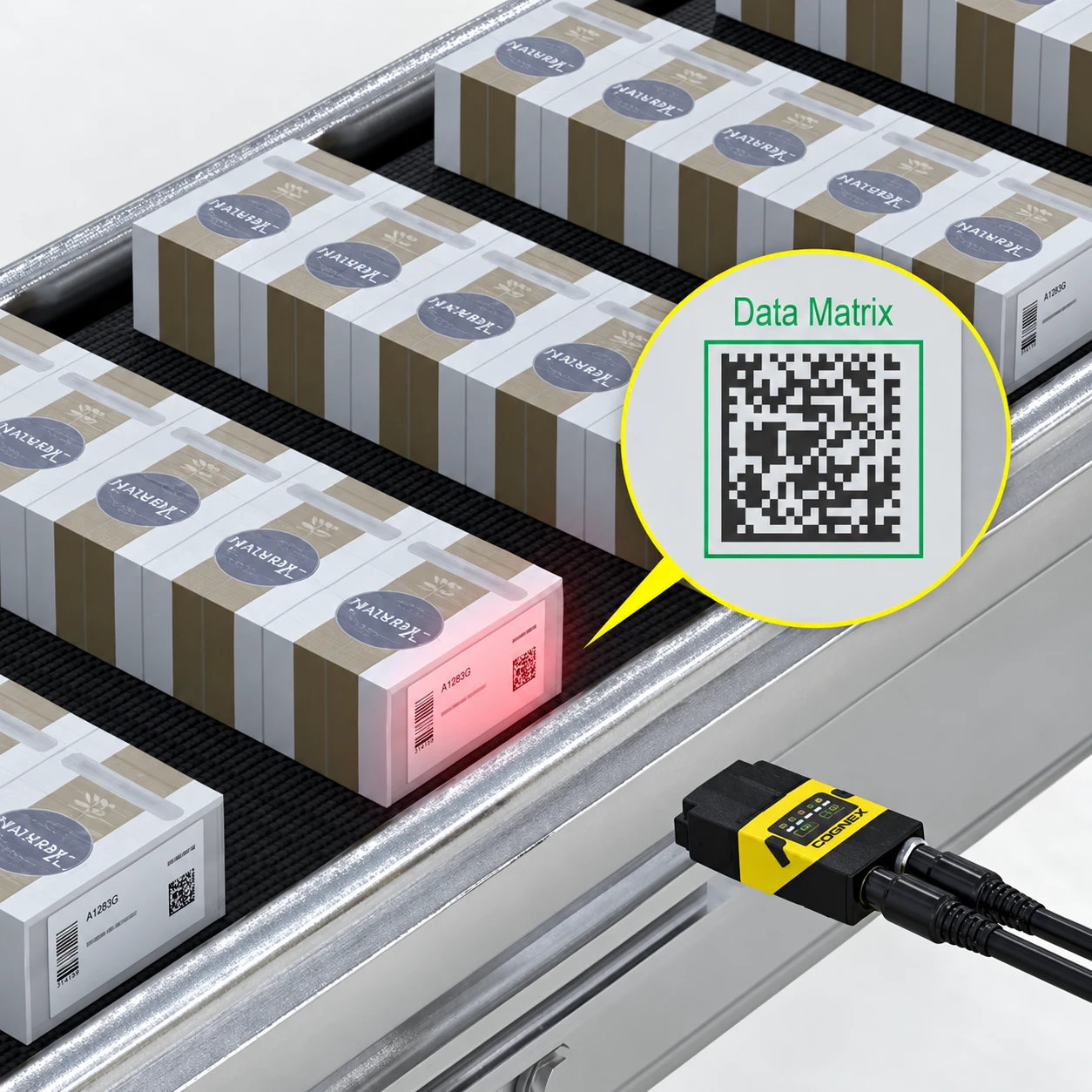
Verification is measured to ISO/IEC 15415 and 15416 for label codes and ISO/IEC 29158, the AIM DPM standard, for direct part marks, alongside the GS1 General Specifications and sector UDI guidance where it applies. On the code side that covers 1D symbologies including EAN and UPC, Code 128 and Code 39, ITF-14 and GS1-128, and 2D including DataMatrix, QR and Micro QR.
02

Fixed-mount readers

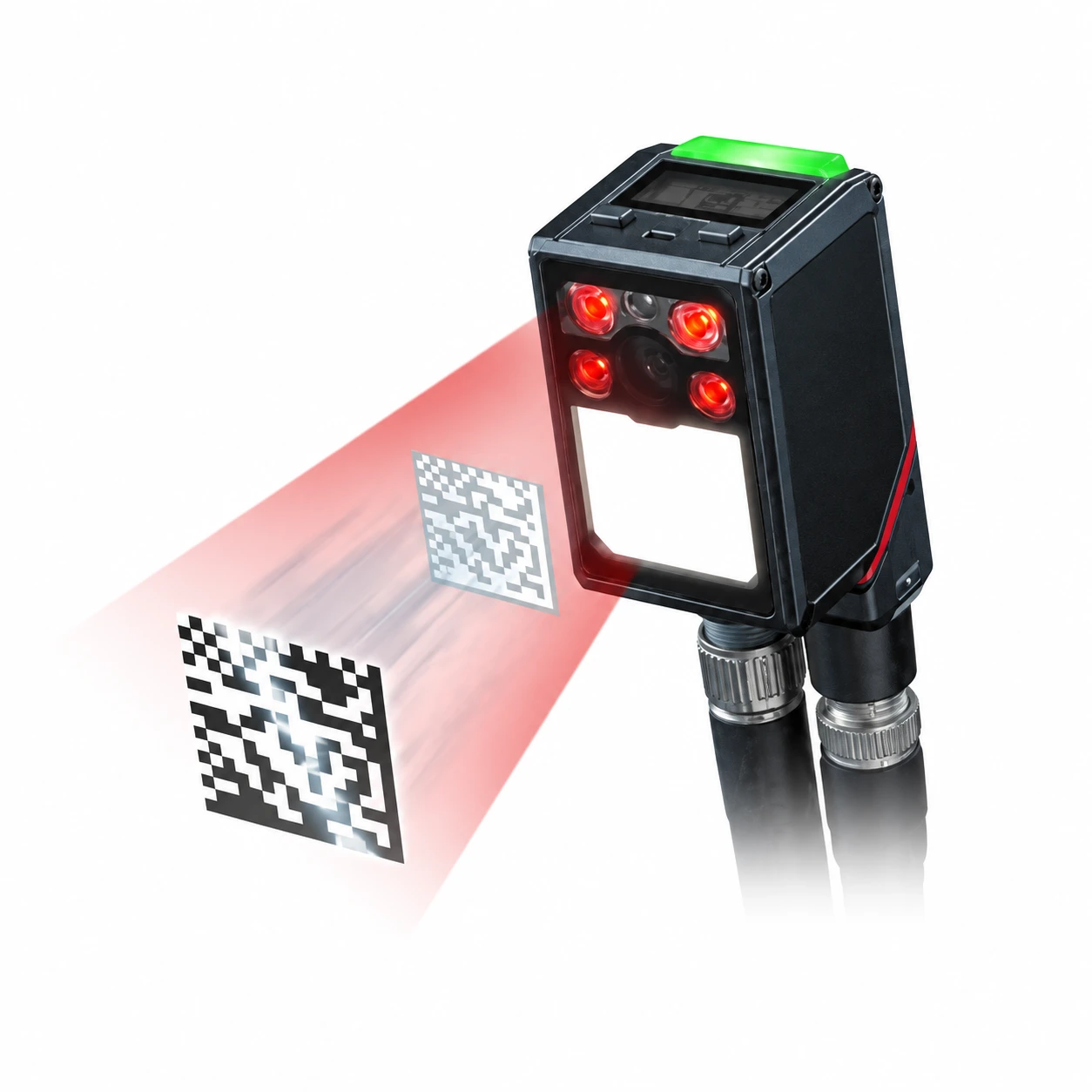
The Cognex DataMan range runs from the compact 70 series at 1.2 MP for label codes in tight spaces, through the 280 at 2 MP and the 370 and 470 at 5 MP for broad multi-code and multi-symbology work, up to the 580 at 9 MP for high-speed tunnel applications where the sorting algorithm has to hold read rates with short gaps between packages. Higher resolution is not automatically better; it buys you field of view and small-code capability, and costs you light.

03

Handhelds for QA and rework

Handheld readers cover the QA bench and rework rather than the line. The DataMan 8700 series runs at 1.6 MP and handles label-based and direct part marked codes, including well-marked codes down to around 2 mil, with variants built for harsh oils, dirt and water.

04

Verifier options

Verification can be inline, handheld or offline. The 475V grades 1D, 2D and DPM codes from a fixed position on the line; the 475VS does the same offline on an adjustable height stand; the 8072V is the handheld for DPM grading. Inline units have an 80 x 60 mm and 35 x 29 mm field of view and the handheld 27 x 20 mm and 17 x 13 mm, with 30, 45 and 90 degree lighting to suit the mark and the surface.

05

Difficult surfaces

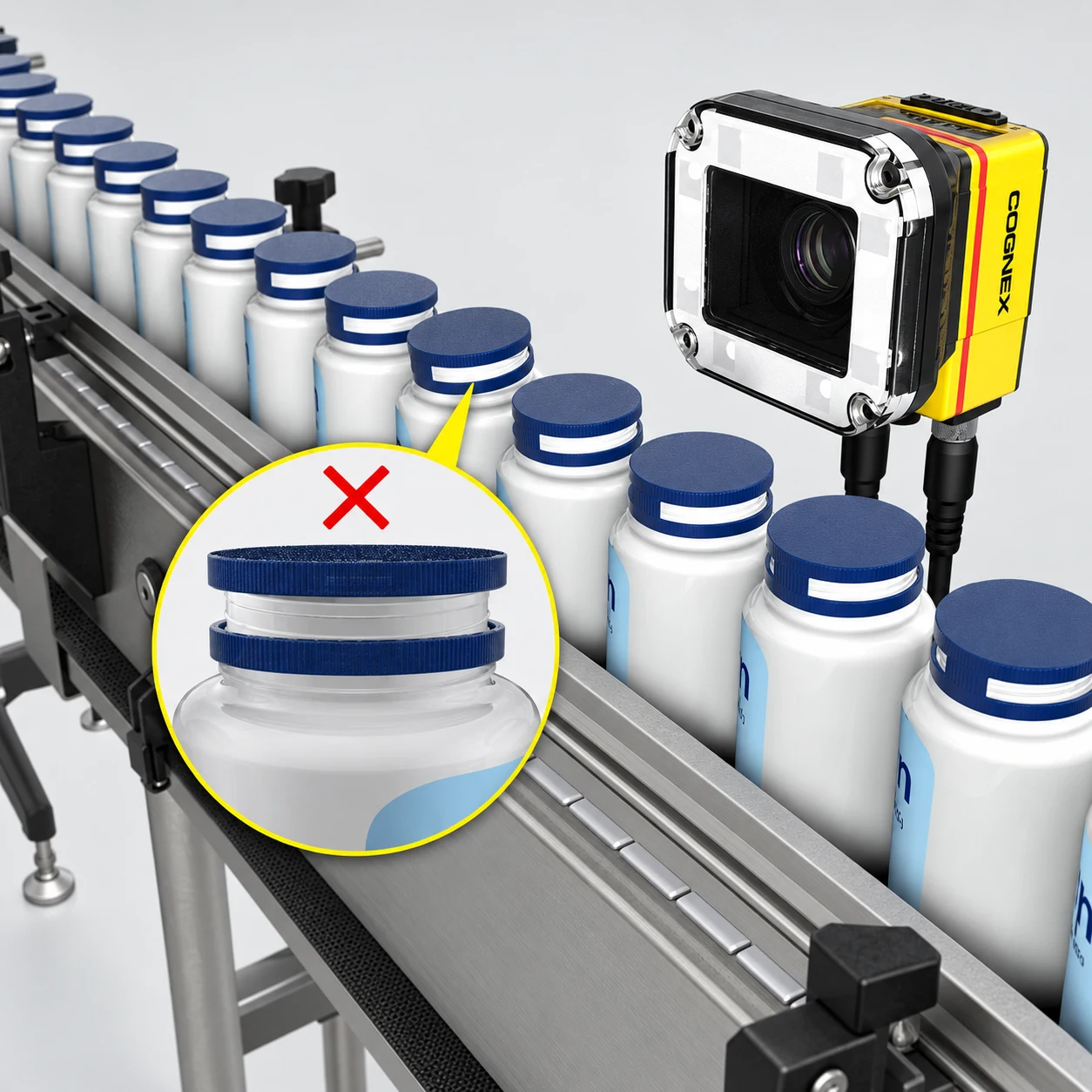
Curved, glossy and low-contrast surfaces are an optics and lighting problem before they are a decoding problem. Polarised, dome, dark-field and backlight arrangements are chosen to get contrast into the image, because no amount of processing recovers detail the camera never captured. Where the job goes beyond codes into presence, position or defect checking, that is machine vision.

06

Closing the loop

Verification is only worth doing if a bad grade changes something. Tied to print and apply labellers, a failed code can trigger a reprint and re-apply, a divert to an exception lane, or an operator alert with the fault detail. Images, grades and metadata including time, lot, user and device are archived, which is what turns a claim about quality into evidence during an audit.

Integration and support

Digital I/O or fieldbus connects to PLCs and robots, and APIs or database links feed WMS, MES and ERP for serialisation and traceability. LVP Automation works with Cognex, Keyence and SICK, and specifies, installs and supports these systems from Finglas, Dublin 11 as part of our wider automation services. Where the label is being produced as well as checked, that is industrial labelling systems.

Specification

Reader resolutions
Fixed mount from 1.2 MP up to 9 MP depending on series; handhelds at 1.6 MP
Fixed mount range
Cognex DataMan 70, 280, 370, 470 and 580 series, from compact label reading to high speed tunnels
Verifier types
475V inline on the line, 475VS offline on an adjustable stand, and 8072V handheld for DPM
Verifier field of view
80 x 60 mm and 35 x 29 mm inline; 27 x 20 mm and 17 x 13 mm handheld
Standards
ISO/IEC 15415 and 15416 for label codes, ISO/IEC 29158 AIM DPM, plus GS1 General Specifications and UDI guidance
Code types
1D EAN and UPC, Code 128 and 39, ITF-14, GS1-128; 2D DataMatrix, QR and Micro QR
Verifier lighting
30, 45 and 90 degree angles to suit label and direct part marked codes
Difficult surfaces
Polarised, dome, dark-field and backlight optics for curved, glossy and low contrast marks
Integration
Digital I/O or fieldbus to PLC and robots; APIs and database links to WMS, MES and ERP
Records
Images, grades and metadata including time, lot, user and device archived for audit

Where Barcode Verification Excels

Compliance & Quality (Verification)

Inline or offline code verification to ISO/ANSI with full grading reports—ideal for GS1/UDI in food, pharma and medical devices.

High-Speed Lines (Reading)

Fixed-mount imagers with advanced decoding and motion tolerance keep pace on VFFS, cartoning, case packing and pallet labs.

Closed-Loop Print Control

Tie verification/reading to your print & apply: bad grades trigger reprint/re-apply or divert, protecting OTIF and carrier compliance.

FAQs about Barcode Verification and Scanning

Quick answers on code types, verification vs reading, speeds, integration and records.

What’s the difference between barcode reading and verification?

Reading checks that data can be decoded; verification measures print quality to ISO/ANSI (contrast, modulation, defects) and assigns a grade.

Which codes can you verify/read?

1D (EAN/UPC, Code 128/39, ITF-14, GS1-128) and 2D (DataMatrix, QR, Micro QR), including GS1 and UDI formats.

Can verification run inline at speed?

Yes—inline verifiers assess samples or 100% depending on cycle time and exposure. Offline benchtop verification is also available.

How do we handle poor grades?

Close the loop: the system can reprint/re-apply, divert to an exception lane, and alert operators with fault detail.

Will it integrate with our PLC/WMS?

Yes—via digital I/O or fieldbus to PLC/robots, and APIs/database links to WMS/MES/ERP for serialisation and traceability.

Can you store images and grade reports?

Absolutely—images, grades and metadata (time, lot, user, device) are archived for audits and customer evidence.

What about curved, glossy or low-contrast surfaces?

We specify optics and lighting (polarised, dome, dark-field/backlight) to maximise contrast and decode reliability.

Do you supply handhelds as well as fixed readers?

Yes—handheld scanners/verifiers for QA/rework and fixed-mount imagers for production lines.

Is this suitable for pallet SSCC labels?

Yes—verify/read SSCC at pallet labelling stations with A/B side application and barcode grade checks before despatch.

What standards do you follow?

ISO/IEC 15415/15416/29158 (AIM DPM), GS1 General Specifications and sector-specific UDI guidance where applicable.

Downloads

Similar Products

Let's Connect

Have a question about our conveyor systems or need a tailored automation solution for your business? Our team at LVP Automation is here to help. Fill out the form below with your details, and we’ll get back to you as soon as possible. Whether you need a quote, technical support, or more information on our products, we’re ready to assist.