
Pallet Strapping Machines

Plasticband pallet strapping machines that secure palletised loads against shifting in transit and storage. PP or PET strap, programmable strap positions and electronic tension, with top pressers and corner boards. Supported across Ireland and Northern Ireland.

Strap materials
PP and PET
Strap widths
9 to 19 mm
Straps per pallet
Single to multiple
Tension
Electronic, recipe set
Load protection
Top press, corner boards
Strap and tension matched to your loadsSpecified, installed and supported from Dublin 11
Loads that hold
Repeatable tension and strap positions on every pallet
No crushed corners
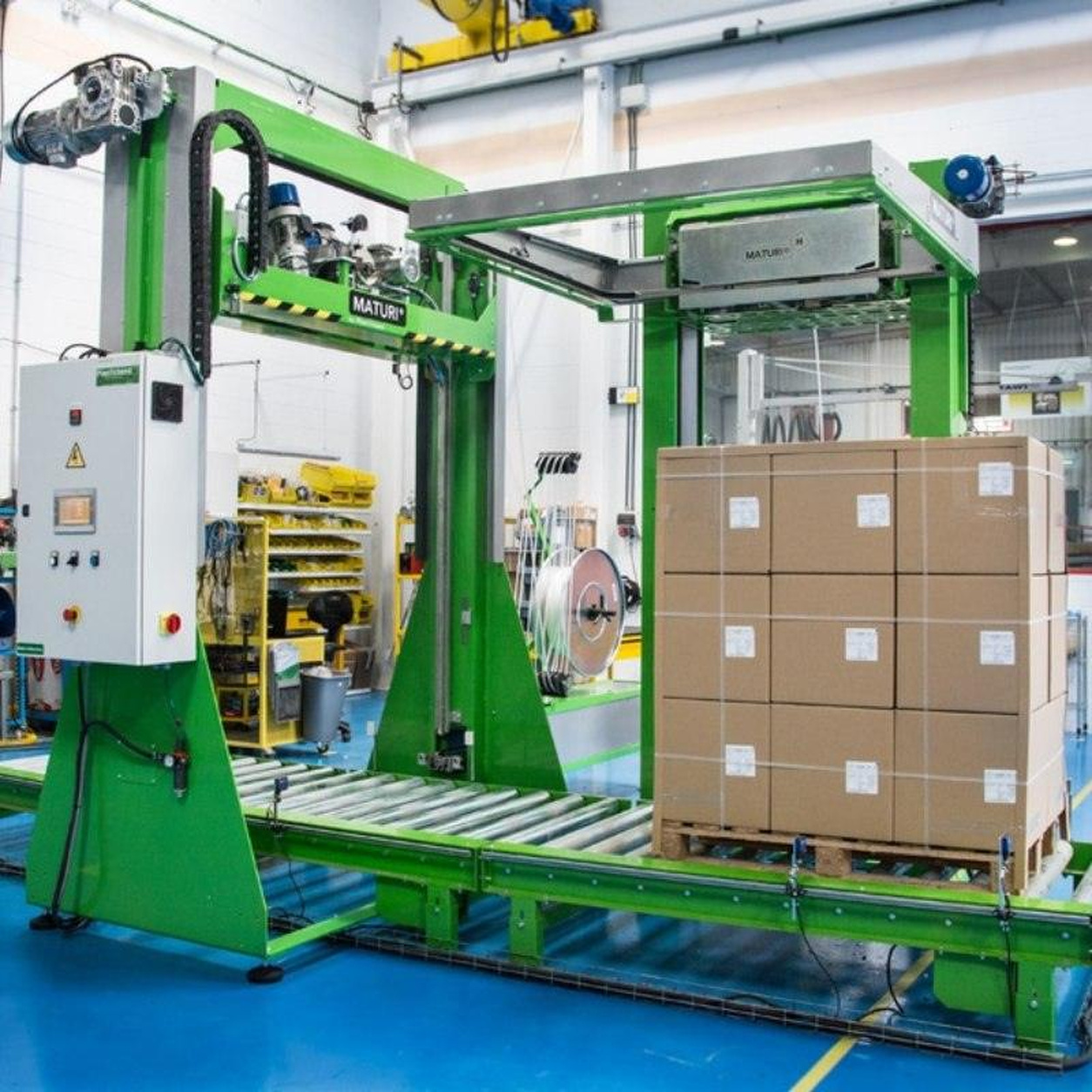
Top pressers and automatic corner board applicators
End of line ready
Inline with your palletiser and stretch wrapper
Ireland-wide support
Specification, install and service from Dublin 11

Pallet strapping machines explained

What strapping does that wrapping does not

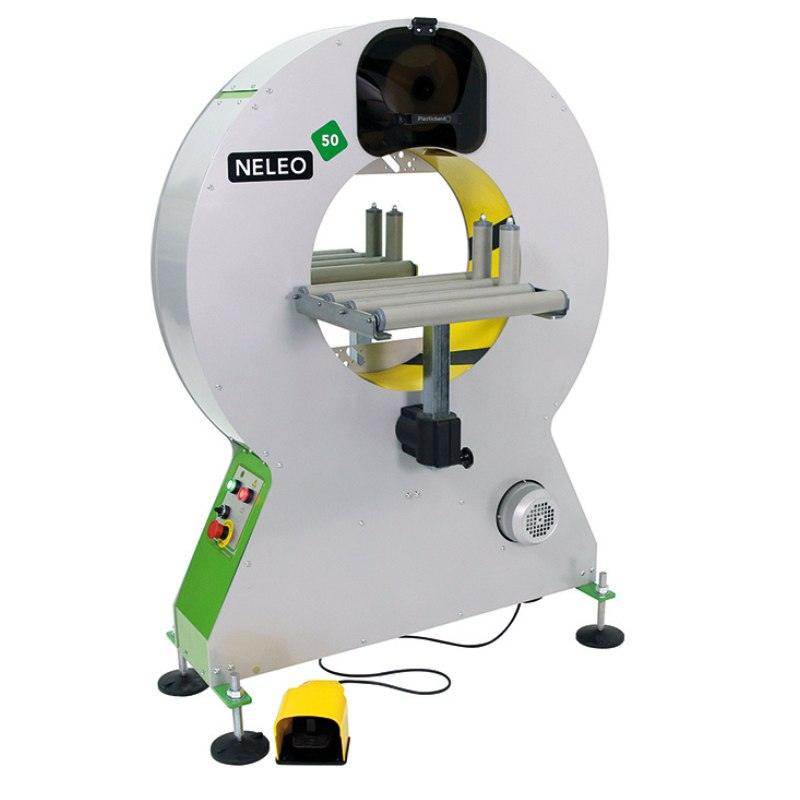
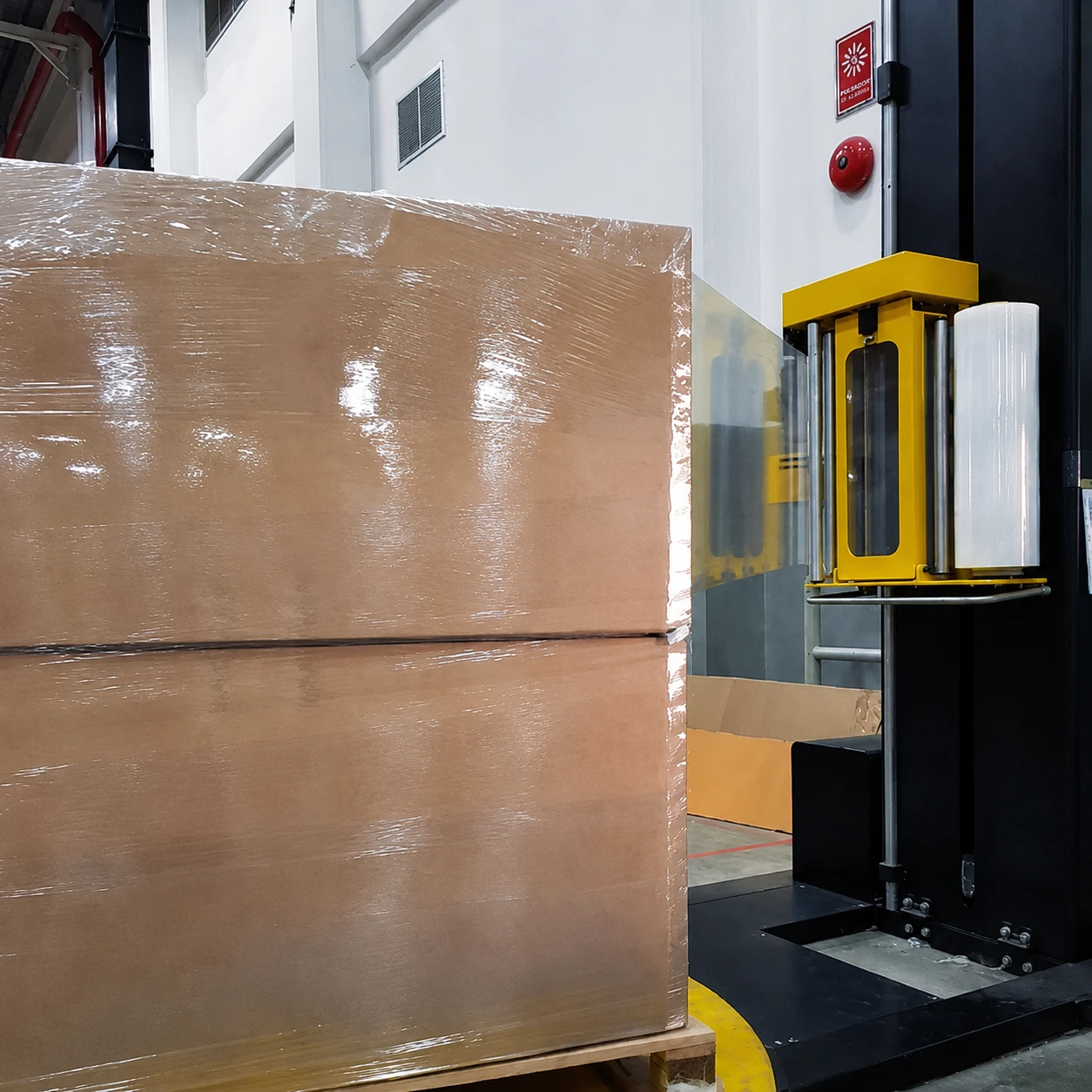
Stretch film holds a load together by containment: it squeezes the whole stack inwards. Strapping does something different, applying concentrated tension along a line, which is what actually stops courses sliding against each other and holds a load down onto its pallet. On heavy or dense pallets the two are used together, with straps doing the holding and film doing the covering. Where the job is film rather than strap, that is pallet wrappers.

01

PP or PET strap

Polypropylene suits light and medium loads and is the everyday choice. Polyester holds higher tension and resists creep, which matters when a load will sit in a warehouse or a container for weeks and the strap has to still be tight at the far end rather than just tight on the day. Common widths run from around 9 mm to 19 mm depending on the head model, and width and gauge are matched to load weight and how stable the stack is.
02

Strap positions and tension

Single, double or multiple straps can be applied with programmable positions, so a load that needs two straps one way and one the other is a recipe rather than a rebuild. Tension is electronically adjustable with recipe recall per SKU or load type, and sensors verify strap presence and cut quality so a missed or badly cut strap is caught at the machine rather than at the customer.

03

Protecting the load while you tension it

Tension is only useful up to the point where it starts crushing the product. Top pressers compress the stack before the strap is tensioned, which takes the slack out without loading the cartons, and automatic corner board applicators spread the strap force across the edges so you can pull harder without marking the corners. Those two accessories are usually what makes the difference between a strap that holds and a strap that cuts in.

04

Inline at the end of line

An automatic strapper sits in the line and takes pallets as they come, with PLC I/O or fieldbus handling interlocks, recipe calls, alarms and line stop and start coordination with whatever feeds it. That is normally a palletiser upstream and a wrapper downstream, so the strapper has to match their rate rather than set its own. Where the pallet is being built as well as strapped, that is palletising.

05

Harsh and cold environments

Sealed enclosures, heaters and dust protection can be specified where the machine sits in a cold store or a dusty area, and stainless options are available for harsher environments. It is worth settling this early, because the enclosure decision affects the frame and the access panels rather than being something bolted on later.

06

Traceability

Cycle counts, strap positions and faults can be logged, with an optional link to WMS or MES for pallet IDs and despatch records. Where the pallet also needs a label before it leaves, print and apply labellers handle the SSCC and despatch labelling.

The machines and the support behind them

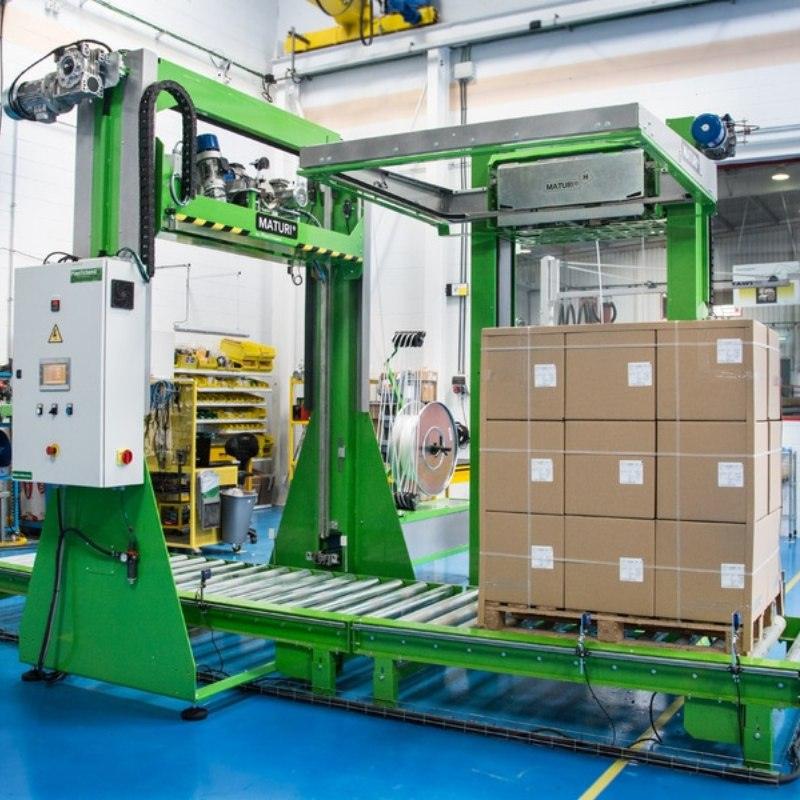
These are Plasticband machines. Plasticband have designed, manufactured and installed strapping equipment since 1978, and their MATURI range is the automatic pallet strapping side of the business. LVP Automation specifies, installs and supports them from Finglas, Dublin 11, across Ireland and Northern Ireland as part of our wider automation services.

Specification

Strap materials
PP for light and medium loads; PET where higher tension and creep resistance are needed
Strap widths
Commonly 9 mm to 19 mm depending on head model, matched to load weight and stability
Straps per pallet
Single, double or multiple straps with programmable positions per load type
Tension
Electronically adjustable with recipe recall per SKU; sensors verify strap presence and cut quality
Load protection
Top pressers to compress the stack and automatic corner board applicators to spread strap force
Integration
PLC I/O or fieldbus for interlocks, recipe calls, alarms and line stop and start coordination
Environment
Sealed enclosures, heaters and dust protection for cold or dusty areas; stainless options available
Traceability
Cycle counts, strap positions and faults logged, with an optional link to WMS or MES
Manufacturer
Plasticband, designing and installing strapping equipment since 1978; MATURI automatic pallet strapping range
Sizing
Matched to the rate of the palletiser upstream and the wrapper downstream

Where Pallet Strappers Excel

Secure, Stable Loads

Apply repeatable strap tension and patterns to prevent shifting, reduce damages and protect product edges during transit and storage.

Fast, Automated Cycles

Inline automatic strapping with top pressers, corner boards and multiple strap positions keeps throughput high at the end of line.

Easy Line Integration

Clean PLC/HMI handshakes to palletisers, turntables and stretch wrappers; trigger print & apply and verification before despatch.

FAQs about Pallet Strappers

Quick answers on strap types, speeds, load protection, integration and upkeep.

Which strap materials are supported?

PP (polypropylene) for light/medium loads and PET (polyester) for higher tension and creep resistance on heavier pallets.

How many straps per pallet can the system apply?

Configurable—single, double or multiple straps with programmable positions; add top pressers for better pack compression.

Can we use corner protectors automatically?

Yes—automatic corner board applicators protect edges and allow higher tension without damaging cartons.

What cycle speeds are typical?

Depends on strap count and accessories; inline systems are sized to match your palletiser/wrapper rate (we’ll confirm secs/pallet).

Does it integrate with our palletiser and wrapper?

Absolutely—standard PLC I/O or fieldbus for interlocks, recipe calls, alarms and line stop/start coordination.

How is strap tension controlled?

Electronically adjustable tension with recipe recall per SKU/load type; sensors verify strap presence and cut quality.

Is the system suitable for cold or dusty areas?

Yes—specify sealed enclosures, heaters or dust protection as needed. Stainless options are available for harsher environments.

What strap widths can we run?

Common widths (e.g., 9–19 mm) depending on head model; we’ll match width/gauge to load weight and stability targets.

What maintenance is required?

Routine cleaning of strap path, checks on cutters/rollers and periodic head servicing; we provide a preventative plan and spares kit.

Can we capture data for traceability?

Yes—log cycle counts, strap positions and faults; optional link to WMS/MES for pallet IDs and despatch records.

Downloads

Similar Products

Let's Connect

Have a question about our conveyor systems or need a tailored automation solution for your business? Our team at LVP Automation is here to help. Fill out the form below with your details, and we’ll get back to you as soon as possible. Whether you need a quote, technical support, or more information on our products, we’re ready to assist.