Bakery Conveyor Systems

Bakery lines carry product that is soft, often still warm, sometimes sticky, and easily marked — on equipment that has to be cleaned down regularly. LVP Automation builds stainless steel modular belt conveyors for bakery production, moving product between process, cooling and packing without damaging it, and built so the line can actually be cleaned.

Most bakery conveyor problems come down to two things: how product is spaced before it reaches the next machine, and how easily the conveyor can be cleaned. Both are decided at design stage, not afterwards. If you are planning or reworking a line, see conveyor system design. For replacement belting on a line already running, see conveyor belting, and for complete units, modular belt conveyors and plastic belt conveyors. We are based in Finglas, Dublin 11 and work with bakeries across Ireland.
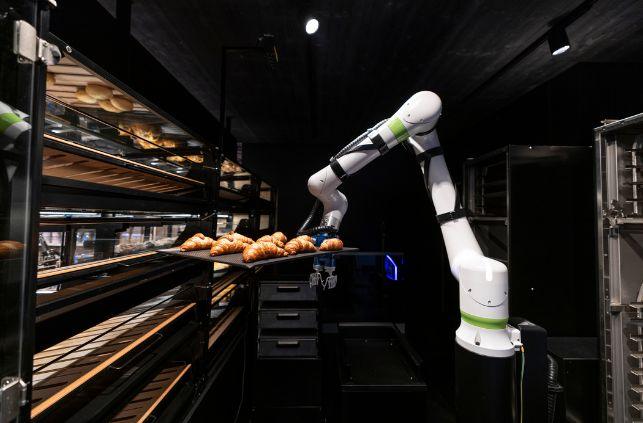
Hygienic Modular Belt Conveyors

Our bakery conveyors are built from stainless steel and run clean plastic modular belt, a combination chosen for washdown rather than for cost. Modular belt can be taken apart and cleaned in sections, and a stainless frame takes repeated cleaning without corroding.

Running successive conveyors at different speeds opens a gap between products, and that gap is what lets the next machine index, inspect or wrap them reliably. Right-angle transfers change direction without dropping product onto an edge, which matters when it is soft or still warm. Both are set at design stage around the product and the rate, and both are difficult to retrofit once the line is in.

What These Conveyors Deliver

Bakery Conveyors

What We Need to Specify a Bakery Line

The useful inputs are the product and the rate. What is being moved, how big and how heavy it is, whether it arrives warm, greasy, floured or sticky, and how easily it marks. Then the throughput you need, the machines either side of the conveyor, and the height and direction changes between them.

After that comes cleaning: how often the line is washed down, with what, and whether it is cleaned in place or stripped down. That decides belt material, frame construction and how the transfers are built. A conveyor specified without knowing the cleaning regime is the one that corrodes, or that traps product where nobody can reach it.

Common Questions

Can the conveyors be washed down? That is what the stainless frame and plastic modular belt are for. How far you can go depends on the regime — a daily caustic wash is a different specification from a wipe-down between runs, so it is worth being specific about what actually happens on your line.

How do you create a gap between products? By running the next conveyor faster than the one feeding it. The difference in speed pulls product apart, and the size of the gap follows from the ratio between the two. It is the simplest way to give the next machine something it can index on.

Can product be turned through 90 degrees without damaging it? Yes, with a right-angle transfer designed for the product. The risk with soft or warm product is the edge it lands on, so the transfer detail matters more than the conveyor either side of it.

Can you replace belting on conveyors we already have? Yes, including conveyors from other suppliers. Belt width, length and joint type, plus a photo of the wear, is usually enough to work from. See conveyor belting.

Do you work on lines you did not install? Yes. A good share of our work is on equipment supplied by somebody else.

Where do you cover? We are based in Finglas, Dublin 11 and work with customers across Ireland.

Let's Connect

Have a question about our conveyor systems or need a tailored automation solution for your business? Our team at LVP Conveyors is here to help. Fill out the form below with your details, and we’ll get back to you as soon as possible. Whether you need a quote, technical support, or more information on our products, we’re ready to assist.

Need more help?

Free Consultation

+353 1 864 3838