Spiral Conveyors

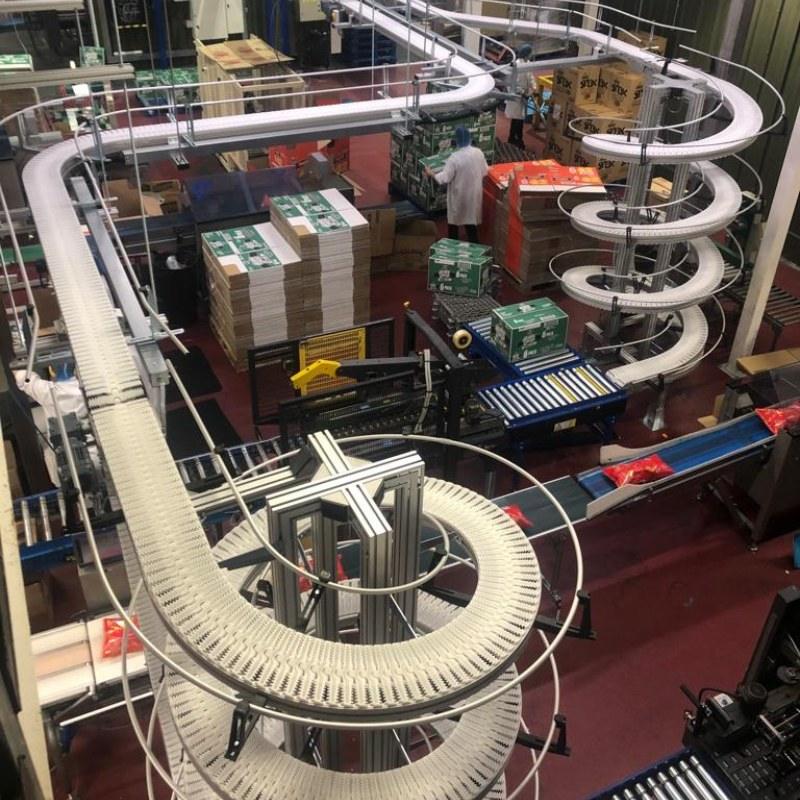
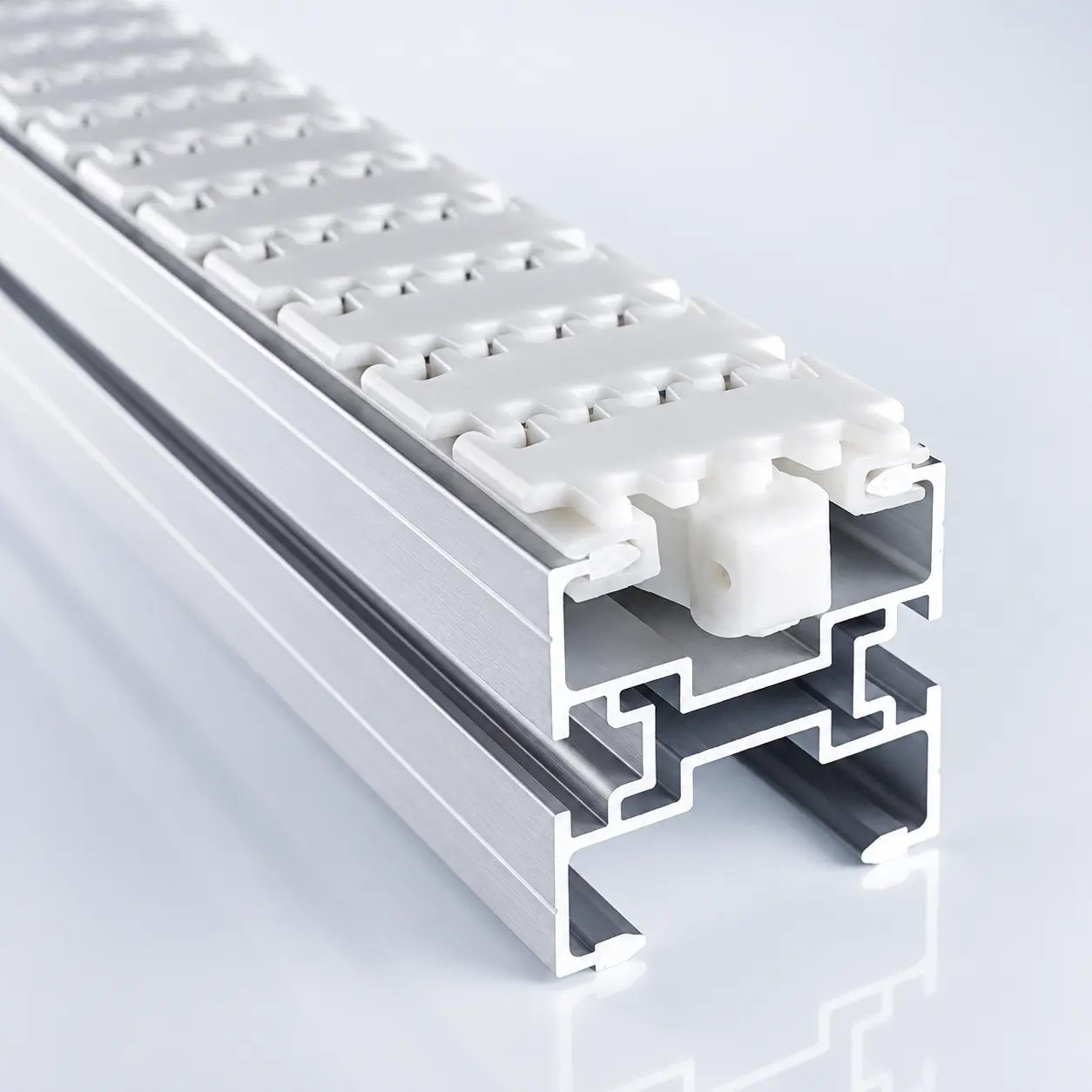
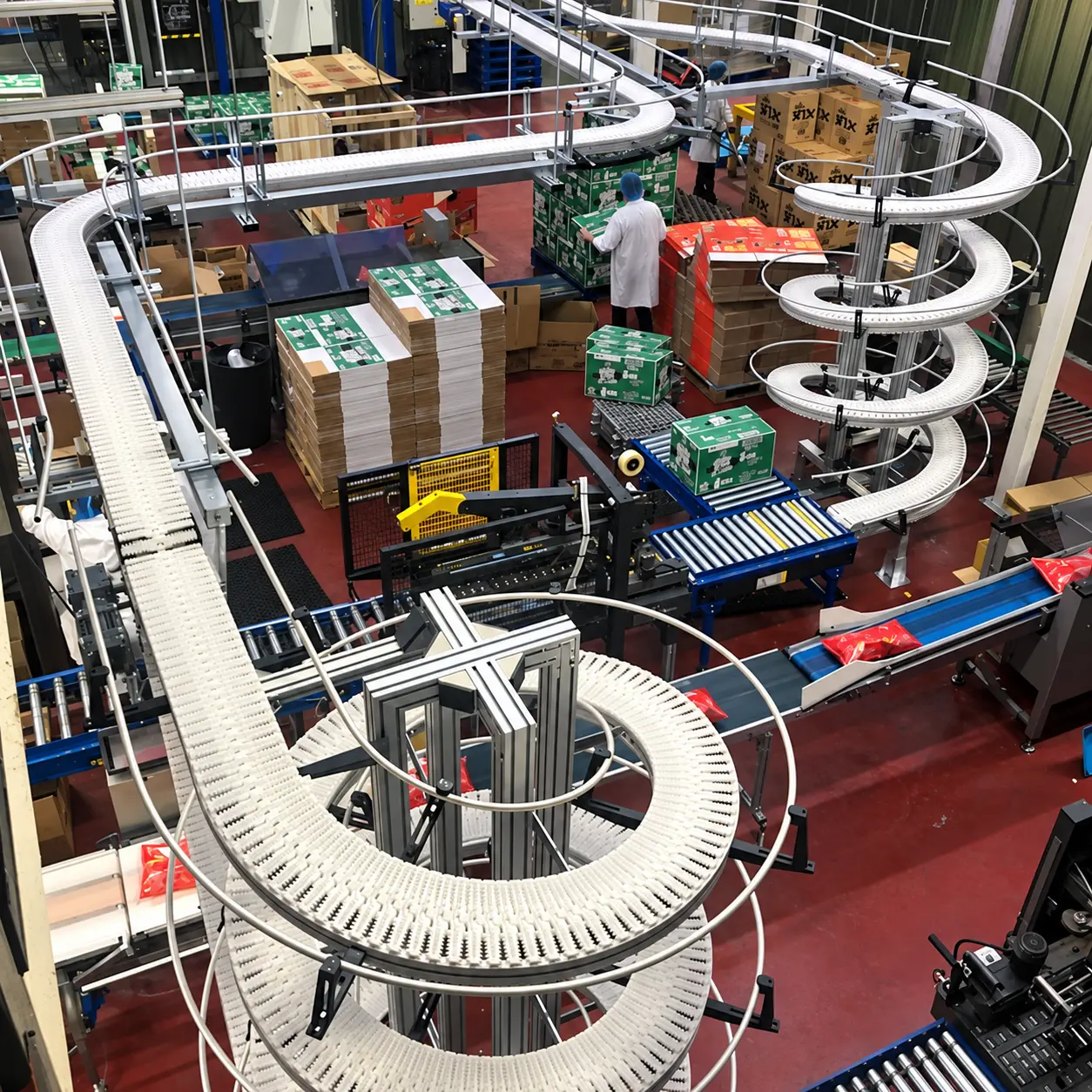
Spiral conveyors lift product between levels in a compact footprint, wrapping the chain around a column instead of running a long incline across the floor. Carryline 83, 140 and 220 mm chain in anodised aluminium or stainless steel V2A, from a 400 mm minimum radius, up to about 50 m/min. Modular, few moving parts and low maintenance.

Models
S830 to S560
Chain widths
83, 140, 220 mm
Minimum radius
400 or 600 mm
Maximum speed
About 50 m/min
Maximum incline
14 degrees
Radius sized from your product lengthStainless where washdown demands it

Spiral conveyors explained

What a vertical spiral conveyor buys you over an incline

A spiral takes product up or down by wrapping the conveyor around a column instead of running it out across the floor. The saving is real: a long incline at a shallow angle needs metres of floor to gain a metre of height, and in a crowded production hall that floor is usually the scarcest thing you have. A spiral reclaims it. That is the whole argument, and it is why spirals turn up in packing halls and between mezzanine levels rather than in wide open warehouses where a straight incline would be cheaper.

01

The Carryline spiral range

The range splits by material. Aluminium execution is the S830, S140 and S220; stainless steel V2A execution is the S530, S540 and S560. Chain widths are 83 mm, 140 mm and 220 mm across the two, so the choice is really width first and material second. Minimum radius is 400 mm, or 800 mm diameter, on the S830 and S530 and on the S140 and S540, rising to 600 mm, or 1,200 mm diameter, on the S220 and S560. Wider chain, bigger footprint: the 220 mm chain needs half again as much space around the column.

02

Radius is set by your product, not the machine

Carryline publish a sizing rule worth knowing before you plan a layout: radius equals product length multiplied by 1.5. A 400 mm product therefore needs a 600 mm radius, not the 400 mm minimum the chain will physically turn. This catches people out, because the minimum radius in the datasheet is a property of the chain and the working radius is a property of your product. Bring the longest thing you convey to the first conversation and the footprint you are quoted will be the one you actually need.

03

Speed, incline and what depends on the product

Maximum speed is approximately 50 m/min, and the wider Carryline system runs between 5 and 50 m/min with higher or lower on request. The chain twists up to 14 degrees in helical curves, which sets the incline. Carryline are explicit that maximum radius, number of turns, speed and in-decline all depend on the product specification rather than being fixed catalogue limits, so those four are settled by what you are lifting and how it behaves, not by a table. Noise stays under 70 dB(A) below 50 m/min.

04

Aluminium or stainless

Choose stainless for hygienic and washdown environments and anodised aluminium for general manufacturing where wipe-down cleaning is enough. It is a build decision rather than a finish, so make it at specification stage. The system runs from -20 C to +60 C as standard with higher or lower on request, which covers chilled areas as well as normal ambient. Food-approved plastic chain is available where product contact matters.

05

Products, stability and spacing

Typical products are bottles, cans, jars, cartons, pouches and small packs, the kind of items that benefit from guided transport and stable elevation. Stability on the spiral comes from continuous slat support, side guides and matched speeds, so product neither tips nor scuffs on the way round. Spacing is managed with guides and upstream control rather than on the spiral itself, which is the right place for it: a spiral is an elevator, not a buffer, and asking it to accumulate is how you get pressure marks on the outside of the curve.

Cleaning, maintenance and integration

Open access and smooth surfaces make cleaning straightforward, and the stainless versions support stricter hygiene routines. Maintenance is routine inspection of chain tension, wear strips and guides plus periodic cleaning, and there is not much more to it because there are few moving parts and the components are standardised across the range. The spiral interfaces cleanly with the rest of the line, including case packers, palletisers, vision, labelling and checkweighers, with PLC and HMI handshakes. One honest caveat: for very steep point-to-point lifts that also need buffering, a lift-style vertical conveyor may suit better than a spiral. LVP Automation specifies, installs and supports Carryline spiral conveyors from Finglas, Dublin 11 as part of our wider automation services.
Specification

Models
S830, S140 and S220 in aluminium; S530, S540 and S560 in stainless steel V2A
Chain widths
83 mm, 140 mm and 220 mm
Minimum radius
400 mm (800 mm diameter) on S830/S530 and S140/S540, 600 mm (1,200 mm diameter) on S220/S560
Maximum speed
Approximately 50 m/min, with the wider Carryline system running 5 to 50 m/min
Maximum incline
14 degrees of chain twist in helical curves
Radius sizing
Product length x 1.5, so a 400 mm product needs a 600 mm radius
Materials
Anodised aluminium or stainless steel V2A, with food-approved plastic chain available
Temperature
-20 C to +60 C, higher or lower on request
Noise
Under 70 dB(A) at speeds below 50 m/min
Products handled
Bottles, cans, jars, cartons, pouches and small packs

Where Spiral Conveyors Excel

Tight Footprints, Multi-Level Flow

Lift products between levels without long inclines. Reclaim floor space and simplify layouts in crowded production areas.

Low Upkeep, High Uptime

Standardised components and simple mechanics keep maintenance light, lowering total cost of ownership.

Hygienic or General Duty

Choose stainless for washdown/hygiene or aluminium for general manufacturing, both are modular and easy to adapt as needs change.

FAQs about Spiral Conveyors

Quick answers on capacity, products, hygiene options, integration and maintenance.

What products can a spiral conveyor handle?

Bottles, cans, jars, cartons, pouches and small packs that benefit from guided transport and stable elevation.

How much space does it save vs. an incline conveyor?

Spirals use vertical height, often reclaiming several metres of floor space compared to long inclines with the same elevation.

Can it run continuously?

Yes, spiral conveyors are designed for smooth, continuous elevation; spacing is managed via guides and upstream controls.

Aluminium or stainless, how do I choose?

Stainless for hygienic/washdown environments; aluminium for general manufacturing where wipe-down cleaning is sufficient.

What are typical load and speed ranges?

Depends on chain width, pitch and elevation. We size speed and drive to your product weight, spacing and throughput targets.

Is the system easy to clean?

Yes, open access and smooth surfaces simplify cleaning. Stainless versions support stricter hygiene routines.

Can the spiral integrate with other equipment?

Absolutely, interfaces cleanly with conveyors, case packers, palletisers, vision, labelling and checkweighers, with PLC/HMI handshakes.

How is product stability maintained on the spiral?

Continuous slat support, side guides and matched speeds ensure smooth transfer without tipping or scuffing.

What maintenance is required?

Routine inspection of chain tension, wear strips and guides; periodic cleaning. Few moving parts keep maintenance minimal.

When should I consider another elevator type?

For ultra-steep, point-to-point lifts with buffering needs, a lift-style vertical conveyor may suit better; for extreme hygiene, consider specific modular belt elevators.

Downloads

Similar Products

Let's Connect

Have a question about our conveyor systems or need a tailored automation solution for your business? Our team at LVP Automation is here to help. Fill out the form below with your details, and we’ll get back to you as soon as possible. Whether you need a quote, technical support, or more information on our products, we’re ready to assist.