Automated Storage and Retrieval Systems (ASRS)

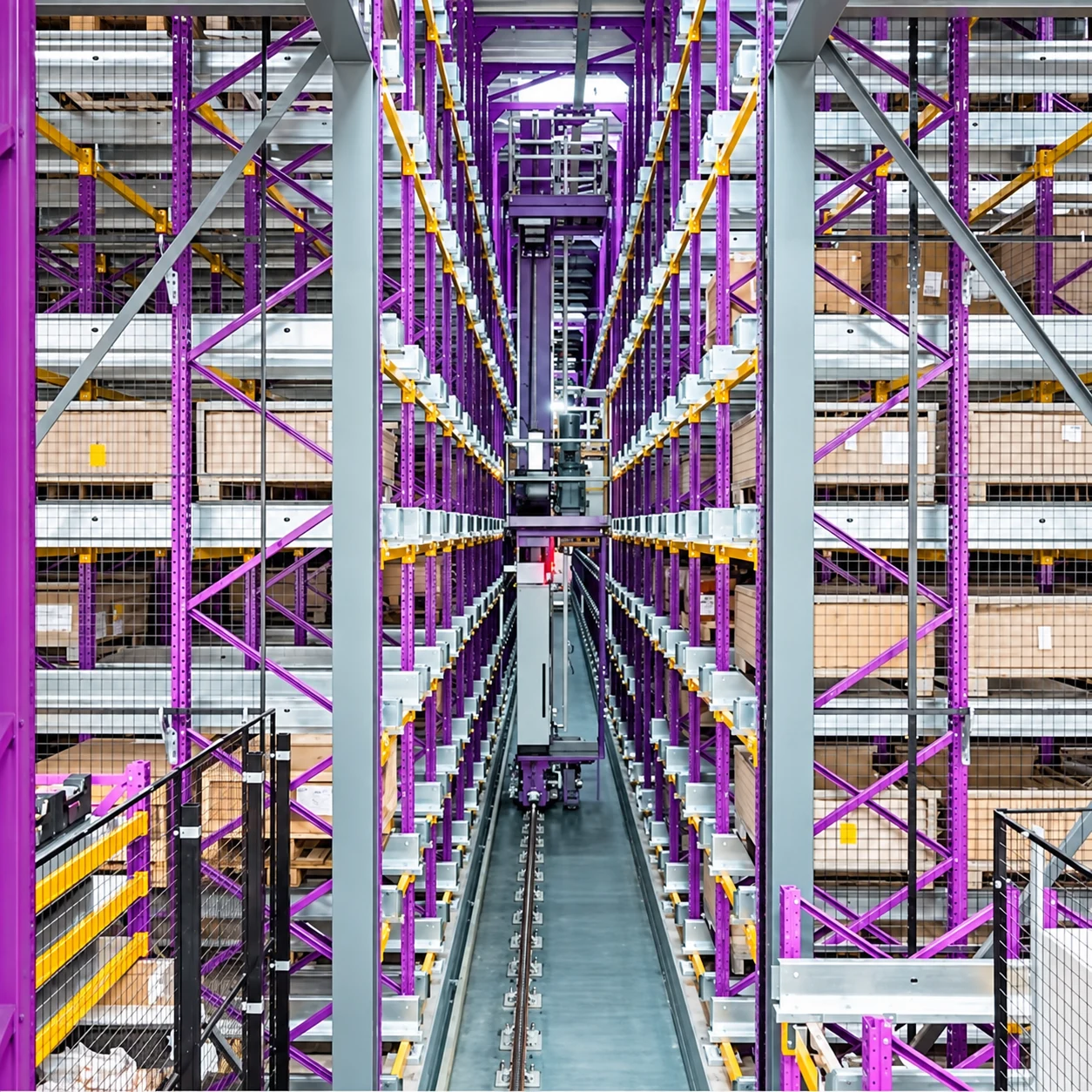
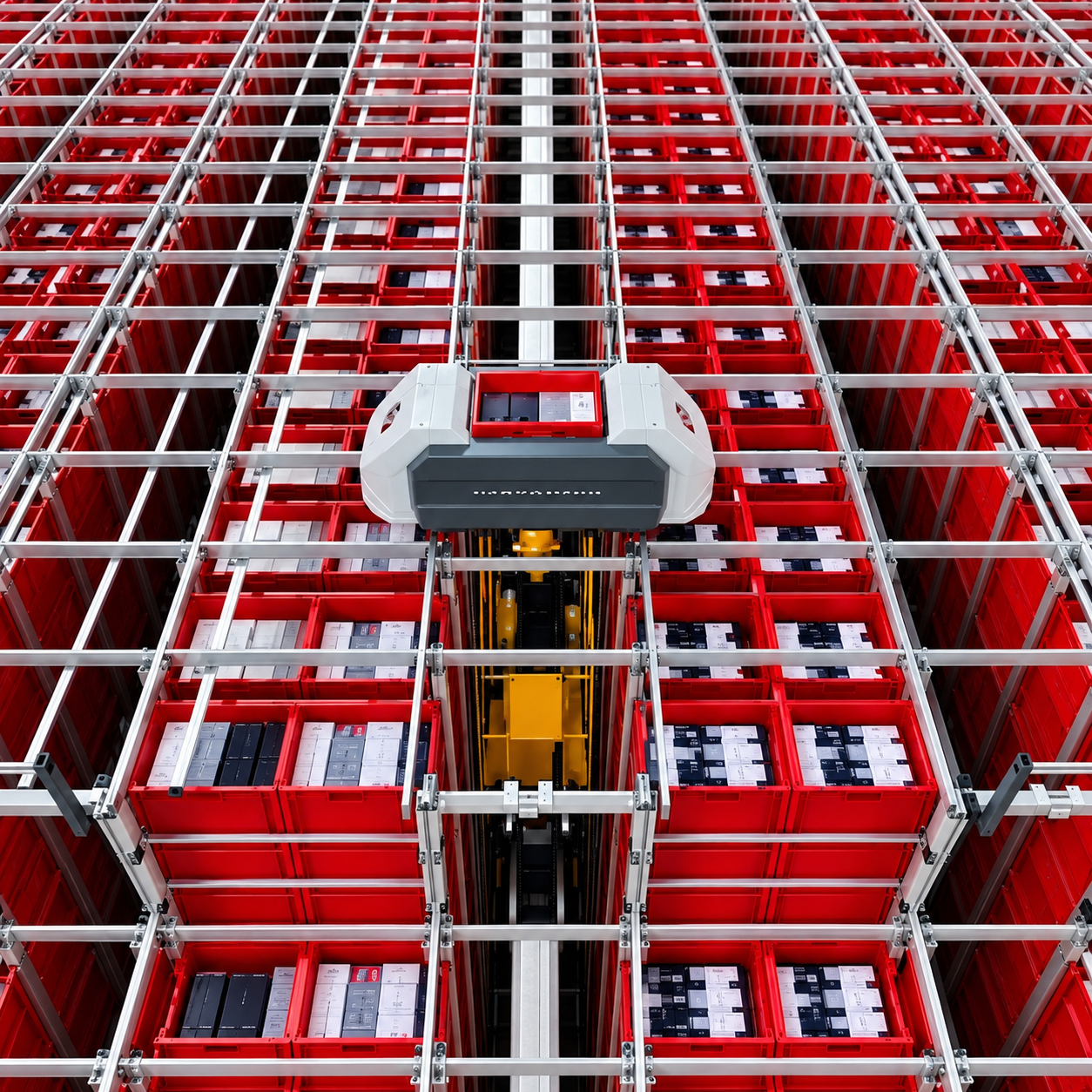
Engineered for high-density warehousing, these automated Storage and Retrieval Machines (SRMs) offer efficient handling and storage of both palletised and non-palletised goods. Designed to enhance workflow efficiency, SRMs operate at high speeds to streamline storage and retrieval processes. With customisable configurations, advanced safety features, and energy-efficient designs, these systems are ideal for optimising space, reducing operational costs, and supporting sustainability in modern warehouses.

Machine types
714 to 718, Cheetah, 748
Load capacity
50 kg to 2,500 kg
Lift height
Up to 24 m
Travel speed
Up to 6.5 m/s
Hoist speed
Up to 3 m/s
Aisle and cycle time modelled before you orderSpecified, installed and supported from Dublin 11
Heights to 24 m
Storage height instead of extra floor space
50 kg to 2,500 kg
Tote, carton and pallet capacity classes
Up to 6.5 m/s
Cheetah Speed travel with matched acceleration
Ireland-wide support
Specification, install and service from Dublin 11

Automated storage and retrieval explained

Height is the cheapest floor space you own

An AS/RS earns its keep by going up rather than out. GEBHARDT machines run from 7.5 m to 22 m on the type 714 to 718 range, and pallet systems reach 24 m. Where a conventional forklift operation needs aisle width to turn, a rail-guided machine needs only its own body plus clearance, so the same footprint holds far more pallets. The building you already have is usually the cheapest warehouse you will ever buy.

01

Capacity classes, and why the choice matters early

These are not one machine scaled up and down. The type 714 to 718 machines carry 50 to 500 kg for totes, trays and cartons. The Cheetah carries 120 kg but moves fast. Pallet ASRS type 748 takes up to 2,500 kg, and the curve-going version up to 2,000 kg. Picking the class is really picking the unit load, and changing your mind later means changing the racking, not just the crane.
02

Speed, and where cycle time actually goes

The type 714 to 718 machines travel at 4 to 5 m/s with a 3 m/s hoist, and the Cheetah reaches 5 m/s on the Eco and 6.5 m/s on the Speed, with acceleration to match. Top speed matters less than you would think, though: on a short aisle the machine spends most of its time accelerating and decelerating, which is why acceleration figures and aisle length together predict cycle time better than velocity alone.

03

Single deep or double deep

Single deep gives the fastest access, because every location is reachable directly. Double deep raises density but means occasionally moving one pallet to reach another. The right answer comes from SKU velocity: fast movers single deep, slow movers double deep. That modelling is worth doing properly at design stage, because it sets both the capacity you get and the throughput you can sustain.

04

Shuttles instead of cranes

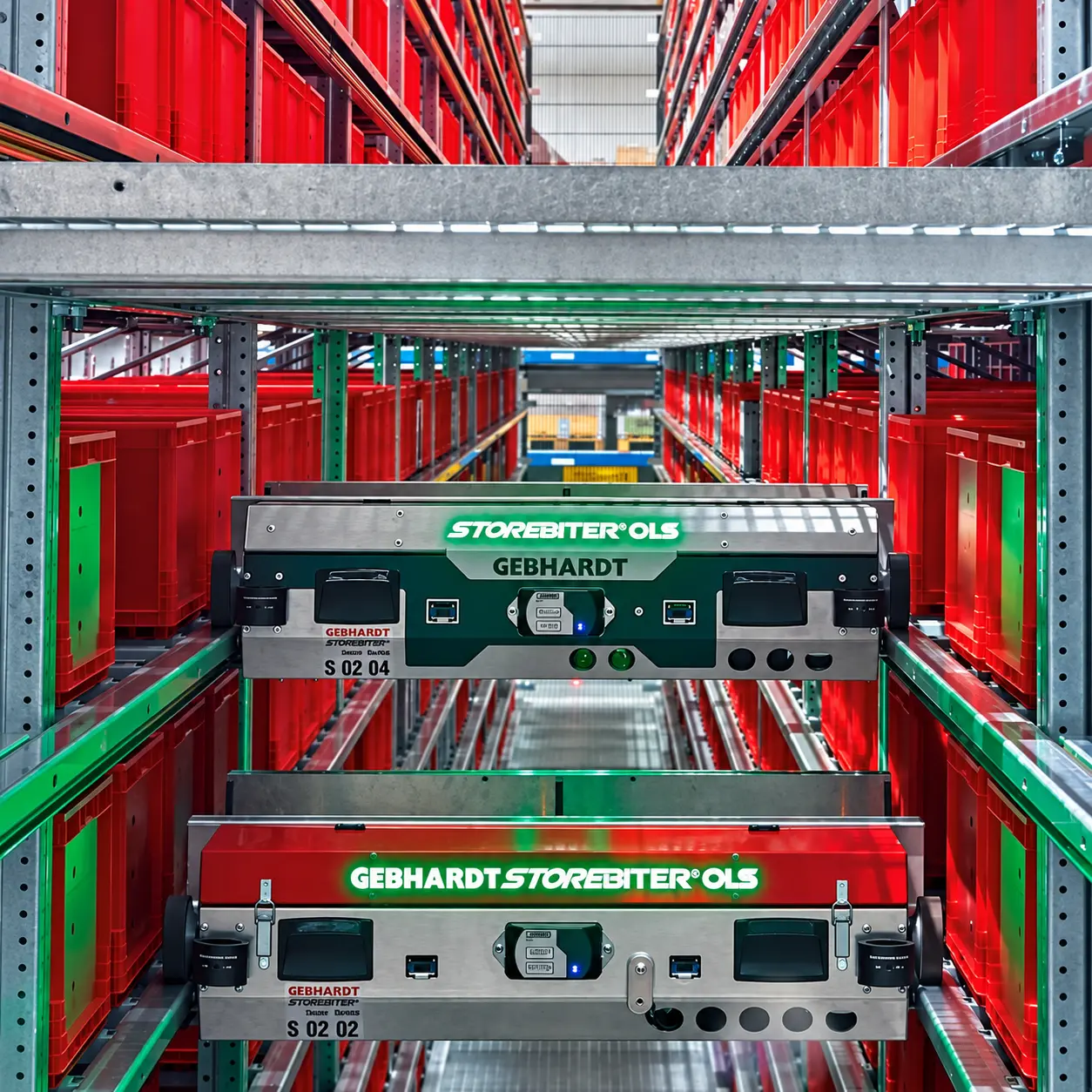
Where the requirement is many small movements rather than deep storage, shuttle systems often beat a crane. The StoreBiter 300 MLS is multi-level at 2 x 50 kg and 4 m/s, the 300 OLS runs one level at 2 x 50 kg and 3 m/s, and the StoreBiter 500 handles 1,500 kg at 1.5 m/s. A shuttle per level removes the single point of contention a one-crane aisle creates.

05

Awkward layouts and cold stores

A curve-going machine handles up to 2,000 kg and can serve more than one aisle, which suits buildings that are not a neat rectangle or where a dedicated machine per aisle cannot be justified. The lifting beam type 720 covers open widths to 10 m and heights to 24 m at 120 kg. Ambient, chilled and some freezer applications are all workable with the right components and insulation, though the temperature has to be on the table from the start.

06

Energy, safety and redundancy

Regenerative braking recovers energy on deceleration and smart motion profiles reduce consumption, with idle and eco modes trimming overnight use. Safety is guarded aisles, access control, e-stops, anti-collision, load sensors and certified safety PLCs to CE. Redundancy is the question people forget: bypass aisles, a spare machine, dual infeed and outfeed stations and a resilient WCS strategy are what keep you shipping when one machine is down.

Software, expansion and support

A WCS interface handles tasks, confirmations, inventory updates, exceptions and dashboards between the machines and your WMS or ERP. Expansion means adding machines, aisles or levels, with the control software supporting staged upgrades rather than a rebuild. Upstream and downstream this typically connects to warehouse robotics and sorting technology. LVP Automation specifies, integrates and supports storage systems from Finglas, Dublin 11 as part of our wider automation services.

Specification

Machine types
GEBHARDT type 714 to 718 storage and retrieval machines, Cheetah Eco and Cheetah Speed, and pallet ASRS type 748
Load capacity
50 to 500 kg on type 714 to 718, 120 kg on the Cheetah, up to 2,500 kg on pallet type 748
Lift height
7.5 m to 22 m on type 714 to 718, up to 24 m on pallet systems
Travel speed
4 to 5 m/s on the x-axis, up to 6.5 m/s on the Cheetah Speed
Hoist speed
Up to 3 m/s on the y-axis
Acceleration
1.5 to 3 m/s² on type 714 to 718, 5 m/s² on the Cheetah Eco and 6.5 m/s² on the Cheetah Speed
Cheetah range
Eco at 120 kg, 18 m and 5 m/s. Speed at 120 kg, 12 m and 6.5 m/s
Shuttle options
StoreBiter 300 MLS at 2 x 50 kg and 4 m/s, 300 OLS at 2 x 50 kg and 3 m/s, StoreBiter 500 at 1,500 kg and 1.5 m/s
Curve-going machine
Up to 2,000 kg, able to serve more than one aisle
Lifting beam type 720
120 kg, open width up to 10 m and height up to 24 m

Where AS/RS Excels

High-Density Pallet & Case Storage

Maximise capacity with tall bays, single/double-deep options and tailored load handling devices for pallets, trays and cartons.

Throughput & Workflow Balance

Fast cycle times and intelligent buffering ensure steady feeds to picking, packing and despatch, reducing bottlenecks end-to-end.

Smart, Sustainable Operations

Energy-saving drives, regenerative systems and optimised travel paths cut utility costs and support your sustainability targets.

FAQs about AS/RS

Key answers on loads, layouts, software, energy use, expansion and maintenance.

What load types can AS/RS handle?

Pallets (Euro/CHEP), totes, trays and suitably rigid cartons, matched to load handling devices and aisle design.

Single- vs double-deep, how do I choose?

Single-deep gives fastest access; double-deep increases density with minor access trade-offs. We model SKU velocity to decide.

How fast is an SRM?

Cycle time depends on lift/drive speeds, aisle length and load. We size the system to your required lines/hour and service levels.

Can it integrate with my WMS/ERP?

Yes, via a WCS interface for tasks, confirmations, inventory updates, exceptions and dashboards.

What safety features are included?

Guarded aisles, access control, e-stops, anti-collision, load sensors and certified safety PLCs, compliant with CE standards.

How energy-efficient is it?

Regenerative braking and smart motion profiles reduce consumption; idle/eco modes trim overnight usage.

How do we expand later?

Add SRMs, aisles or levels; the control software supports staged upgrades with minimal downtime.

Is it suitable for chilled or ambient warehouses?

Yes, solutions are available for ambient, chilled and some freezer applications with appropriate components and insulation.

What maintenance is required?

Planned inspections of drives, rails and load devices; condition monitoring and remote diagnostics help maintain high availability.

What redundancy options exist?

Bypass aisles, spare SRMs, dual infeed/outfeed stations and resilient WCS strategies maintain service during outages.

Downloads

Similar Products

Let's Connect

Have a question about our conveyor systems or need a tailored automation solution for your business? Our team at LVP Automation is here to help. Fill out the form below with your details, and we’ll get back to you as soon as possible. Whether you need a quote, technical support, or more information on our products, we’re ready to assist.