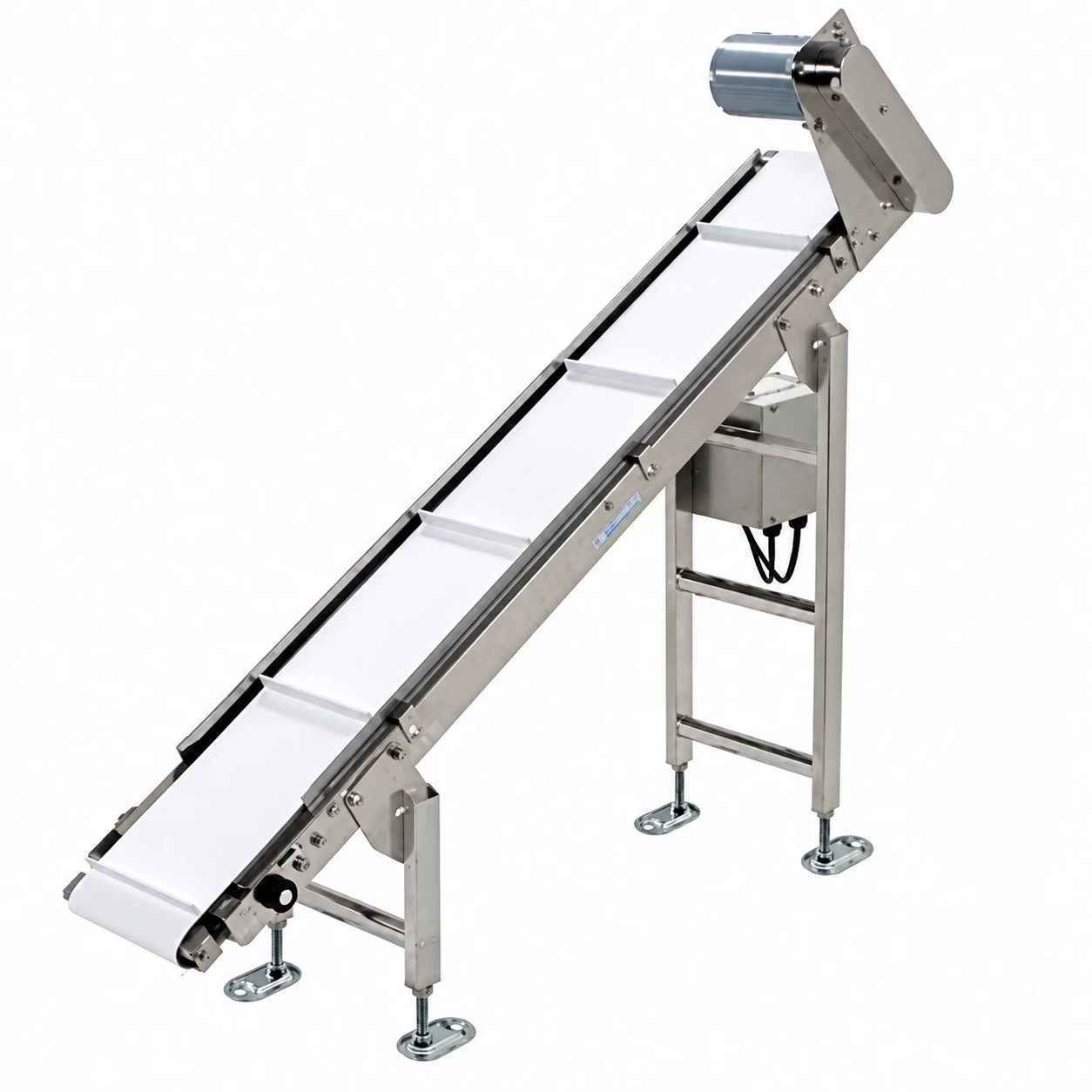
LVP Automation offers a robust selection of modular belt conveyors designed to meet diverse application needs across various industries. With a range of straight, radius, and inclined belt options, these conveyors are crafted from low-maintenance materials like Polypropylene, Polyethylene, Polyoxymethylene, and Polyamide for durability and minimal upkeep. Built with hygiene and durability in mind, our stainless-steel conveyor models are ideal for pharmaceutical and food processing environments, supporting easy cleaning to reduce contamination risk while ensuring lasting performance.
Belt material matched to your productCurves and inclines checked in the layout
Modular belt conveyors explained
What a modular belt actually is
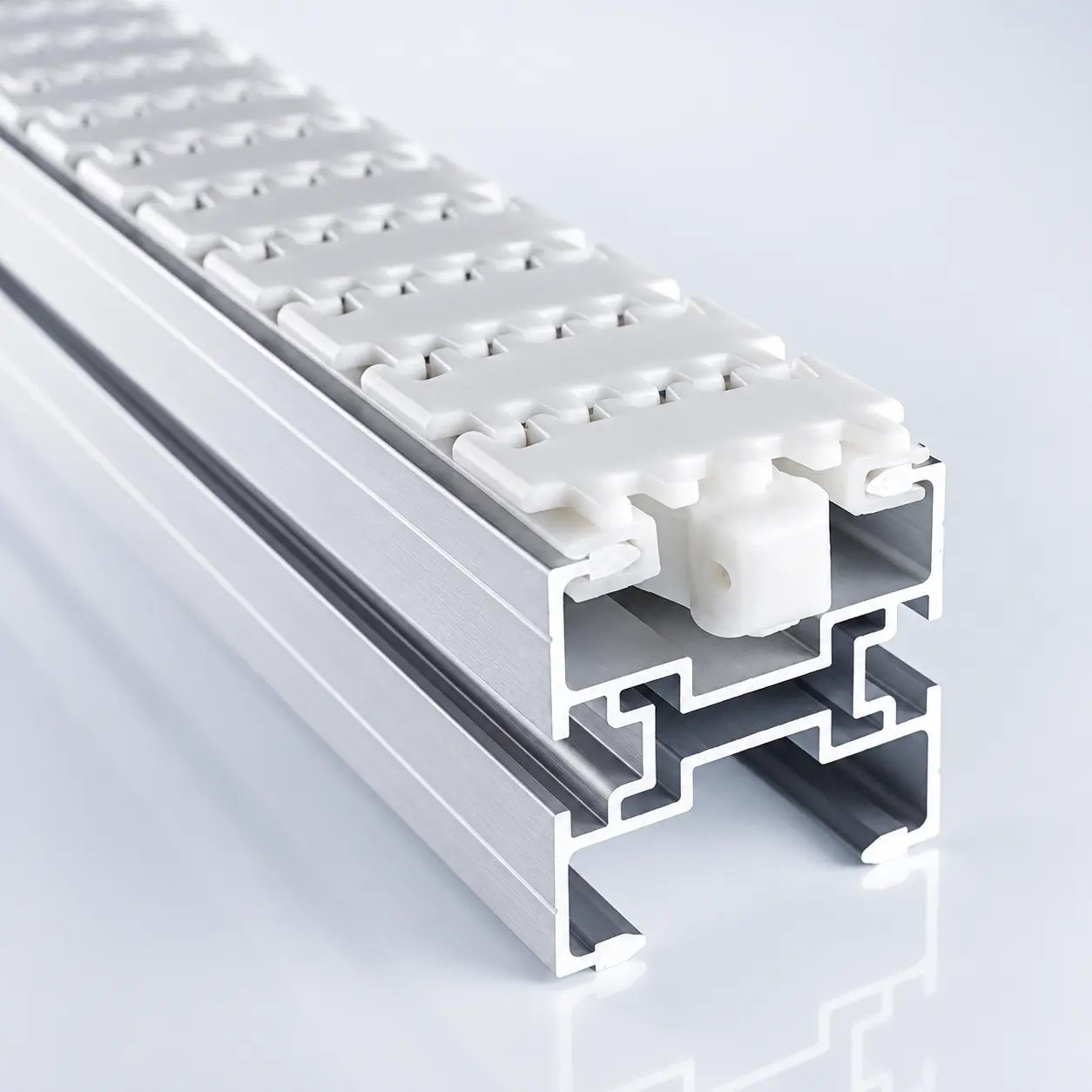
A modular belt is not a single loop of fabric or rubber. It is a mat built from interlocking plastic modules joined by rods, driven by sprockets rather than by friction against a drum. That one construction difference is where every practical advantage comes from: the belt can turn a corner, climb a slope, be washed through, and be repaired a section at a time. LVP Automation build straight, radius and inclined runs from the same module family, so a single belt can do all three in one pass.
01
Positive drive is the reason to choose one
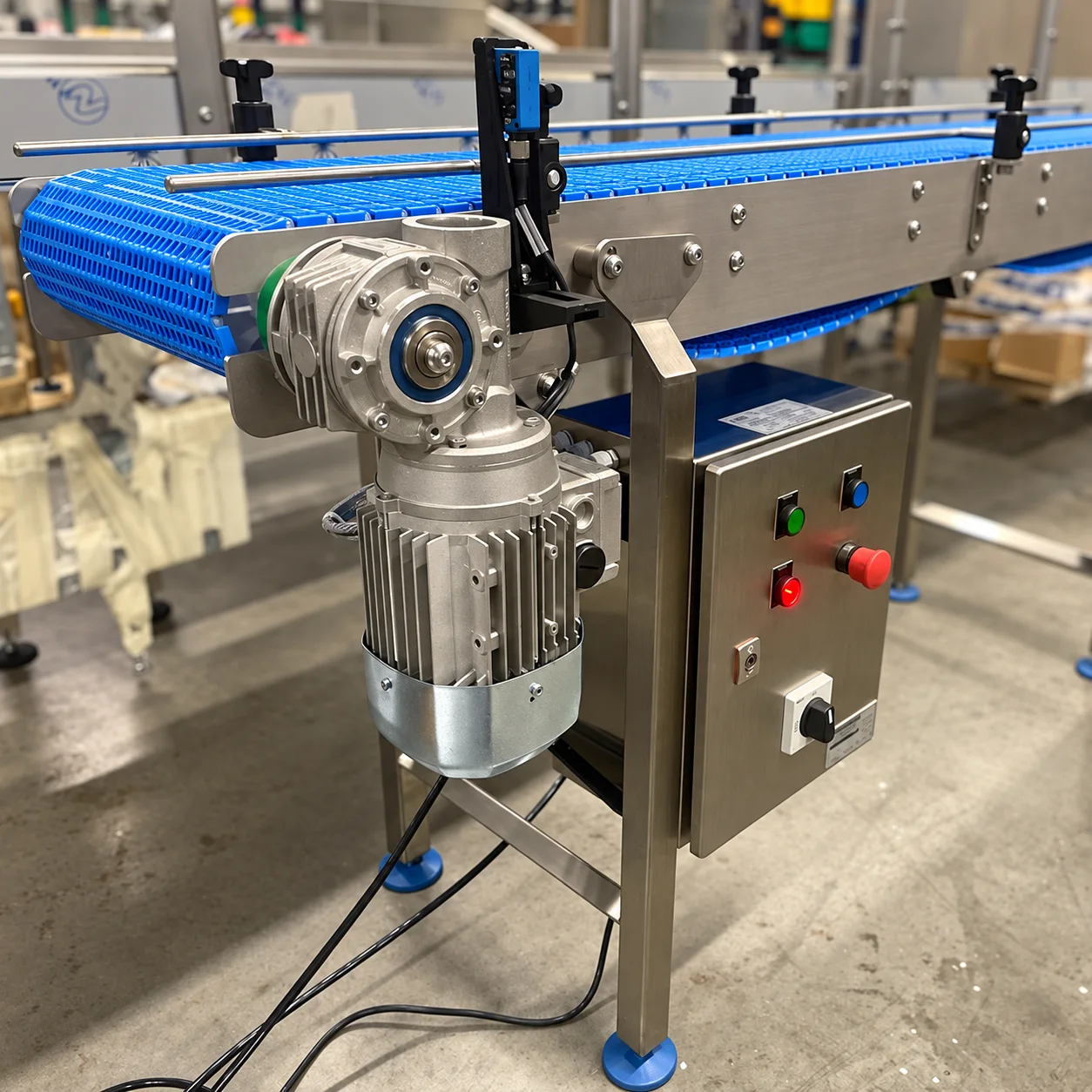
Sprocket teeth engage the modules, so the belt is pulled rather than dragged. It does not slip when the surface is wet, oily or loaded unevenly, and it does not need the tensioning that a friction-driven flat belt does. On a wet line that is the difference between a belt that tracks true all shift and one that wanders and needs adjusting. It also means the belt can be run at low tension, which is easier on bearings and on the frame.
02
Curves without a transfer point
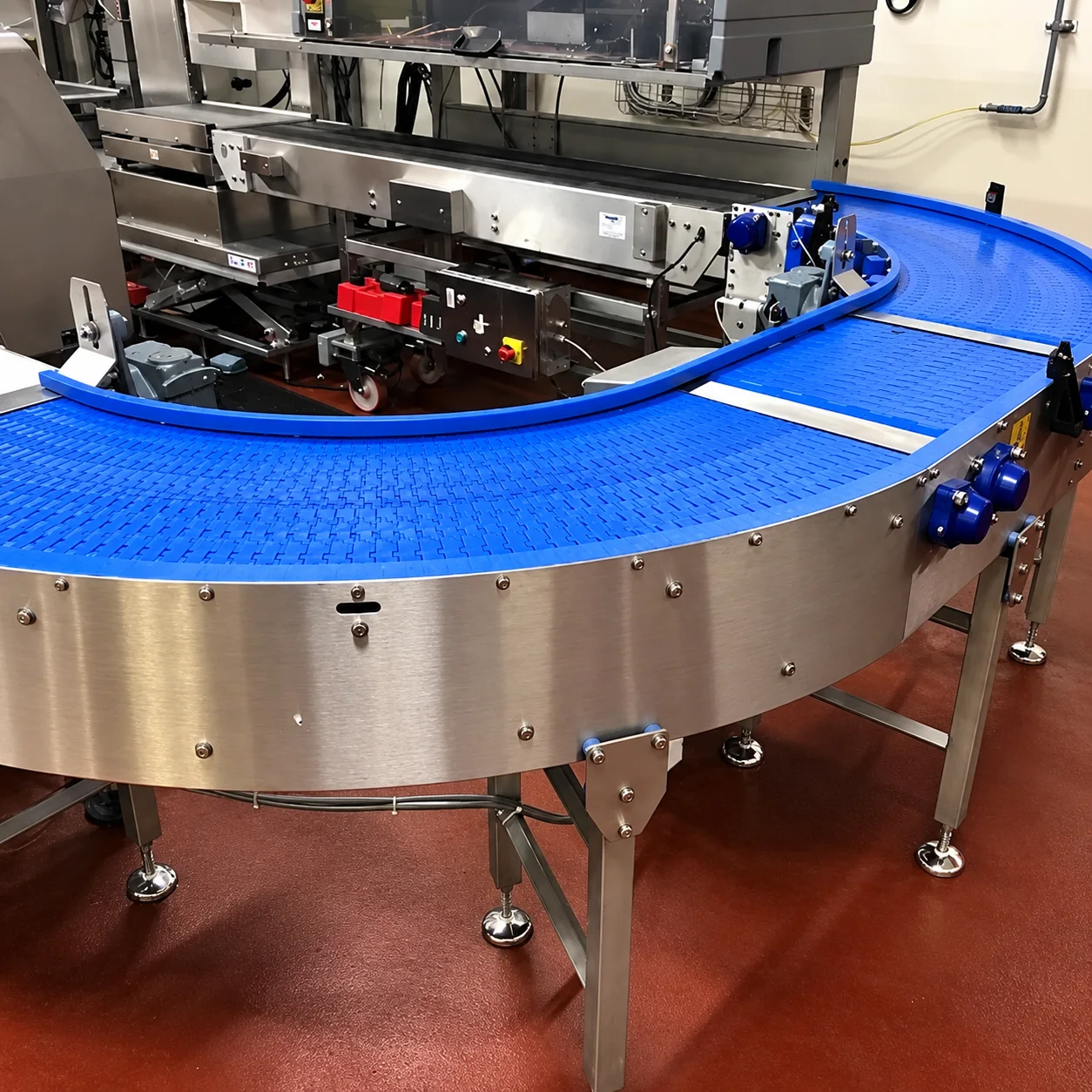
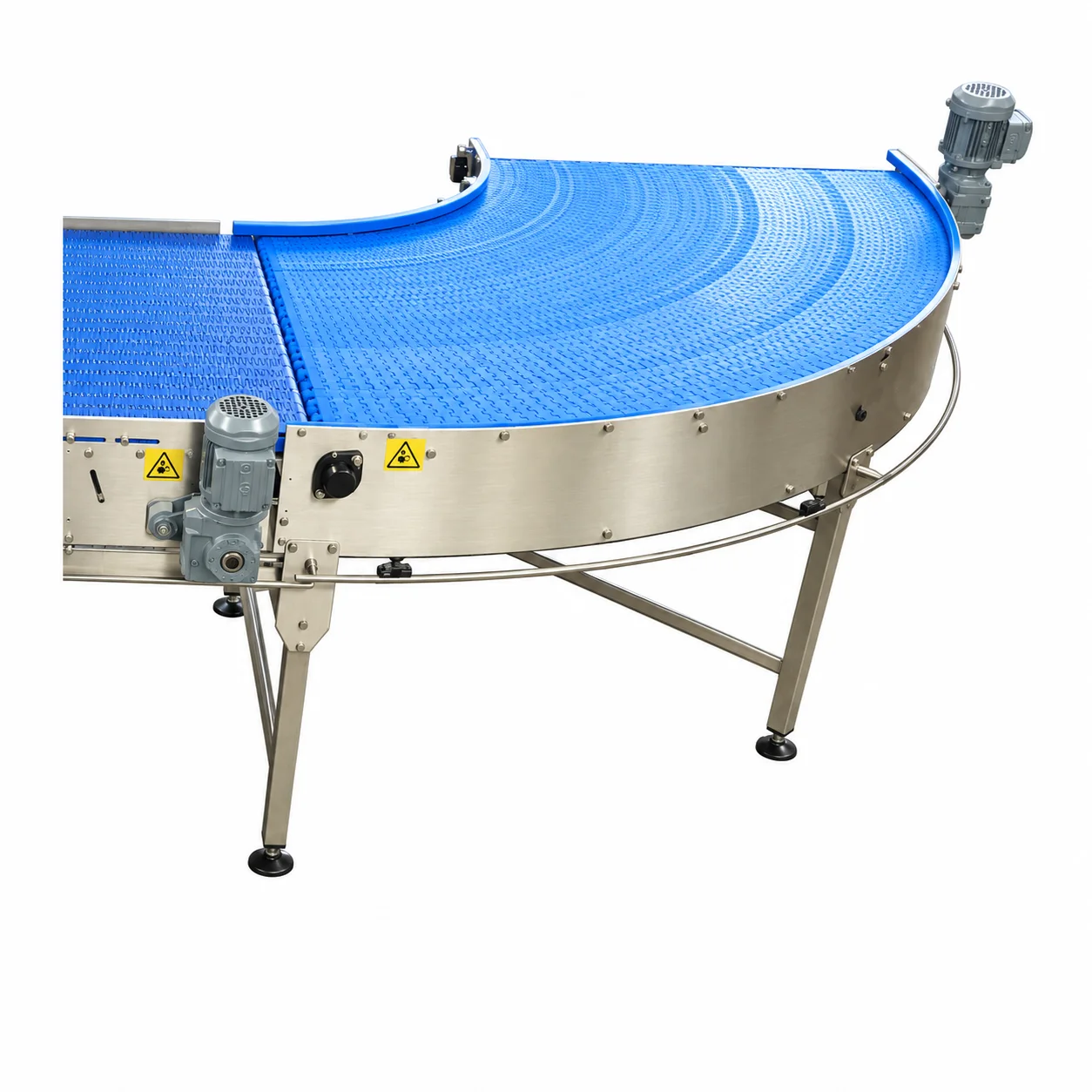
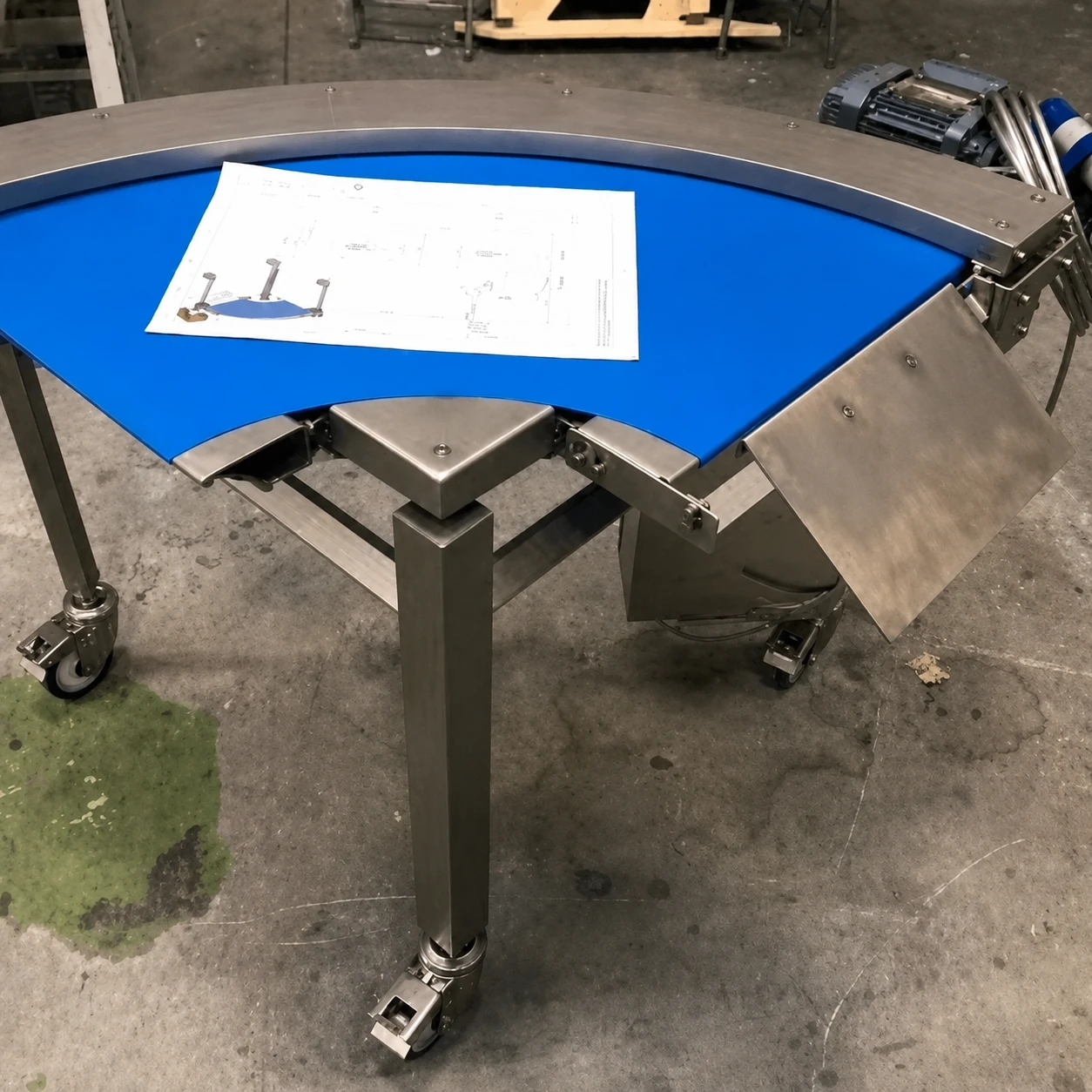
Radius modules let the belt turn through a curve as one continuous surface. The alternative on a flat belt line is a side transfer: two conveyors meeting at an angle with a dead plate between them. Transfers are where product tips, jams and gets damaged, and they are where an operator ends up standing. Removing them from a layout usually does more for uptime than anything else on the line, so if your floor plan has corners in it, this is the section that matters.
03
Inclines and declines
Elevation change is handled either with flights and cleats plus sidewalls, which carry product up in pockets, or with a high-friction top surface that simply holds it in place on the slope. Which one is right depends on the product: a cleated belt suits loose or unstable items, a high-friction top suits stable packs that only need help against sliding. Both remove the need for a separate elevator, and both can be built into the same run as the horizontal sections.
04
Belt material: PP, PE, POM or PA
Four polymers cover almost everything. Polyethylene suits low temperatures, so it is the usual choice in chilled and frozen areas. Polyoxymethylene is the strong, wear-resistant one for heavier or more abrasive duty. Polypropylene handles chemical exposure, which matters where cleaning agents are aggressive. Polyamide is the high-strength option. The material is chosen against the process rather than the product, so it is worth telling us about the wash regime and the temperature as well as what is being carried.
05
Belt surface and drainage
Beyond material, the top surface is a specification in its own right: flat closed surfaces for small or unstable items, open-grid surfaces for air flow and drainage, high-friction tops for slopes, and roller-tops where product needs to be turned or accumulated. Where product is wet or oily, a drainage pattern lets liquid leave the belt rather than travel with it into the next machine.
06
Hygiene and cleaning
For washdown areas the build is a stainless steel frame with open belt links and lift-up or quick-release sections. The open structure is the point: cleaning solution sprays straight through the belt instead of having to reach around it, and sections lift for access underneath. That cuts sanitation time and removes the closed seams and trapped edges where contamination hides. It is the standard build for food, dairy and pharmaceutical lines, and the same reasoning behind our stainless steel slat conveyors.
07
Maintenance costs a module, not a belt
When a fabric belt wears through, you replace the belt. When a modular belt wears, you pop out the affected modules and click new ones in, on the line, without dismantling the frame. Damage from a dropped tool or a jam is a repair rather than a write-off, and spares are small enough to keep on a shelf. Modular belts are also quiet in normal running, which matters in a packing hall where several lines run together.
Where a different conveyor is the better answer
Modular belt is not always the right call, and it is cheaper to find that out now. For very soft or unstable bases that need continuous support over a long run, a flat belt is kinder to the product, which is what our medium duty belt conveyors are for. For zero-pressure accumulation, 24V zero line pressure conveying controls back pressure properly. For pallets and heavy unit loads, use roller conveyor or chain conveyor. And where the product suits a narrow chain that turns tight corners, aluminium slat conveyors take up less floor. Modular belt lines pair readily with metal detection, X-ray, checkweighing, machine vision and coding equipment, and LVP Automation specify, install and support all of it from Finglas, Dublin 11 as part of our wider automation services.
Specification
Configurations
Straight runs, radius (curved) sections and inclined or declined runs, built as one continuous belt
Belt materials
Polypropylene (PP), polyethylene (PE), polyoxymethylene (POM) and polyamide (PA)
Material selection
PE for low temperatures, POM for strength and wear, PP for chemical resistance, PA for high strength
Drive
Positive sprocket drive, so the belt does not slip under wet or oily load and needs no high tensioning
Curves
Radius modules turn as one continuous surface, removing the side-transfer point where product tips and jams
Inclines and declines
Flights and cleats with sidewalls, or a high-friction top surface, for reliable elevation change
Hygienic build
Stainless steel frames, open belt links and lift-up or quick-release sections for spray-through cleaning
Belt surfaces
Flat, open-grid, high-friction and roller-top surfaces, with drainage patterns for wet or oily product
Products handled
Packed and unpacked food, trays, pouches, tubs, bottles and general FMCG needing stable support
Maintenance and integration
Individual modules replaced in place rather than a whole belt; pairs with metal detection, X-ray, checkweighers, vision and coding
Where the Modular Belt Conveyor Excels
Hygienic and Washdown Areas
Stainless frames, open belt surfaces and tool-free belt removal support fast sanitation, reducing downtime and contamination risk in food and pharmaceutical lines.
Curves, Inclines and Complex Paths
Radius modules and cleated/flighted belts handle space-efficient curves and reliable incline/decline transfer, ideal where roller or flat belts struggle.
Tough, Low-Maintenance Duty
Hard-wearing polymer modules resist wear, moisture and chemical exposure, offering long belt life with simple section replacement instead of full belt swaps.
FAQs about Modular Belt Conveyors
Quick answers on materials, hygiene, curves, inclines, maintenance and when to pick modular belts over other conveyor types.
Which belt materials are available and when should I use them?
Common choices are PP, PE, POM and PA. PE suits low temperatures, POM for strength and wear, PP for chemical resistance; we match material to your process.
Can modular belts handle curves?
Yes, radius modules allow dependable curved conveying without side-transfer points, reducing jams and product damage.
Are they suitable for inclines/declines?
Absolutely. Use flights/cleats and sidewalls or high-friction top surfaces for reliable elevation changes.
Are modular belts hygienic?
With the right design (stainless frames, open links, lift-up or quick-release), they are excellent for washdown and hygienic applications.
How easy are they to clean?
The open structure allows spray-through cleaning; sections can be lifted or released for access, reducing sanitation time.
What products are they best for?
Packed and unpacked food, trays, pouches, tubs, bottles, and general FMCG where stable support and positive drive are required.
Do modular belts slip under wet load?
No, positive drive prevents slip. For wet or oily conditions we specify suitable top textures and drainage patterns.
What about noise and wear?
Modular belts are typically quiet; wear surfaces are replaceable by swapping individual modules, keeping costs down.
Can they integrate with inspection and coding equipment?
Yes, commonly paired with metal detectors, X-ray, checkweighers, vision and labelling/marking systems with appropriate guides and gaps.
When should I choose another conveyor type?
For very soft or unstable bases needing continuous support over long runs, consider flat belt; for zero-pressure accumulation, choose 24V MDR; for heavy pallets, use pallet roller/chain.
Have a question about our conveyor systems or need a tailored automation solution for your business? Our team at LVP Automation is here to help. Fill out the form below with your details, and we’ll get back to you as soon as possible. Whether you need a quote, technical support, or more information on our products, we’re ready to assist.