Medium Duty Belt Conveyors

Powered belt conveyors carry unit loads on a continuous belt, so mixed weights and sizes stay stable and fragile packaging is protected. Available level, mezzanine incline and decline, drum driven and waste, in PU, PVC, food-grade, anti-static, high-grip or low-friction belting, with variable speed and metering for print, vision and sortation. Designed, built and supported by LVP Automation in Dublin.

Types
Level, mezzanine, drum, waste
Lengths
2 to 30 m in 0.5 m steps
Belt speeds
9 to 30 m/min
Construction
Powder coated steel
Belt
2-ply, gripface on incline

Quoting: Level Belt Conveyor

Sized to your product weights and throughputDesigned, built and supported from Dublin 11
Mixed loads
Pouches to heavier cartons without jams or tip-overs
Gentle handling
Speed ramps and belt surfaces that protect packaging
Line integration
Inclines, declines, merges and 90 degree transfers
Ireland-wide support
Design, build, install and service from Dublin 11

Medium duty belt conveyors explained

What a medium duty belt conveyor does

A powered belt conveyor carries unit loads on a continuous belt rather than on rollers, so the product is supported along its whole length instead of bridging gaps. That is what makes belt the right choice when loads vary in weight and size, or when they are fragile enough that a roller gap would mark or tip them.

Medium duty covers the everyday range in most warehouses and factories, from small totes up to heavier cartons. The frame and drive are sized to your maximum weights rather than to a catalogue figure, which is the part worth settling before anything else. Lighter products that do not need that frame are handled by light duty belt conveyors.

01

The four types

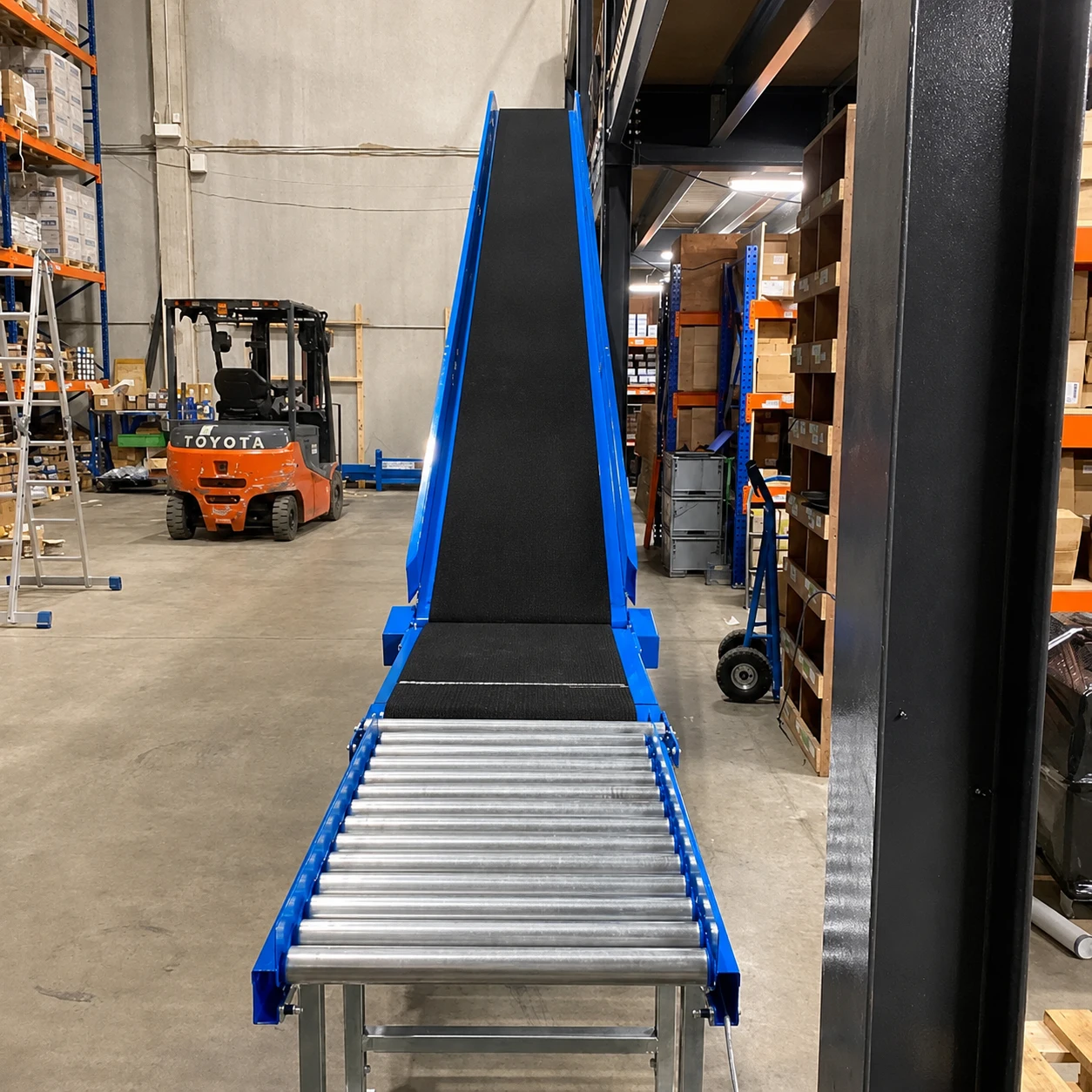
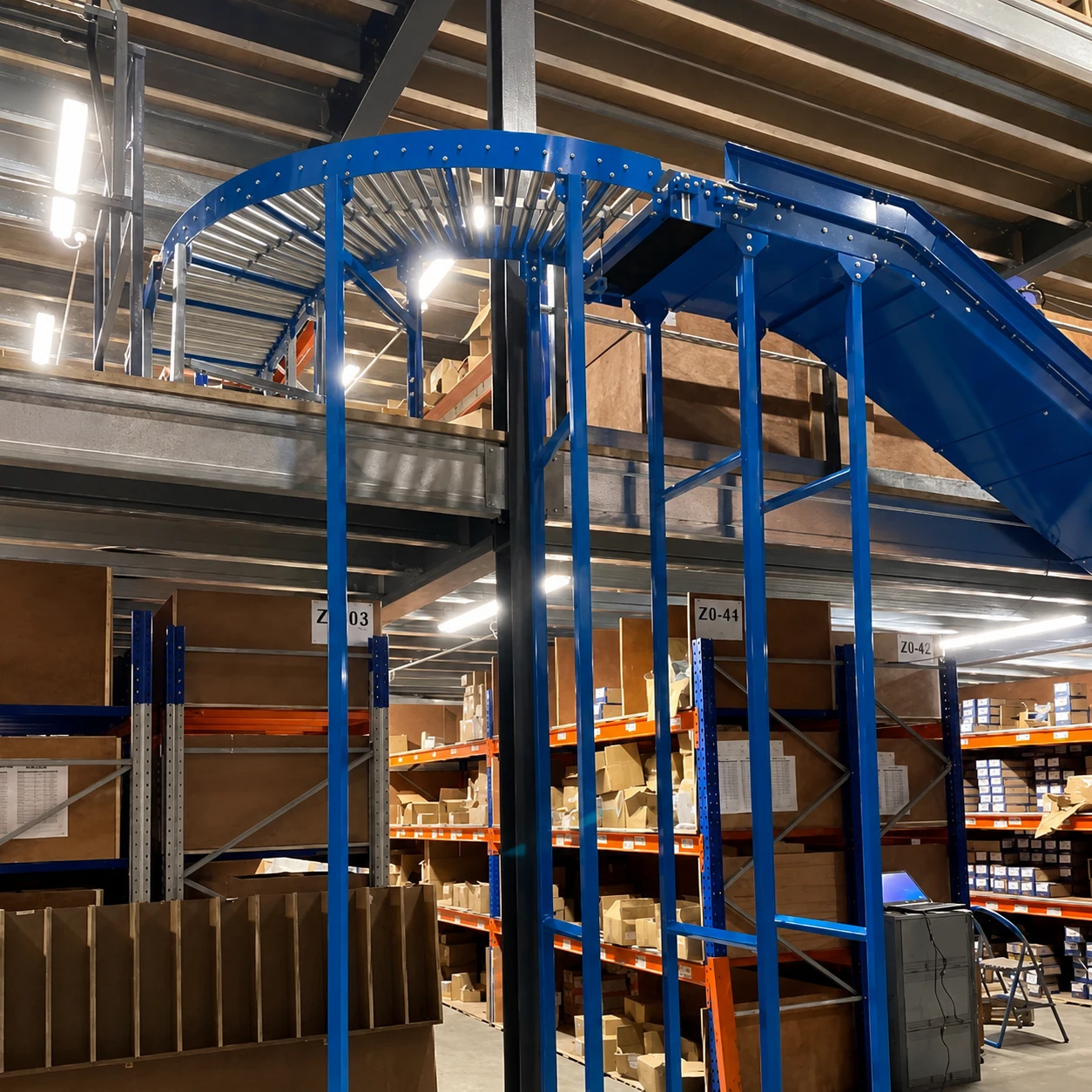
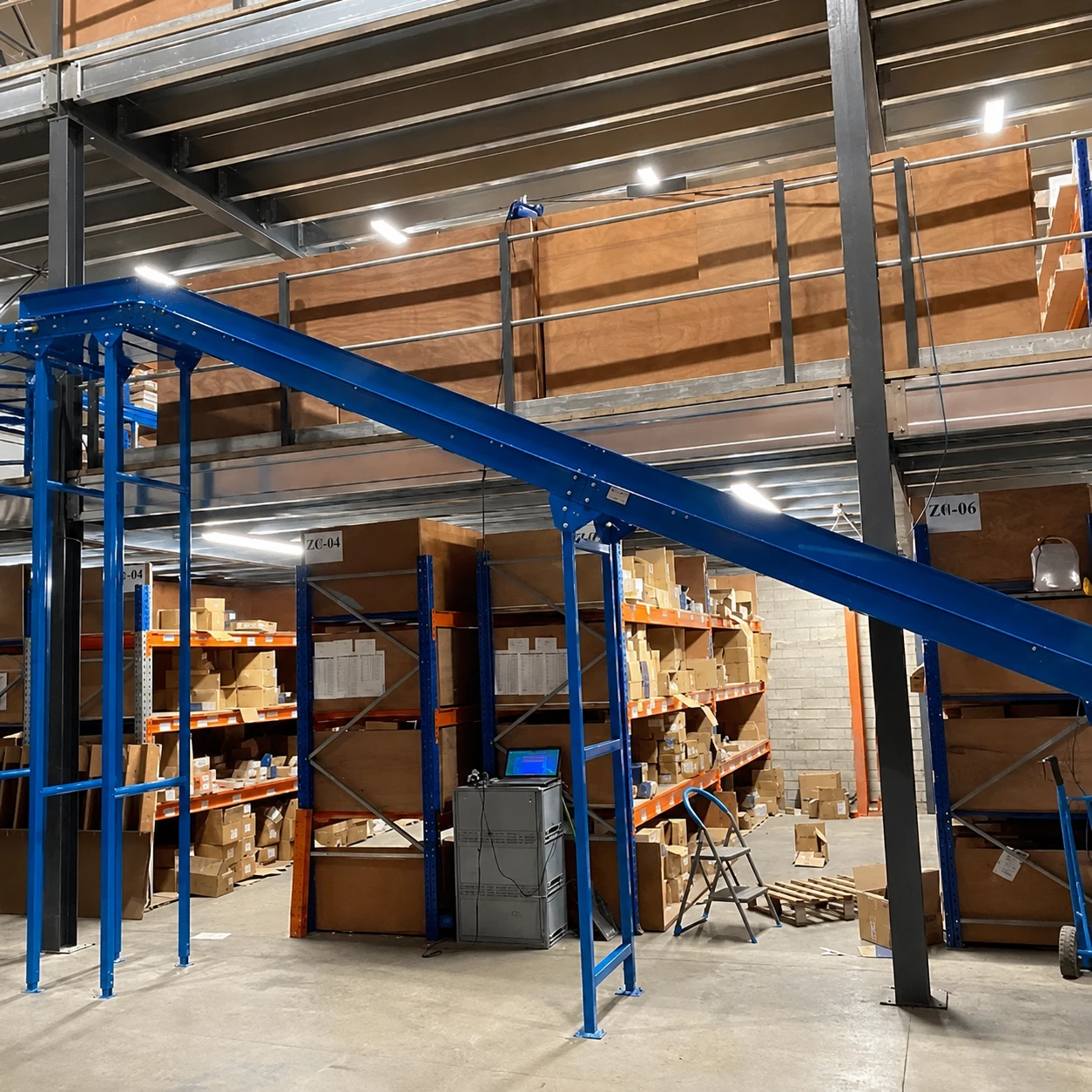
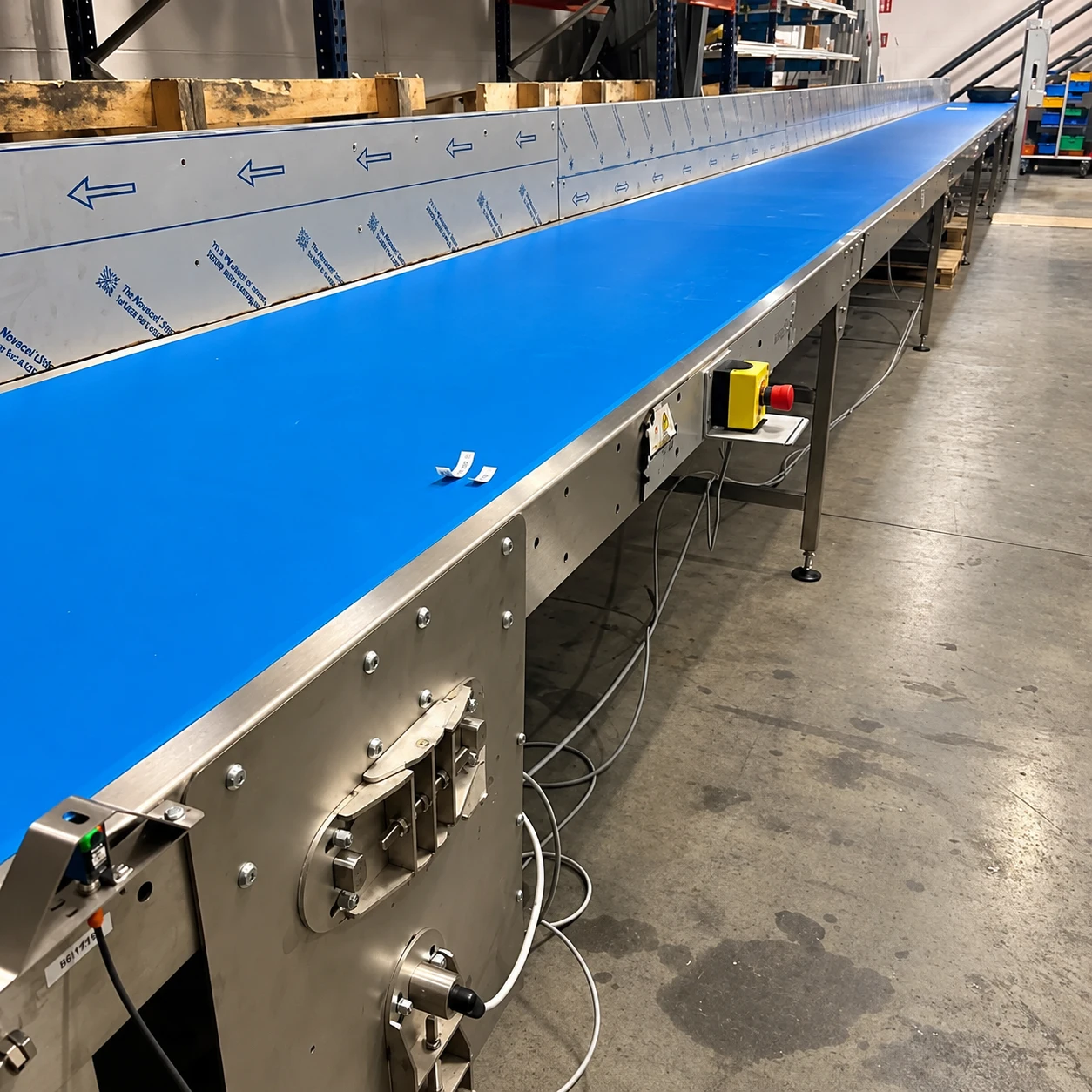
Level runs flat and is the general workhorse. Mezzanine handles incline and decline where product has to change height. Drum driven puts the motor inside the head drum for a cleaner, more compact profile. Waste is built for the harder duty of scrap and offcut removal. Which one you need follows from the layout, not the product.
02

Load range and product mix

The belt gives stable conveying across a mixed product range, from lightweight pouches through to heavier cartons, without the jams, tip-overs and scuffing that a mixed range causes on unsuitable handling. Controlled acceleration and deceleration, with a belt surface chosen for the product, is what protects fragile packaging, labels and seals.

03

Belt materials and surfaces

PU and PVC cover general handling. Food-grade belting suits production areas, anti-static belting protects electronics, and high-grip or low-friction surfaces are chosen depending on whether product needs to be held or allowed to slip. The belt is matched to the product, the environment and the speed together, because changing one usually changes the right answer for the others.

04

Speed, metering and gapping

Speeds run from slow inspection rates up to high-speed induction, with variable frequency drives setting metres per minute to match whatever the belt is feeding. Where the downstream equipment needs consistent spacing rather than consistent flow, encoder-driven metering belts create the gaps that print-and-apply, vision and sortation depend on.

05

Inclines and declines

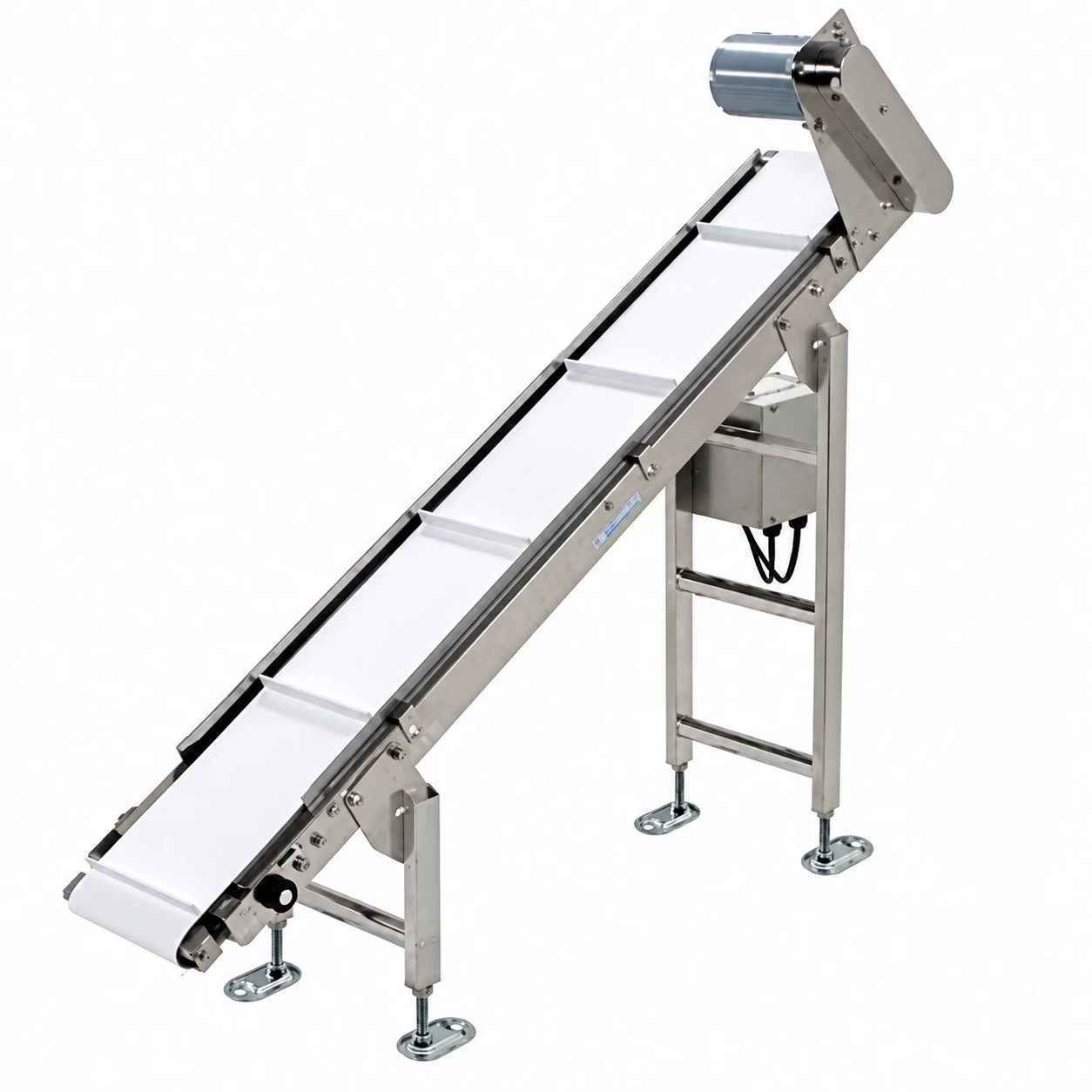
Changing height is a belt problem before it is a layout problem. Belt compound is paired with cleats or nose-over geometry so product stays put on the slope, and the angle that will actually hold your product is a function of what the product is and how it is packaged. Where product is being loaded into a vehicle rather than moved between floors, vehicle loading conveyors cover that.

06

Integration, guarding and maintenance

Mounts and I/O are provided for printers, barcode readers, checkweighers, metal detectors and rejecters, so inspection and coding equipment sits on the conveyor rather than beside it. Guarding, e-stops and interlocks are designed around nip points and transfers on a risk basis. Quick-release tensioning and tracking, accessible drives and standard parts are what keep downtime low once it is running.

Where medium duty belt conveyors sit in a line

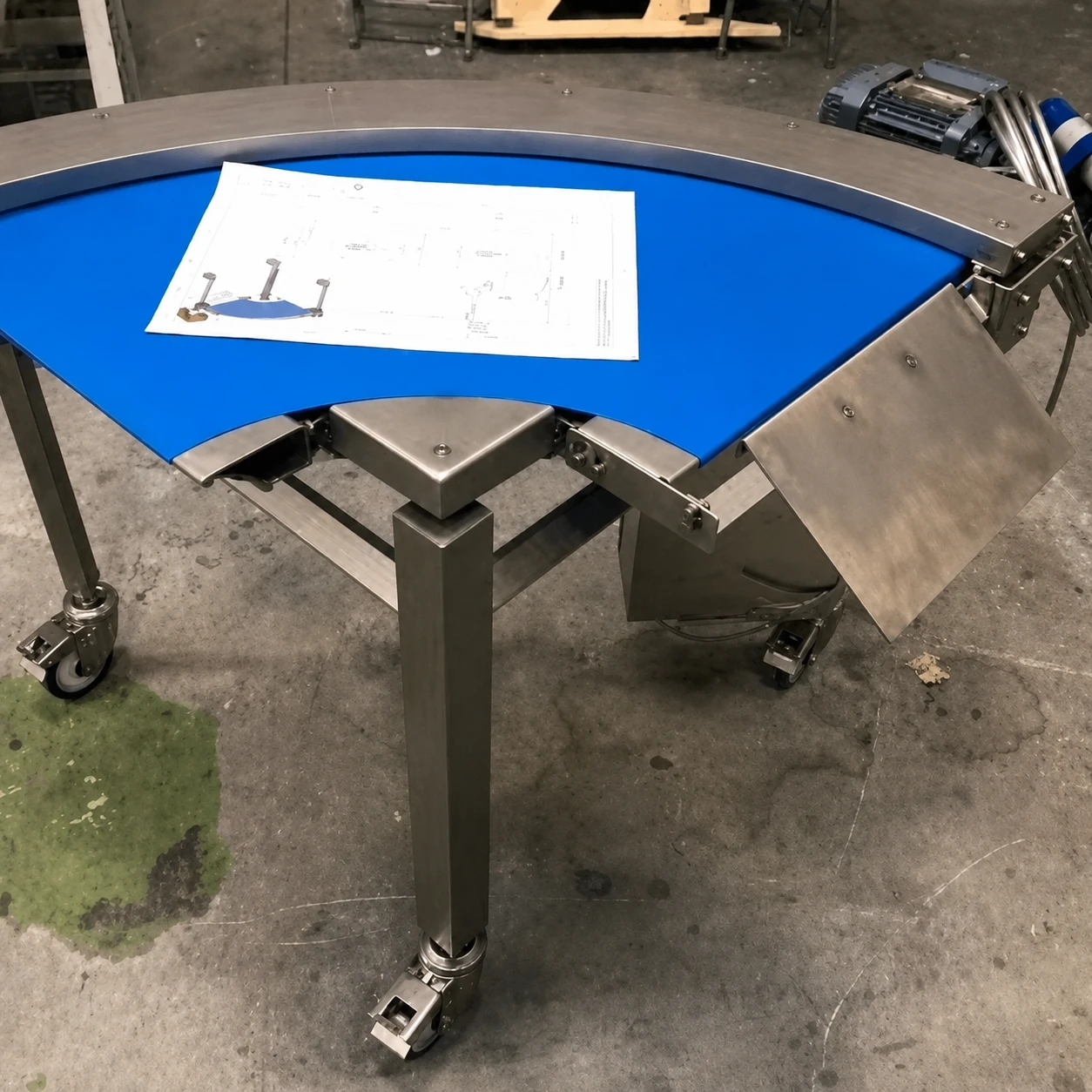
A straight belt is rarely the whole system. It connects to whatever feeds it and whatever it feeds, and has to match their width, height and speed, so what happens at each transfer matters as much as the conveyor itself. Where a line has to change direction, corner conveyors carry product round the turn on one belt rather than transferring it between two straights.

Stainless and washdown builds are available for hygienic areas, with painted steel for general industry. LVP Automation designs, builds and supports these conveyors from Finglas, Dublin 11, working with manufacturers across Ireland as part of our wider automation services. Where a layout needs proving before it is built, automation simulation covers how that is done.

Specification

Types
Level, mezzanine (incline and decline), drum driven and waste
Lengths
2 m to 30 m in 0.5 m increments (level); end driven units up to 10 m
Belt speeds
Centre driven 9, 14, 18, 24 and 30 m/min; end driven 15.6, 18.6 and 21.6 m/min
Construction
Cold formed steel with powder coated channels
Belt
2-ply transmission belt; gripface incline belt on mezzanine units
Belt materials
PU, PVC, food-grade, anti-static (ESD), high-grip and low-friction
Load range
Medium duty, from small totes to heavier cartons, sized to your maximum weights
Metering and gapping
Encoder-driven metering belts for print and apply, vision and sortation
Frame options
Stainless and washdown builds for hygienic areas; painted steel for general industry
Safety
Guarding, e-stops and interlocks designed around nip points and transfers

Where Medium Duty Belt Conveyors Excel

Mixed Weights & Sizes

Stable conveying for everything from lightweight pouches to heavier cartons—without jams, tip-overs or scuffing.

Gentle, High-Quality Transfers

Controlled acceleration/deceleration and tailored belt surfaces protect fragile packaging, labels and seals.

Flexible Line Integration

Drop-in modules for inclines, declines, merges and 90° transfers; clean PLC/HMI handshakes with upstream/downstream equipment.

FAQs about Medium Duty Belt Conveyors

Quick answers on loads, belts, speeds, layouts, hygiene and integration.

What load range do these conveyors support?

Medium duty frames and drives suit everyday warehouse/factory loads—small totes up to heavier cartons. We size to your max weights.

Are they suitable for fragile products?

Yes—smooth belt support, refined speed ramps and high-grip/low-friction options minimise impact and abrasion.

Can I run inclines and declines?

Absolutely. We pair belt compound and cleats/nose-over geometry to hold product securely on slopes.

How fast can they run?

From slow inspection speeds to high-speed induction; VFDs set metres/min to match scanners, printers or sorters.

What belt materials are available?

PU/PVC, food-grade, anti-static (ESD), high-grip and low-friction. We’ll match belt to product, environment and speed.

How easy is maintenance?

Quick-release tensioning/tracking, accessible drives and standard parts keep downtime low.

Do you support metering and gapping?

Yes—encoder-driven metering belts create consistent gaps for print/apply, vision and sortation.

Can we integrate printers and scanners?

Yes—mounts and I/O for TIJ/CIJ/TTO printers, barcode readers, checkweighers, metal detectors and rejecters.

Are stainless versions available?

Stainless and wash-down options are available for hygienic areas; painted steel for general industry.

What about safety and guarding?

CE-compliant guarding, e-stops and interlocks; risk-based design around nip points and transfers.

Similar Products

Let's Connect

Have a question about our conveyor systems or need a tailored automation solution for your business? Our team at LVP Automation is here to help. Fill out the form below with your details, and we’ll get back to you as soon as possible. Whether you need a quote, technical support, or more information on our products, we’re ready to assist.