Autonomous Mobile Robots – Flex Series

The Flex Series offers a highly scalable, modular automation solution designed to adapt to diverse applications. This versatile product family can be customised with a range of functional modules, allowing businesses to tailor each Flex unit to meet specific operational needs. Whether optimising workflows, expanding capabilities, or addressing unique logistical requirements, the Flex Series provides an adaptable platform that grows with your business.

Models
Flex 300 and 600
Maximum payload
300 kg or 600 kg
Lifting height
60 mm lift
Robot dimensions
From 850 x 480 mm
Endurance
5.5 to 8 hours
Modules matched to your tasks and routesSpecified, installed and supported from Dublin 11
One base, many tops
Swap modules as the work changes
Two payload sizes
300 kg and 600 kg, carried or towed
Fits narrow aisles
Compact 300-SCB build where the standard will not turn
Ireland-wide support
Specification, install and service from Dublin 11

Modular autonomous mobile robots explained

One platform, many jobs

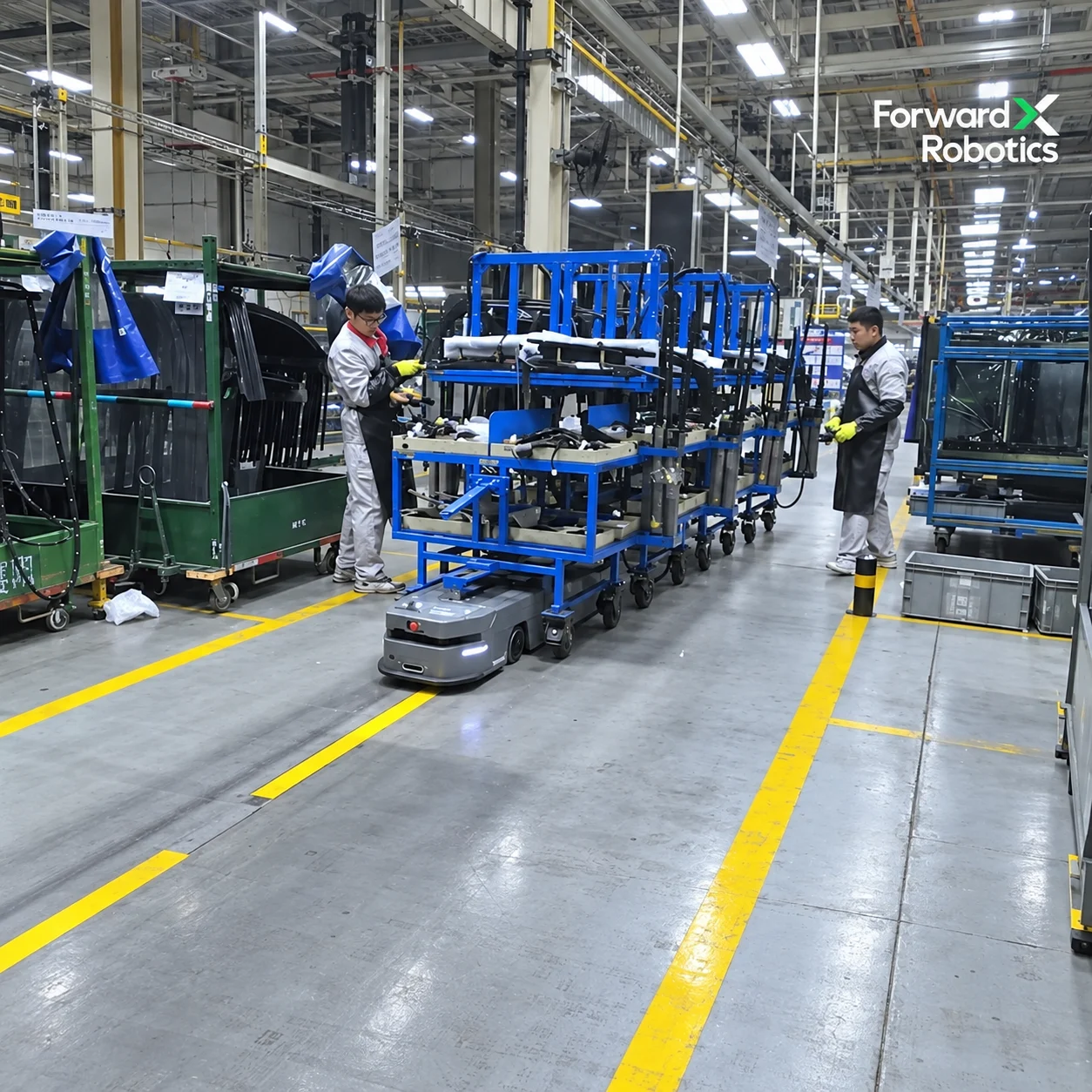
The Flex is a chassis with a swappable top. Tugger, rack or shelf lift, conveyor-top, tote or bin deck, pallet mover and a custom IO or PLC interface all mount on the same base, which means the fleet you buy for put-away this year can be doing lineside feed and returns next year. That matters most in the places where the work changes faster than the capital cycle, because the alternative is buying a second machine for the second job.

01

Two sizes, and why that is the first decision

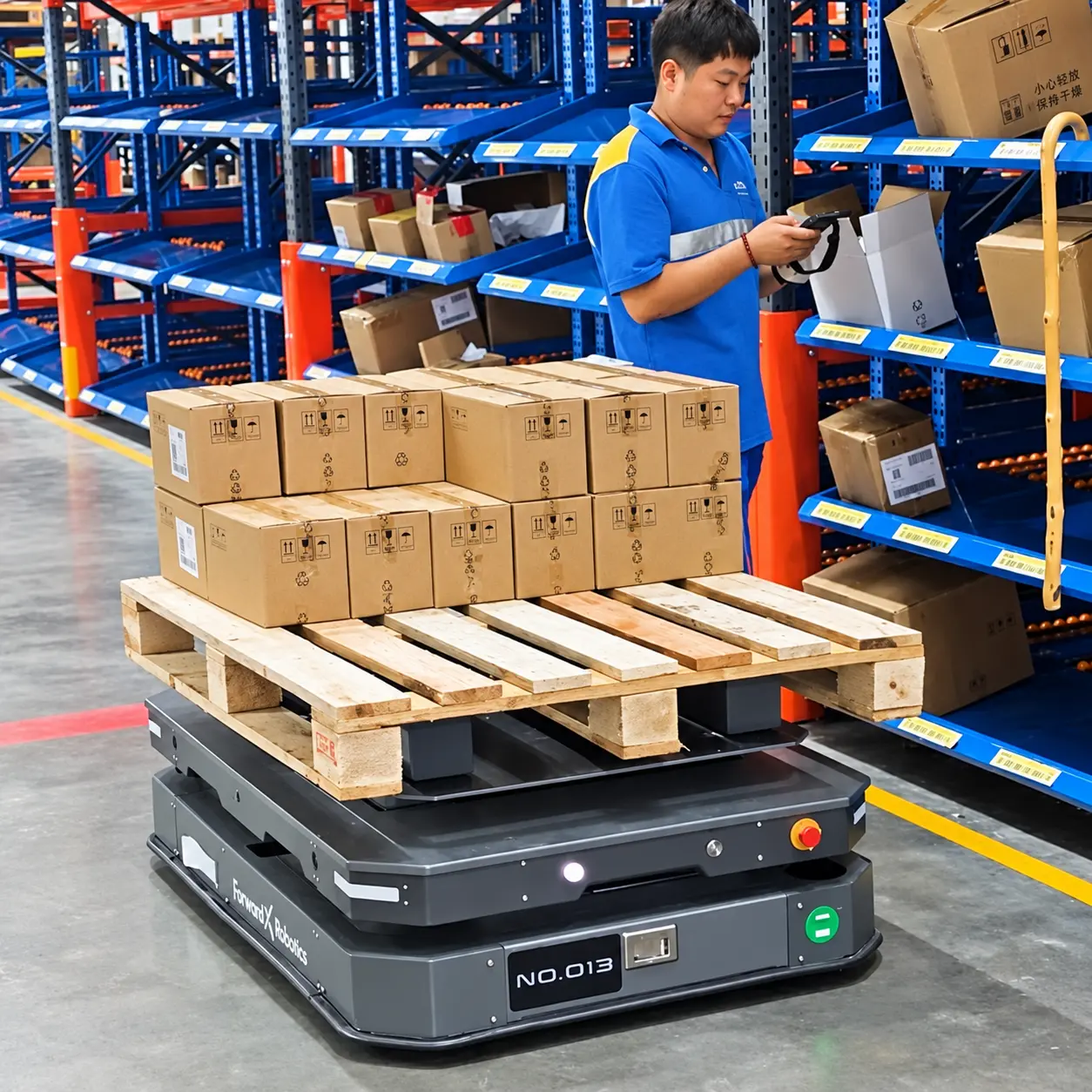
The 300 models carry up to 300 kg on an 850 x 480 mm footprint. The 600 models carry up to 600 kg on 950 x 650 mm, and the 600-ST tows 600 kg as a tugger instead of carrying it. Getting this right early saves rework: the payload sets the footprint, and the footprint sets which aisles the robot can actually use once racking, pallets and people are in them.
02

The tall ones and the narrow one

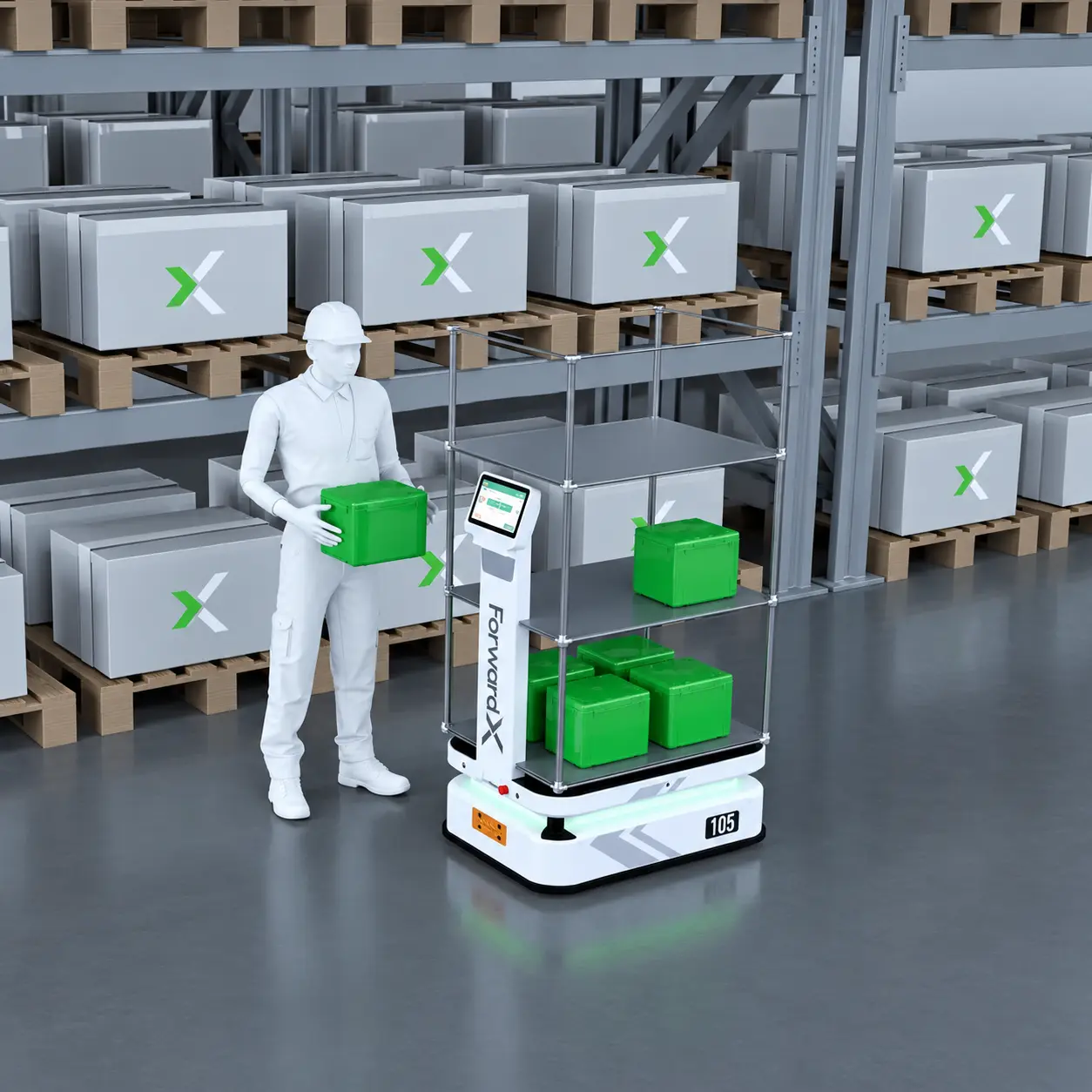
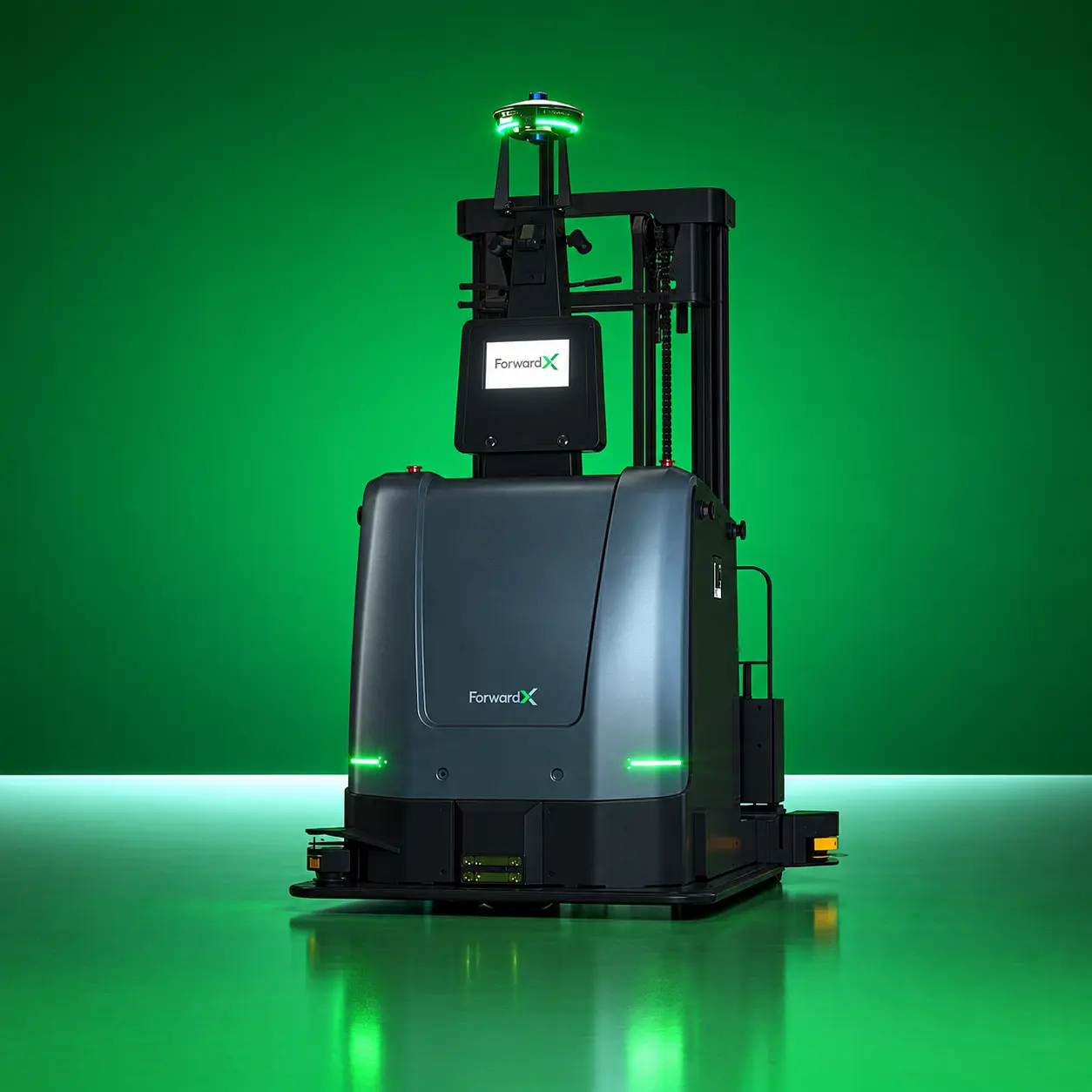
The 300-LS and 600-LS stand around 1,237 mm and 1,185.5 mm tall and carry a touchscreen, so an operator can interact at the robot rather than walking to a terminal. The 300-SCB goes the other way: a compact build for narrow aisles where the standard chassis will not turn. Most sites end up with a mix, chosen aisle by aisle rather than one model everywhere.

03

Seeing all the way round

The Flex 600-L carries four LiDAR sensors for 360 degree detection. That is the difference between a robot that is safe travelling forwards and one that is safe in a busy aisle where a pallet truck can appear from behind. Safety-rated LiDAR and vision build dynamic protective fields across the range, with the robot slowing or stopping for obstacles and obeying speed and zone rules to CE standards.

04

Navigation and infrastructure

Laser SLAM and visual navigation work from natural features, so there are no rails, no floor tape and nothing to cut into the slab. Fiducials can be added in long or featureless aisles where extra robustness is wanted, but they are an option rather than a prerequisite. What the site does need is reliable Wi-Fi, mapped areas, defined pick and drop points and basic signage.

05

Charging and shift coverage

The 300 and 600 carrying models run around eight hours per charge and the 600-ST tugger around five and a half, on DC CC-VC auto-dock charging between missions. The fleet manager schedules charging to balance battery health against peak demand, so the design question is how many dock positions the layout needs and where they sit.

06

Where it sits in the range

Flex is the light and adaptable end. For case and pallet moves at 1,500 kg or 2,500 kg the Max Series is the right frame, and where the job is towing at 1,000 kg or 1,500 kg on one or two hooks the Lynx Series is purpose-built for it. Pallets in and out of racking at height are a job for the Apex Series autonomous forklifts rather than an AMR.

Integration, scaling and support

Your WMS, WES or MES raises tasks by API and the fleet manager returns confirmations and exceptions in real time, with traffic control, battery scheduling and KPIs handled centrally. Start with one cell mapped and missioned in days, then add robots, routes and modules as demand justifies them. Maintenance is routine checks on wheels, sensors and modules with software updates and remote diagnostics. LVP Automation specifies, integrates and supports warehouse robotics from Finglas, Dublin 11 as part of our wider automation services.

Specification

Models
ForwardX Flex 300-L, 300-LS, 300-SCB, 600-L, 600-LS and 600-ST
Maximum payload
300 kg on the Flex 300 models, 600 kg on the 600-L and 600-LS, and 600 kg towed on the 600-ST tugger
Lifting height
60 mm lift deck on the L models
Robot dimensions
850 x 480 x 295 mm on the 300-L and 300-SCB, 850 x 480 x 1,237 mm on the 300-LS, 950 x 650 x 245 mm on the 600-L, 950 x 650 x 1,185.5 mm on the 600-LS and 1,300 x 650 x 1,240 mm on the 600-ST
Endurance
Around 8 hours per charge on the 300 and 600 L and LS models, around 5.5 hours on the 600-ST
Narrow aisles
The Flex 300-SCB is the compact build for narrow aisle work
Obstacle detection
Four LiDAR sensors give 360 degree detection on the Flex 600-L
Operator interface
Touchscreen fitted on the 300-LS and 600-LS
Navigation and charging
Laser SLAM and visual navigation with DC CC-VC auto-dock charging; Wi-Fi, 4G and 5G
Modules
Tugger, rack or shelf lift, conveyor-top, tote or bin deck, pallet mover and custom IO or PLC interface

Where the Flex Series Excels

Goods Movement & Replenishment

Create point-to-point missions for put-away, lineside feed, returns and kitting. Swap to a shelf-lift module to move racks, or a tugger to tow trains.

Workstation Bridging & Buffering

Add a conveyor-top or tote deck to handshake with pack benches, inspection, or machining cells—smoothing flow without fixed conveyors.

Rapid Scaling & Changeovers

Start small, then add robots/modules as demand grows. Recipes and mission templates let you reconfigure workflows in minutes, not weeks.

FAQs about the Flex Series AMRs

Practical answers on safety, payloads, navigation, integration, scaling and maintenance.

What modules are available?

Tugger, rack/shelf lift, conveyor-top, tote/bin deck, pallet mover and custom IO/PLC interface modules. We match modules to your tasks.

Do I need markers or reflectors?

No in most sites—SLAM uses natural features. We can add fiducials in long/featureless aisles for extra robustness.

How do AMRs interact with my WMS/ERP?

Via a WES/fleet manager or direct APIs. Orders become missions; the AMR returns confirmations and exceptions in real time.

How safe are they around people and forklifts?

Safety-rated LiDAR and vision create dynamic protective fields; the robots slow/stop for obstacles and obey speed/zone rules to CE standards.

What payloads can they handle?

Depends on module—tuggers tow trains, shelf-lifters handle loaded racks, conveyor-tops move totes/cartons. We’ll size to your loads and routes.

How is charging managed?

Auto-dock smart charging between missions maintains uptime; schedules balance battery health and peak demand.

Can I pilot in one area and expand later?

Yes—start with a cell, then add robots, routes and modules. Fleet software manages traffic and prioritisation as you scale.

What IT/infrastructure is required?

Reliable Wi-Fi, mapped areas, defined pick/drop points and basic signage. No rails or floor tapes needed.

How long does deployment take?

Typically days for mapping and mission setup in a pilot cell; additional zones/modules are added incrementally.

What maintenance is needed?

Routine checks on wheels, sensors and modules; software updates and remote diagnostics keep downtime low.

Downloads

Similar Products

Let's Connect

Have a question about our conveyor systems or need a tailored automation solution for your business? Our team at LVP Automation is here to help. Fill out the form below with your details, and we’ll get back to you as soon as possible. Whether you need a quote, technical support, or more information on our products, we’re ready to assist.