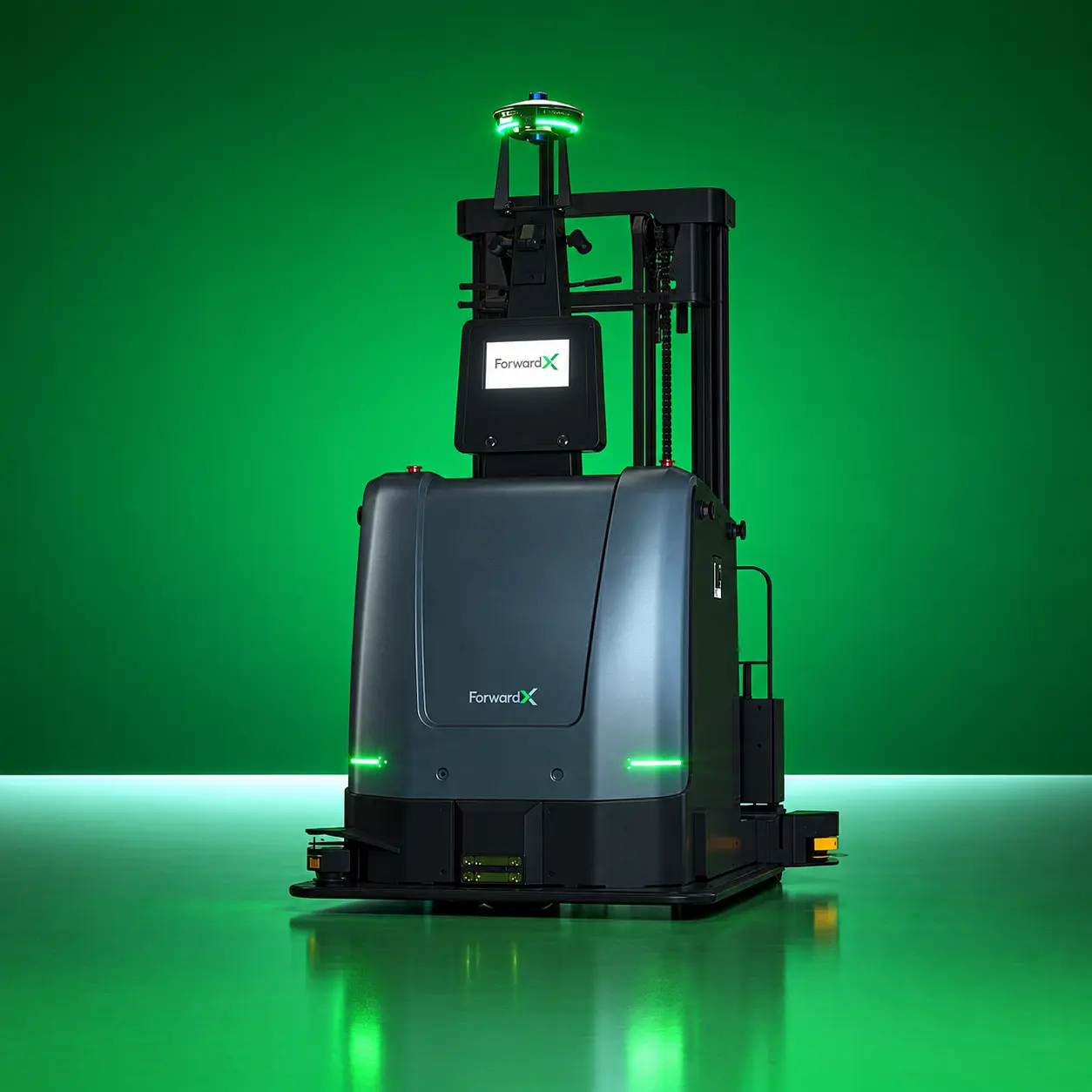
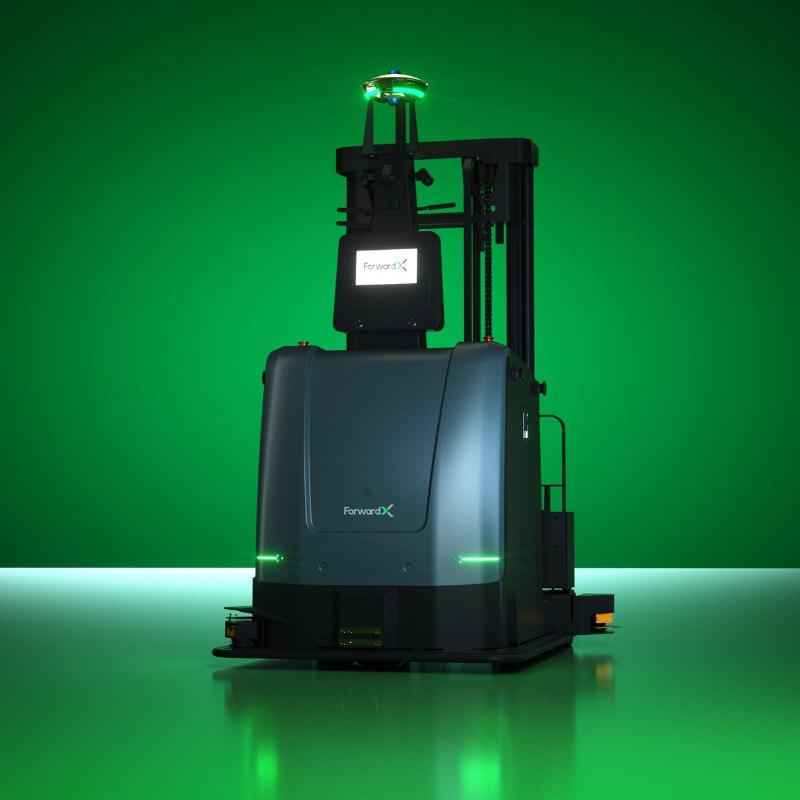
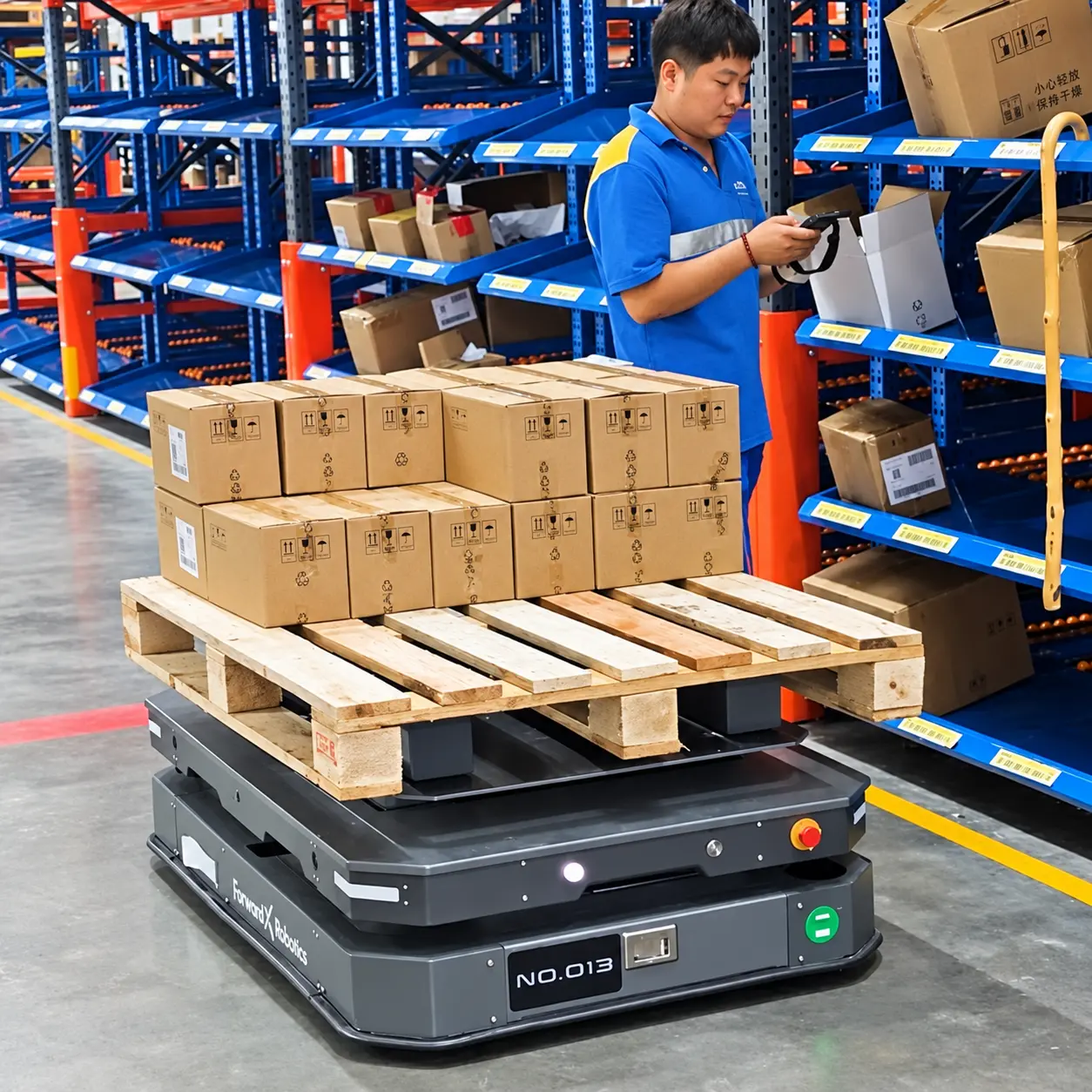
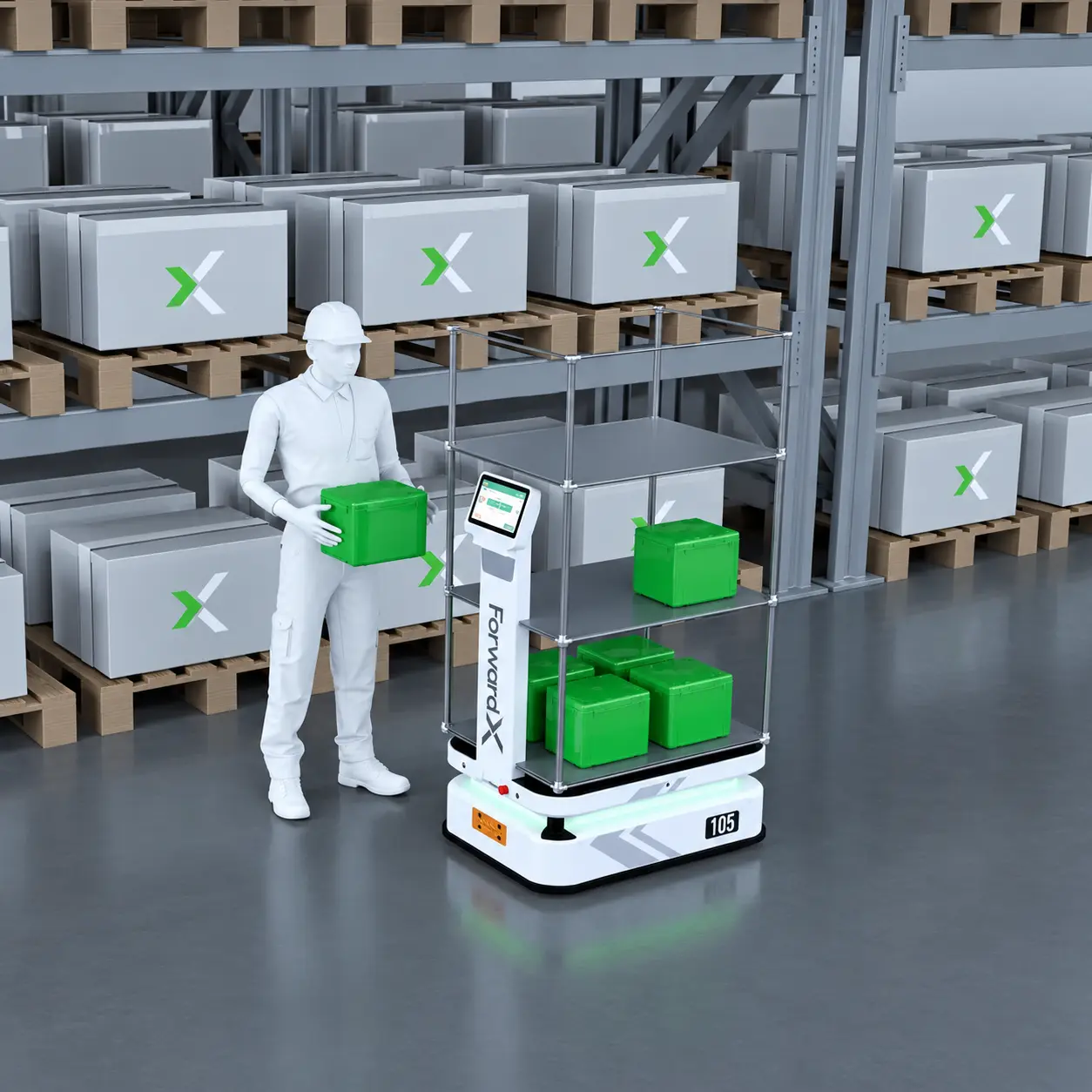
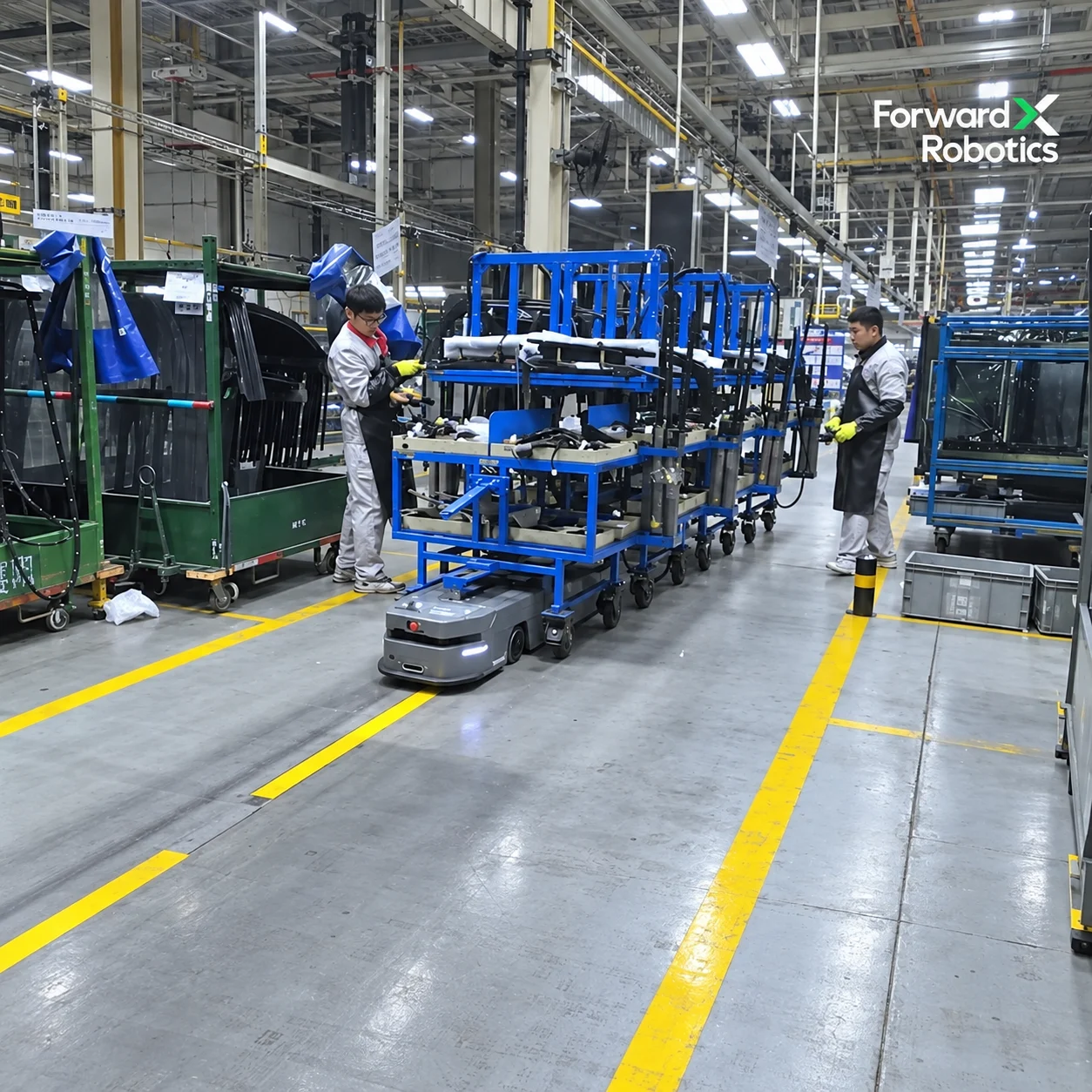
High-performance autonomous forklifts that lift, stack and transport pallets safely and efficiently. The Apex Series spans the Apex 1400-L pallet stacker, Apex C1500-L counterbalanced and Apex 2000 pallet jack, engineered to boost throughput, cut handling costs and improve safety in live warehouse environments.
Mast sized to your top beam heightSpecified, installed and supported from Dublin 11
Three truck types
Stacker, counterbalanced and pallet jack
Rated at height
Capacity confirmed at the height you actually lift to
No floor works
Laser SLAM, no guidewires or rails
Ireland-wide support
Specification, install and service from Dublin 11
Autonomous forklifts explained
Three trucks, three different jobs
The Apex range is not one machine in three sizes. The 2000 is a pallet jack for horizontal moves, receiving to staging to racking, and it carries the heaviest load at 2,000 kg because it barely lifts. The 1400-L is a stacker for lift and set-down work at height. The C1500-L is counterbalanced, which is what you need at docks, with mixed or partial pallets, and anywhere the load sits out in front rather than straddled.
01
Capacity falls as the forks rise
This is the number most specifications leave out. The 1400-L is rated 1,400 kg at 1,600 mm, but at its full 3,500 mm it takes 700 kg. The C1500-L is 1,500 kg at 3,000 mm and 600 kg at 4,500 mm. So the question is never just "how heavy" or "how high", it is how heavy at the height you actually need. Your top beam height and your heaviest pallet together decide the model, and getting that pairing wrong is the most common way one of these projects disappoints.
02
Why the counterbalanced weighs what it does
The C1500-L is 2,700 kg empty against 880 kg for the 1400-L and 400 kg for the 2000. That counterweight is what lets it carry a load ahead of the wheels, and it is also a floor loading question worth raising early if you are on a mezzanine, a suspended slab or an older building. Its footprint is larger too, at 2,495 x 1,250 mm against 1,830 x 1,050 mm, which matters at the dock and in turns.
03
Endurance is not the same across the range
The 1400-L runs around ten hours per charge, the C1500-L around eight, and the 2000 around four. That last figure changes the plan: a pallet jack doing continuous loops will spend real time on charge across a double shift, so either the fleet is sized for it or the dock positions are placed so charging happens inside the natural gaps. Charging is DC CC-VC auto-dock between missions, scheduled by the fleet manager to balance battery health against peak demand.
04
Navigation and path control
Laser SLAM and visual semantics work from natural features, so there are no guidewires and no rails. The C1500-L adds optional QR code navigation for long, featureless or poorly lit aisles. Path planning runs road network, preferred route, real-time optimal or hybrid depending on model, so you can pin trucks to defined lanes where forklift traffic is heavy and let them optimise elsewhere.
05
Safety in a live aisle
These run in aisles that still have people and manual trucks in them. Safety-rated LiDAR and 3D sensing build dynamic protective fields, and the truck slows or stops for obstacles under CE-compliant safety logic. Many models allow supervised manual override for the occasional task that does not suit automation, which needs a policy and training rather than just a keyswitch.
06
Where it sits in the range
Apex is for pallets on forks. Where the load is carried on a deck rather than lifted on a mast, the Max Series handles case and pallet moves to 2,500 kg and the Flex Series covers lighter tote and shelf work at 300 kg and 600 kg. Where trolleys and trains are towed instead, that is the Lynx Series.
Integration, deployment and support
Your WMS or ERP raises picks, put-away and replenishment; the fleet manager turns them into missions and dispatches the nearest available truck, returning live status and confirmations. Infrastructure needs are clear travel paths, marked transfer points and Wi-Fi coverage, with mast and sensors sized to your top beam height at design stage. LVP Automation specifies, integrates and supports warehouse robotics from Finglas, Dublin 11 as part of our wider automation services.
Specification
Models
ForwardX Apex 1400-L pallet stacker, Apex C1500-L counterbalanced and Apex 2000 pallet jack
Load capacity
1,400 kg on the 1400-L, 1,500 kg on the C1500-L and 2,000 kg on the 2000
Maximum fork height
1400-L lifts 1,400 kg to 1,600 mm and 700 kg to 3,500 mm; C1500-L lifts 1,500 kg to 3,000 mm and 600 kg to 4,500 mm; the 2000 lifts to 195 mm
Minimum fork height
85 mm on the 1400-L and 40 mm on the C1500-L
Endurance
Around 10 hours per charge on the 1400-L, 8 hours on the C1500-L and 4 hours on the 2000
Truck dimensions
1,830 x 1,050 x 2,080 mm on the 1400-L, 2,495 x 1,250 x 2,190 mm on the C1500-L and 1,725 x 1,050 x 2,090 mm on the 2000
Tare weight
880 kg on the 1400-L, 2,700 kg on the C1500-L and 400 kg on the 2000
Navigation
Laser SLAM and visual semantics, with optional QR code navigation on the C1500-L
Path planning
Road network, preferred route, real-time optimal or hybrid depending on model
Charging and safety
DC CC-VC auto-dock charging between missions; safety-rated LiDAR and 3D sensing with dynamic protective fields under CE-compliant safety logic
Where the Apex Series Excels
Inbound to Put-Away
Apex pallet jacks (1500/2000) move pallets from receiving to staging or racking in continuous loops, freeing operators for value-add tasks.
Stacking & Replenishment
The Apex1400-L Pallet Stacker handles lift and set-down at defined heights for buffer lanes, lineside replenishment and reserve storage.
Versatile Handling & Mixed Layouts
The Apex C1500-L Counterbalanced manages mixed pallets, enclosed/partial pallets and tight docks where counterweight stability is required.
FAQs about the Apex Autonomous Forklifts
Practical answers on safety, payloads, heights, navigation, integration, charging and ROI.
Which model should I choose?
Use Apex 1500/2000 Pallet Jack for horizontal moves, Apex1400-L Stacker for lift/stack tasks, and Apex C1500-L Counterbalanced for docks, mixed pallets or where mast reach and counterbalance are needed.
What payloads do they handle?
Typical rated loads range from ~1,400–2,000 kg depending on model. We’ll confirm exact ratings to match your pallet weights and centre of gravity.
How do they navigate safely around people and forklifts?
Safety-rated LiDAR and 3D sensing create dynamic protective fields; the truck slows/stops for obstacles and follows CE-compliant safety logic.
Do I need markers or reflectors?
No in most sites—SLAM mapping uses natural features. Reflectors/QRs can be added in challenging areas (long, featureless aisles, low light).
What lift heights are supported?
Stacker/counterbalanced models support defined lift heights for racking, staging and line feed. We size mast and sensors to your top beam height.
How do missions get created?
The fleet manager/WES receives picks/put-away/replen orders from your WMS/ERP, creates missions and dispatches the nearest available vehicle.
How is charging handled?
Auto-dock smart charging between missions keeps uptime high; schedules avoid peak windows and balance battery health.
Can humans still drive them manually?
Many models allow supervised/manual override for rare tasks. Policies and training ensure safe switches between modes.
What infrastructure changes are required?
Minimal—clear travel paths, marked transfer points and Wi-Fi coverage. No rails or guidewires required.
What ROI should I expect?
Savings come from reduced non-value travel, fewer damage incidents and predictable staffing. Many sites see payback within 12–24 months, depending on shift patterns and volume.
Have a question about our conveyor systems or need a tailored automation solution for your business? Our team at LVP Automation is here to help. Fill out the form below with your details, and we’ll get back to you as soon as possible. Whether you need a quote, technical support, or more information on our products, we’re ready to assist.
We use cookies to see how our website is used and improve it. They're only set if you accept them. You can change your mind at any time. Read our cookie policy