Chain Conveyor

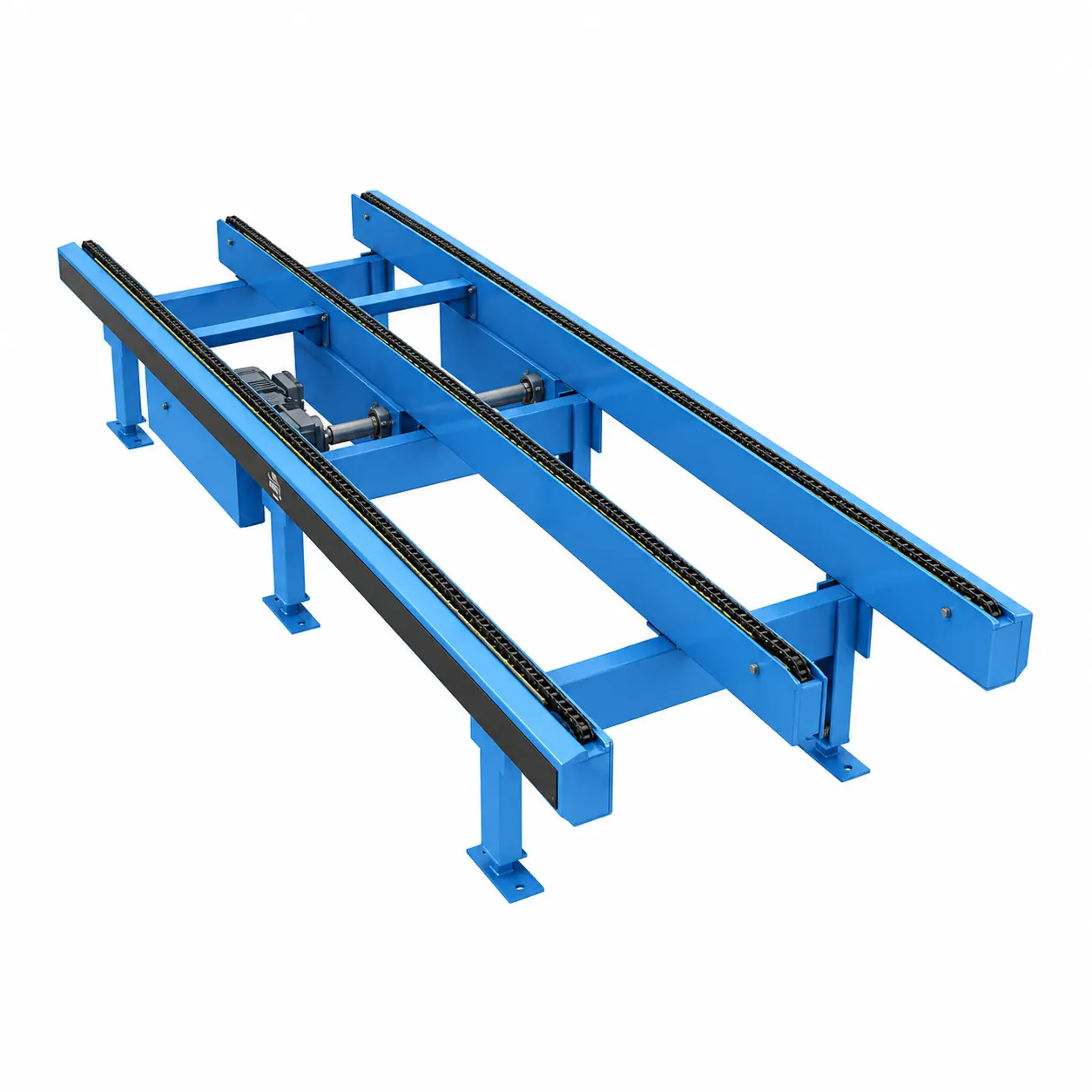
Painted steel pallet chain conveyor for high-capacity handling in demanding environments, with triple strand chains on wear-resistant polymer guide strips for stable, low-maintenance transport. Up to 1,500 kg per pallet at 12, 15 or 18 m/min, height adjustable from 425 mm to 1,175 mm and lengths from 1,300 mm to 3,600 mm. The choice over rollers where pallet bases are heavy, damaged or uneven.

Load capacity
1,500 kg per pallet
Chain
Triple strand
Speeds
12, 15 or 18 m/min
Height range
425 to 1,175 mm
Standard lengths
1,300 to 3,600 mm
Chain sized to your heaviest palletHeight set to your adjacent equipment

Pallet chain conveyor explained

Chain or rollers, and how to tell

Chain and roller conveyor do the same job on paper, and the pallet decides which one you want. Rollers need a sound base with good deckboards and enough of them under the load at any moment. Chain carries the pallet on the runners themselves, so it copes with damaged, uneven or unusual bases that would drop between rollers, and with sustained heavy duty cycles. The honest test is your worst inbound pallet, not your best. If a fair share of what arrives is tired, chain will save you more in jams than it costs in capital.

01

Triple strand, and why three rather than two

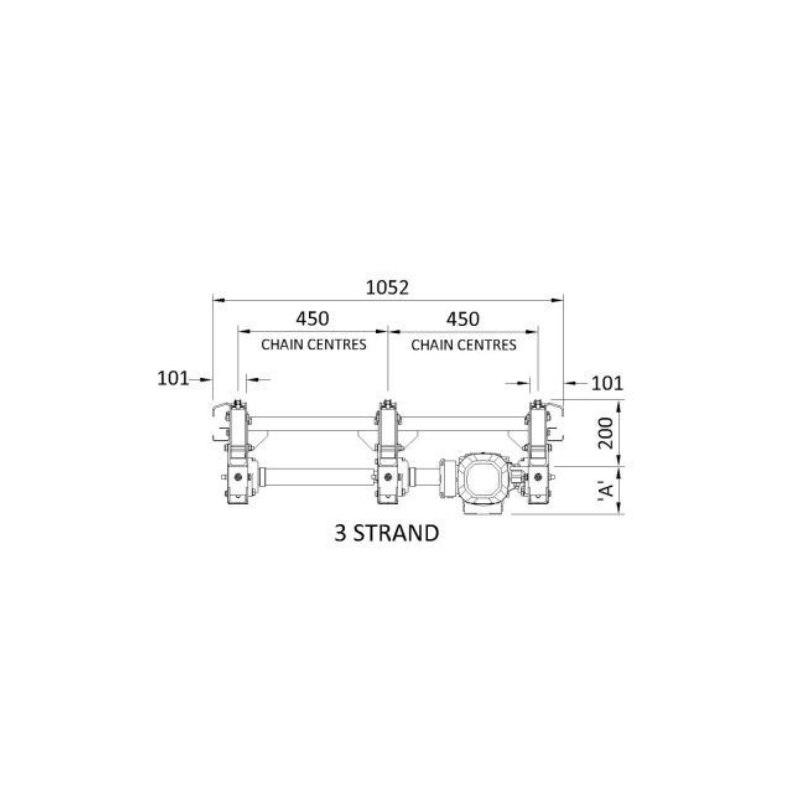
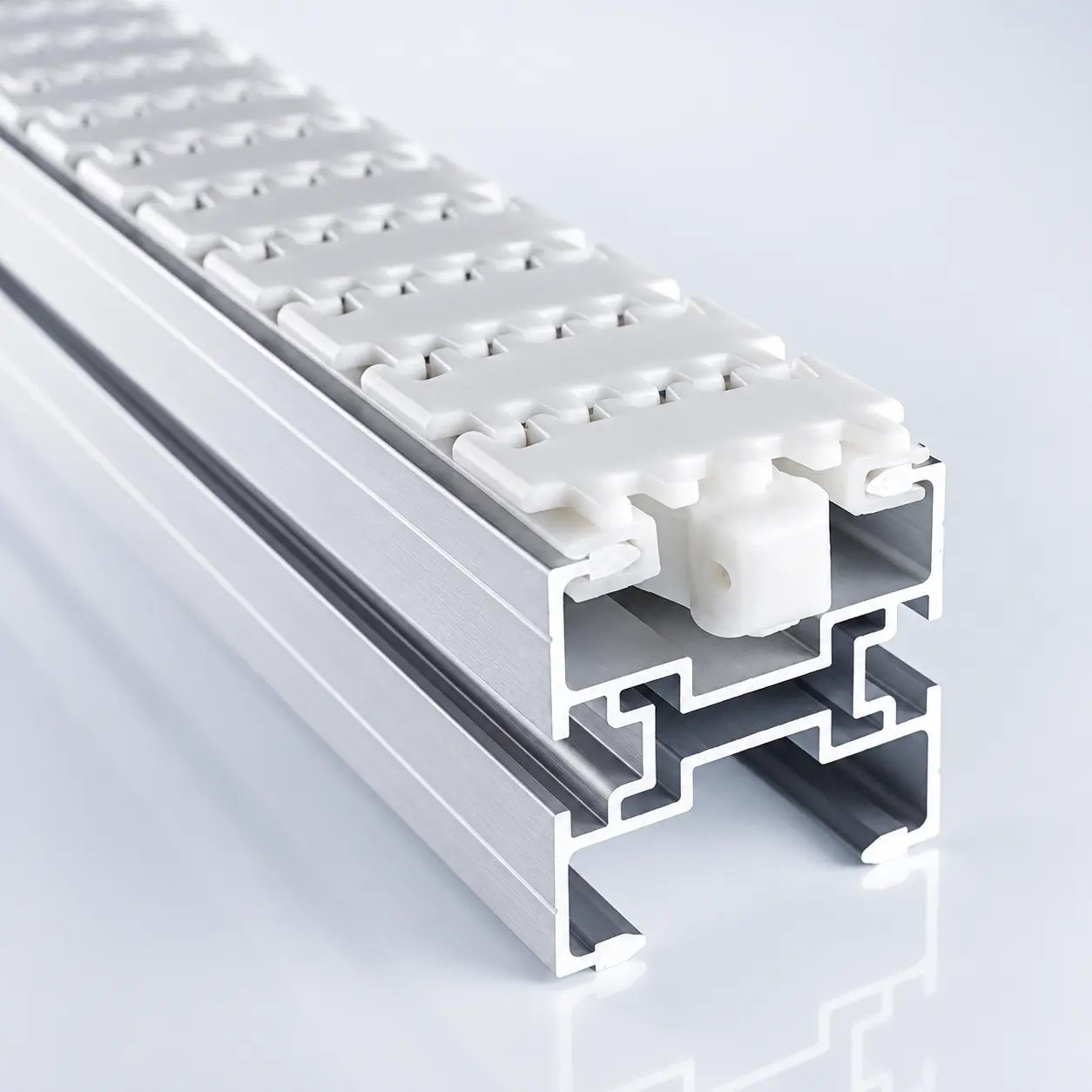
These conveyors run triple strand chains on wear-resistant polymer guide strips. The third strand is not there for capacity alone: three strands improve stability and load distribution across heavier pallets and wider bases, which reduces both wear and skewing. Skew is the practical problem on a two strand line, because a pallet that arrives at a transfer slightly crooked either jams or hands off badly, and the fix is usually more sensors and more control logic. Getting the mechanical stability right first is cheaper.
02

Load capacity and motor sizing

The conveyor supports up to 1,500 kg per pallet. Motors run from 0.75 kW to 3.0 kW, selected on pallet mass, friction, start and stop frequency and whether the section includes an incline or a transfer. Start and stop frequency is the one most often left out of a brief: a buffer lane that indexes every few seconds asks far more of a drive than a straight run of the same length carrying the same weight, so tell us how the line actually behaves rather than just what the pallets weigh.

03

Height range and handshakes

Frames come with adjustable feet and stands, giving a top of chain height anywhere from 425 mm to 1,175 mm. That range is deliberately wide because a pallet conveyor almost never stands alone: it has to meet the deck height of whatever it hands to and takes from, and a mismatch of even a few millimetres at a transfer shows up as a snag on every pallet. Fix the heights of the fixed machines first, then set the conveyor to them.

04

Lengths, speeds and layout

Standard lengths run from 1,300 mm to 3,600 mm, and speeds are 12, 15 or 18 m/min, matched to throughput, stopping distance and downstream equipment. Chain sections are shorter than the equivalent roller ones, which is normal for the duty, so a long run is assembled from several driven sections rather than one. That is worth knowing at layout stage, because each section is a drive, and the number of drives affects both the control panel and the cost more than the total length does.

05

Transfers, turntables and direction changes

Direction changes are handled by chain transfers, turntables or right-angle cross-transfers, which move pallets between perpendicular lines or rotate them for orientation. Orientation matters more than people expect at the end of a line: a wrapper or a truck loading pattern may need the pallet a particular way round, and it is far cheaper to turn it in the layout than to ask an operator to do it with a pallet truck twenty times a shift.

06

Accumulation on chain

Chain conveyors accumulate with controlled accumulation and photo-eyes, and where zero pressure between pallets is needed the zones and controls are designed for it rather than assumed. A short buffer ahead of a wrapper or palletiser absorbs that machine's cycle so the upstream line does not stop every time it runs. For lighter product where zero pressure is the point of the whole system, zero line pressure conveying is the dedicated answer.

Finish, maintenance and safety

The standard build is painted steel for dry industrial areas; specify stainless from the outset for washdown or corrosive settings, since it changes the frame rather than being a coating added later. Maintenance is periodic chain tension checks with simple tension adjustment, lubrication to spec, inspection of the polymer guides and sprockets, and keeping debris clear. Safety is guarding, e-stops, pull cords, interlocked gates and beacons or sounders to CE standards, integrated with your existing site systems. Typical neighbours are pallet wrappers, palletisers and infeed and outfeed lanes, and where the load never needs driving, gravity conveyor is cheaper. LVP Automation designs, builds, installs and supports pallet chain conveyor from Finglas, Dublin 11 as part of our wider automation services.

Specification

Load capacity
Up to 1,500 kg per pallet
Chain
Triple strand chains running on wear-resistant polymer guide strips
Speeds
12, 15 or 18 m/min, matched to throughput, stopping distance and downstream equipment
Height range
Top of chain adjustable from 425 mm to 1,175 mm on adjustable feet and stands
Standard lengths
1,300 mm to 3,600 mm
Motor options
0.75 kW to 3.0 kW, sized on pallet mass, friction, start and stop frequency and transfers
Pallets handled
Euro, CHEP and custom pallets with solid runners or bottom deckboards, including damaged or uneven bases
Construction
Painted steel for dry industrial areas, stainless for washdown or corrosive settings
Configurations
Straight runs, accumulation sections, chain transfers, turntables and right-angle cross-transfers
Maintenance
Simple chain tensioning, lubrication to spec, polymer guide and sprocket inspection

Where the Chain Conveyor Excels

Heavy Pallet Transport

Built for sustained, high-load duty cycles where rollers struggle, handles full pallets, bulk loads and rugged bases with confidence.

Configurations and Integrations

Straight runs, accumulation sections, chain transfers and turntables; links cleanly to palletisers, stretch wrappers, infeed/outfeed lanes and safety systems.

Typical Applications

Warehouse infeed/outfeed, buffer zones before wrappers/palletisers, cross-docking, and manufacturing cells moving heavy or uneven-base pallets.

FAQs about the Chain Conveyor

Key answers on pallets, strands, bases, transfers, speeds, maintenance and safety.

Which pallet types are suitable?

Euro, CHEP and custom pallets with solid runners or bottom deckboards. For damaged or highly uneven bases, chain is often preferable to rollers.

Why triple-strand instead of two-strand?

Three strands improve stability and load distribution for heavier pallets and wider bases, reducing wear and skewing.

Can chain conveyors accumulate pallets?

Yes, with controlled accumulation and photo-eyes. For zero-pressure between pallets, we’ll design appropriate zones and controls.

What about transfers and direction changes?

Use chain transfers, turntables or right-angle cross-transfers to move pallets between perpendicular lines or rotate for orientation.

How do I choose the right speed?

Typical options are 12, 15 or 18 m/min. We match speed to throughput, stopping distance and downstream equipment.

What maintenance is required?

Periodic chain tension checks, lubrication to spec, inspection of polymer guides and sprockets, plus cleaning to keep debris clear.

Is painted steel suitable for my environment?

Painted steel is ideal for dry industrial areas. For washdown or corrosive settings, specify stainless steel constructions.

How is height adjusted on site?

The frames include adjustable feet/stands to set top-of-chain height within ~425–1,175 mm for smooth handshakes with adjacent equipment.

How are motors sized?

We select 0.75–3.0 kW based on pallet mass, friction, start/stop frequency and incline/transfer requirements.

What safety features are available?

Guarding, e-stops, pull cords, interlocked gates and beacons/sounders to CE standards; we integrate with your site safety systems.

Similar Products

Let's Connect

Have a question about our conveyor systems or need a tailored automation solution for your business? Our team at LVP Automation is here to help. Fill out the form below with your details, and we’ll get back to you as soon as possible. Whether you need a quote, technical support, or more information on our products, we’re ready to assist.