
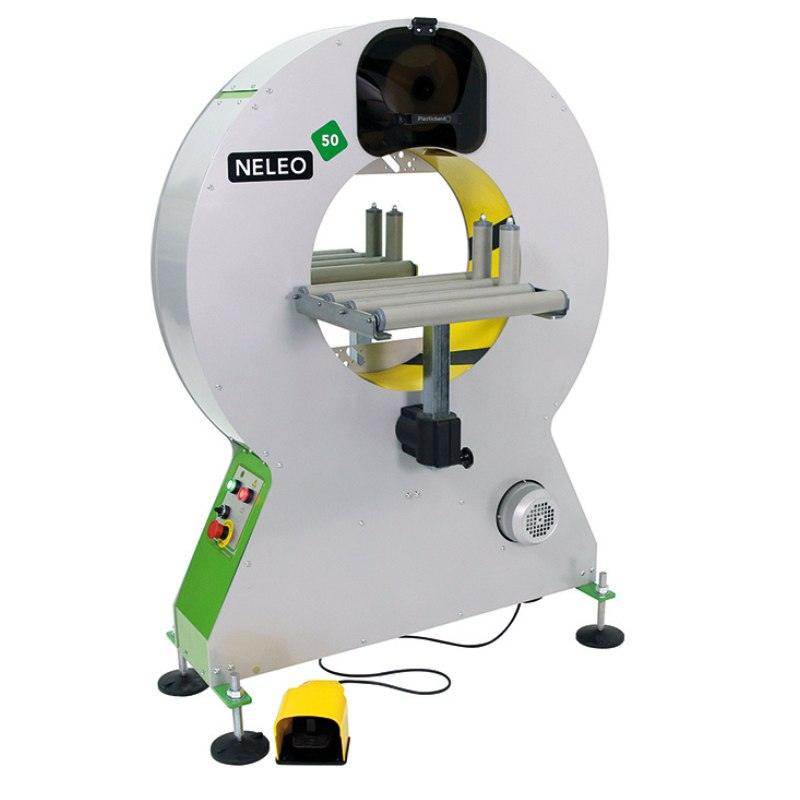
Orbital Wrappers

Plasticband orbital wrappers band stretch film around long or irregular products as they pass through a rotating ring. Low film use, recipe changeovers between sizes, and protection from dust and moisture in storage and transit. Supported across Ireland and Northern Ireland.

Products suited
Long and irregular
Wrap method
Rotating ring
Film
Stretch film, any gauge
Film use
Low film use
Changeover
Recipe changeover
Wrap pattern matched to your product lengthSpecified, installed and supported from Dublin 11
Long and awkward loads
Profiles, doors, timber and tubing wrapped end to end
Less film per pack
Pre-stretch and targeted banding, not full shrink
Inline ready
Infeed and outfeed conveyors with a PLC handshake
Ireland-wide support
Specification, install and service from Dublin 11

Orbital wrappers explained

What an orbital wrapper is for

An orbital wrapper passes the product through a rotating ring that bands stretch film around it as it travels. That geometry is what makes it the answer for anything long or awkward: profiles, doors, windows, timber lengths, tubing and furniture kits, which are the shapes that will not sit sensibly on a pallet and would otherwise be boxed or shrink wrapped. The film is applied along the length rather than around a stack, so it protects the surface and holds bundled items together at the same time.

01

Orbital or pallet wrapping

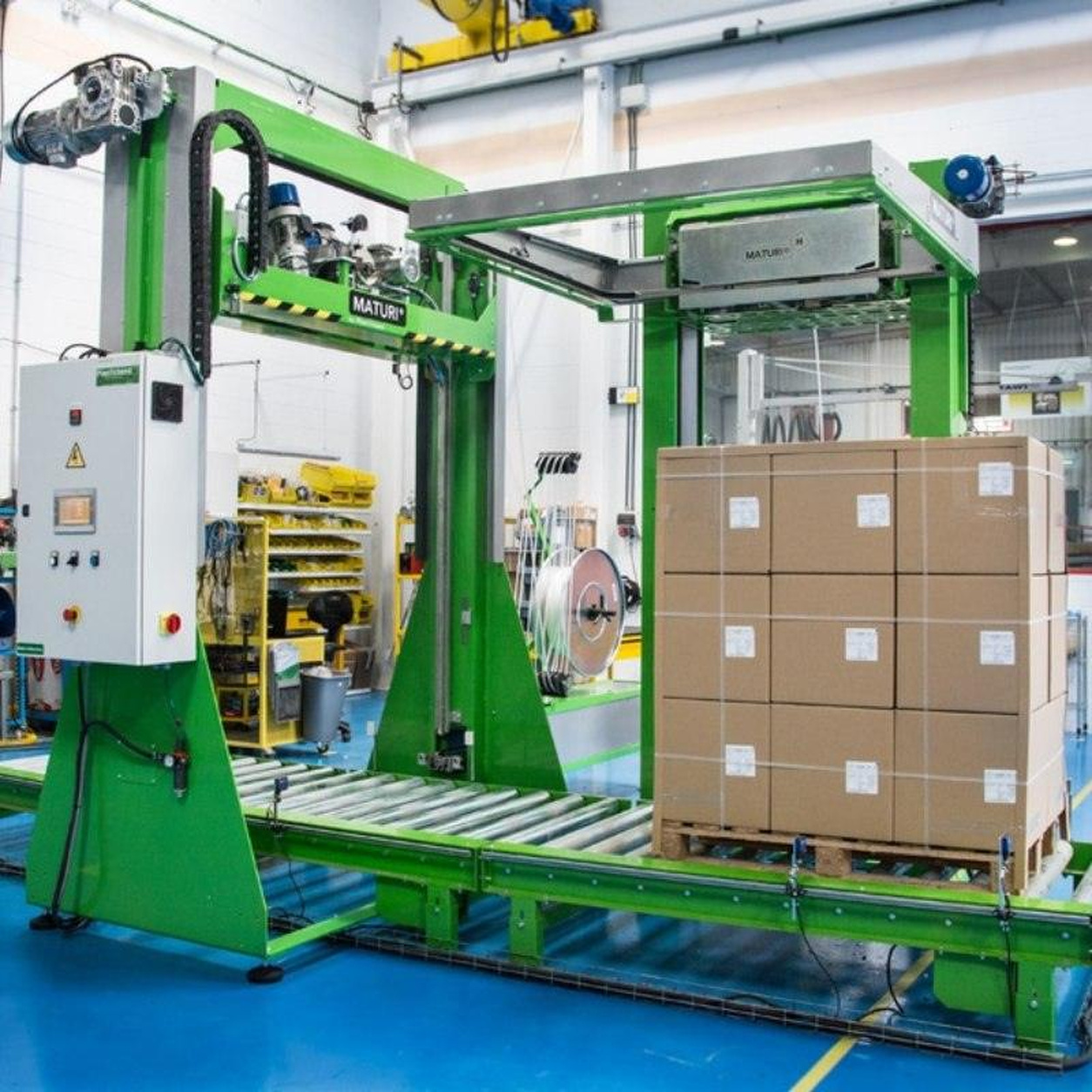
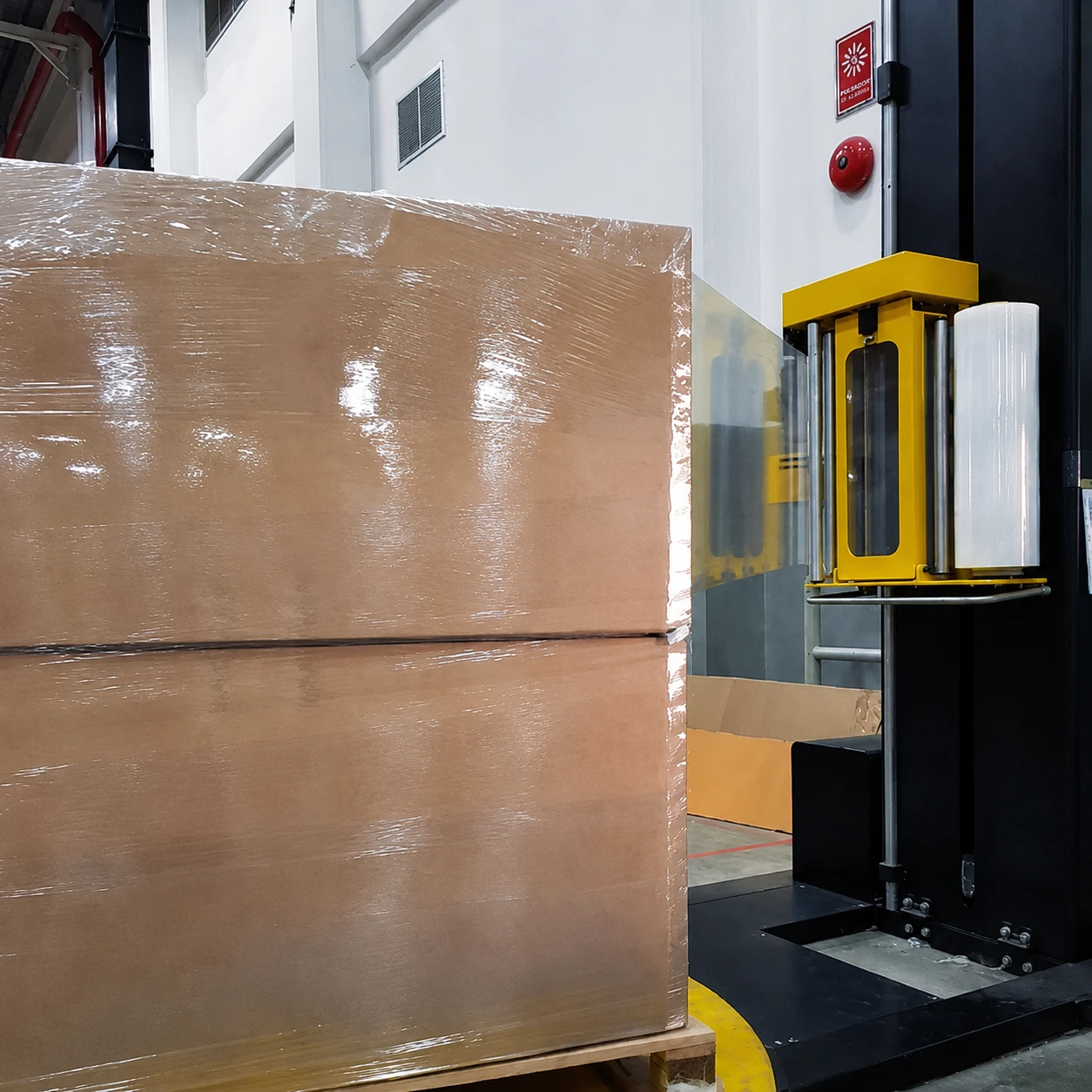
The two do different jobs and it is worth being clear which one you need. A pallet wrapper turns film around a stacked load standing on a pallet. An orbital wrapper puts film around a single long item or a bundle passing through the ring, which is why it appears in joinery, fabrication and building products rather than general warehousing. Some sites run both, at different points on the same line.
02

Film use

Orbital wrapping uses far less film than full shrink packing. Pre-stretch thins the film before it reaches the product and targeted banding puts it only where it is needed, so consumable spend drops without giving up protection. Stretch film is used in a range of gauges, and branded or coloured film is an option where packs need to be identified on sight or carry your name out to site.

03

Changeovers between sizes

Running mixed lengths back to back is the normal case rather than the exception, so wrap count, tension and band spacing are held as recipes. Automatic clamp and cutter units take the manual handling out of the start and end of each pack, which is where most of the changeover time goes on a machine that does not have them.

04

Protection in storage and transit

Banding pattern and overlap are what decide how well a pack resists dust and incidental moisture while it sits in a yard or travels on an open trailer. Edge protectors can be added where the product corners need it, and hold-down rollers and top and bottom pressers keep a bundle square while the film goes on.

05

Running inline

Digital I/O or fieldbus handles start and stop, product detect, recipe calls and interlocks, so the wrapper works with infeed and outfeed conveyors, stops, pressers and indexers rather than needing an operator to feed it. Where packs need labelling after wrapping, print and apply labellers go downstream, and where pallets also need banding, that is pallet strapping machines.

06

Throughput and sizing

Throughput is set by product length and wrap pattern rather than by a headline figure, because a long profile with a tight band count takes longer than a short one wrapped loosely. Ring speed and conveyor pace are sized to the packs per hour you actually need, so the useful starting point is your product lengths, the pack rate and what happens either side.

The machines and the support behind them

These are Plasticband machines, from a manufacturer that has designed, built and installed packaging equipment since 1978. LVP Automation specifies, installs and supports them from Finglas, Dublin 11, across Ireland and Northern Ireland as part of our wider automation services.

Specification

Products suited
Long or irregular items: profiles, doors, windows, timber lengths, tubing and furniture kits
Wrap method
Product passes through a rotating ring that bands stretch film along its length
Film
Stretch film in a range of gauges, with branded or coloured film available
Film use
Pre-stretch and targeted banding use far less film than full shrink packing
Changeover
Wrap count, tension and band spacing held as recipes, with automatic clamp and cutter
Options
Auto clamp, cut and wipe, hold-down rollers, top and bottom pressers, edge protectors and accumulation
Integration
Digital I/O or fieldbus for start and stop, product detect, recipe calls and interlocks
Protection
Banding pattern and overlap resist dust and incidental moisture in storage and transport
Throughput
Set by product length and wrap pattern; ring speed and conveyor pace sized to your packs per hour
Manufacturer
Plasticband, designing, building and installing packaging equipment since 1978

Where Orbital Wrappers Excel

Long & Irregular Products

Frames, profiles, doors, windows, timber lengths and tubing—uniform containment without bulky shrink or carton packs.

Low Film, High Protection

Controlled pre-stretch and banding patterns give edge protection and dust/moisture resilience while cutting consumable spend.

Seamless Line Integration

Inline with infeed/outfeed conveyors, stops and sensors; links to printers/labels and palletisers for a smooth end-of-line.

FAQs about Orbital Wrappers

Quick answers on products, film, speed, integration, options and maintenance.

How much film does an orbital wrapper use?

Far less than full-shrink solutions. Pre-stretch and targeted banding reduce film while maintaining protection.

Can we run different sizes back-to-back?

Yes—recipes adjust wrap count, tension and band spacing; automatic clamps/cutters help minimise changeover time.

What film types are supported?

Typically stretch film (various gauges); options for branded or coloured film. We’ll validate to your protection goals and line speed.

How fast can it run?

Throughput depends on product length and wrap pattern. We size rotary speed and conveyor pace to your required packs/hour.

Will it integrate with my conveyors and PLC?

Yes—digital I/O or fieldbus for start/stop, product detect, recipe calls and interlocks. Works with stops, pressers and indexers.

Can we print or label after wrapping?

Absolutely—add print & apply or label applicators downstream; we can provide verification and reject logic if needed.

Is the wrap moisture/dust resistant?

Banding patterns and overlap provide strong defence against dust and incidental moisture during storage and transport.

What options are available?

Auto clamp/cut/wipe, hold-down rollers, top/bottom pressers, edge protectors, infeed/outfeed accumulation and safety guarding packages.

What maintenance is required?

Routine checks on ring drive, film carriage, rollers and sensors; keep paths clean and follow a preventative schedule for bearings and belts.

What products are best suited to orbital wrapping?

Long or irregular items (profiles, doors, furniture kits, tubes), as well as boxed goods that benefit from added stability and surface protection.

Downloads

Similar Products

Let's Connect

Have a question about our conveyor systems or need a tailored automation solution for your business? Our team at LVP Automation is here to help. Fill out the form below with your details, and we’ll get back to you as soon as possible. Whether you need a quote, technical support, or more information on our products, we’re ready to assist.