
The case for putting a conveyor into a facility is usually made in general terms: it saves time, it saves labour, it improves safety. All broadly true, and none of it much use when you are trying to decide whether a particular transfer is worth automating.
This page sets out what a conveyor actually changes in an operation, which of the usual benefits stand up to scrutiny, and where a conveyor is the wrong answer. The honest version is more useful than the sales version.
What a conveyor actually changes
It removes the carry, not the work
A conveyor does not eliminate a process step. It removes the movement between steps. Someone still packs the carton, but nobody walks it to the pallet station. The value is in reclaiming the time and effort that was going into transport rather than into production.
This is why short, frequent transfers often justify a conveyor better than long, occasional ones. A ten-metre carry done four hundred times a shift is a bigger cost than a fifty-metre carry done twice.
It makes throughput predictable
Manual movement varies with who is doing it and how the day is going. A conveyor moves at a set rate, which means the output of one process arrives at the next in a way you can plan around. Predictability, rather than raw speed, is usually what makes the rest of the line work better.
It fixes where product is
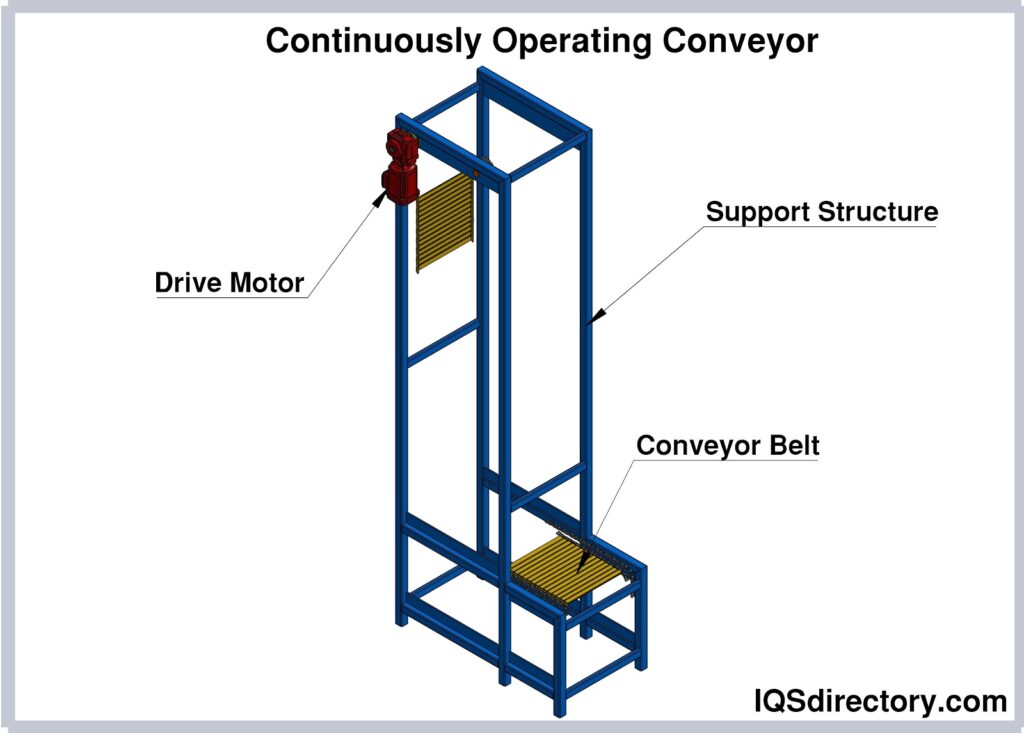
A conveyor presents product at a known height, in a known place, at a known time. That is what allows anything downstream to be automated at all: a labeller, a checkweigher, a robot or a vision system needs the product in a repeatable position before it can do anything with it. Conveying is often the step that makes the rest of the automation possible.
The benefits worth counting
Reduced manual handling
This is the strongest of the safety arguments, and it is measurable. Manual handling accounted for 30% of non-fatal workplace injuries reported to the Health and Safety Authority in 2022, and it has been the single most common trigger every year since 2018. Every carry a conveyor removes is exposure removed.
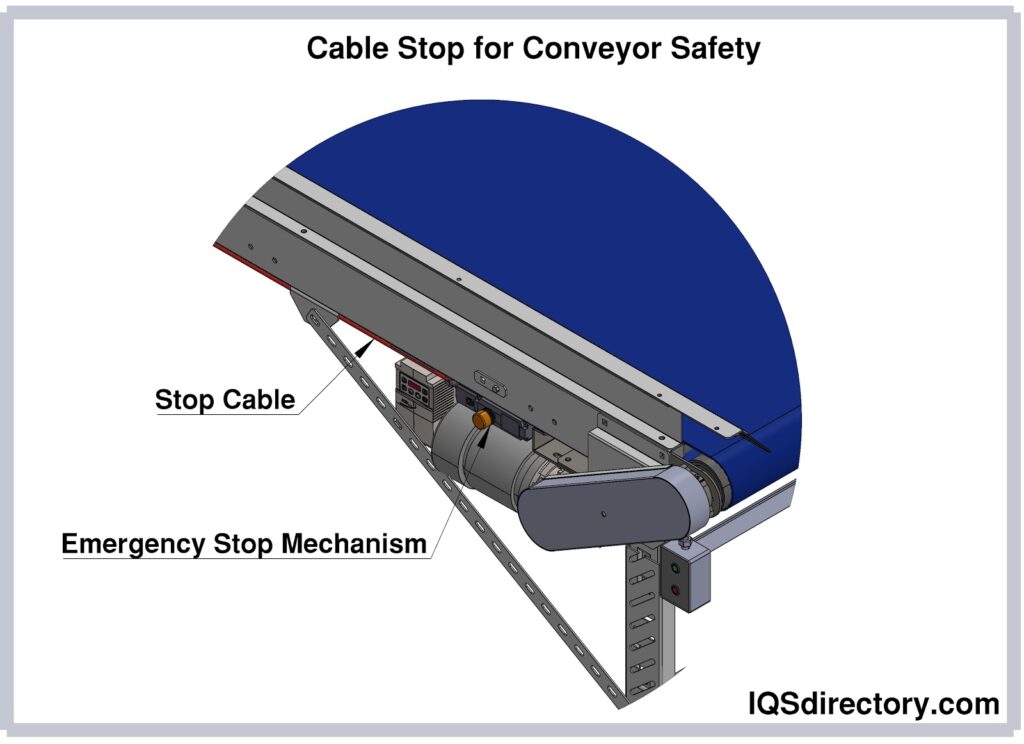
A conveyor is not automatically safer than the alternative, though. It introduces its own hazards, which is why guarding, emergency stop provision and isolation are part of the design rather than accessories. We cover that in conveyor safety requirements in Ireland.
Labour redeployed rather than removed
Conveying is usually sold as a labour saving. In practice it more often redeploys people from carrying to doing, particularly on lines that are already short-staffed. The business case is stronger when it is framed that way, because it survives the question of what happens when volumes rise.
Less product damage
Product handled once and placed on a belt is handled less than product carried, set down, picked up and carried again. Controlled speed and a proper transfer between sections mean less impact and fewer drops, which matters most with fragile items and with anything where the packaging is part of the sale.
Control over speed and direction
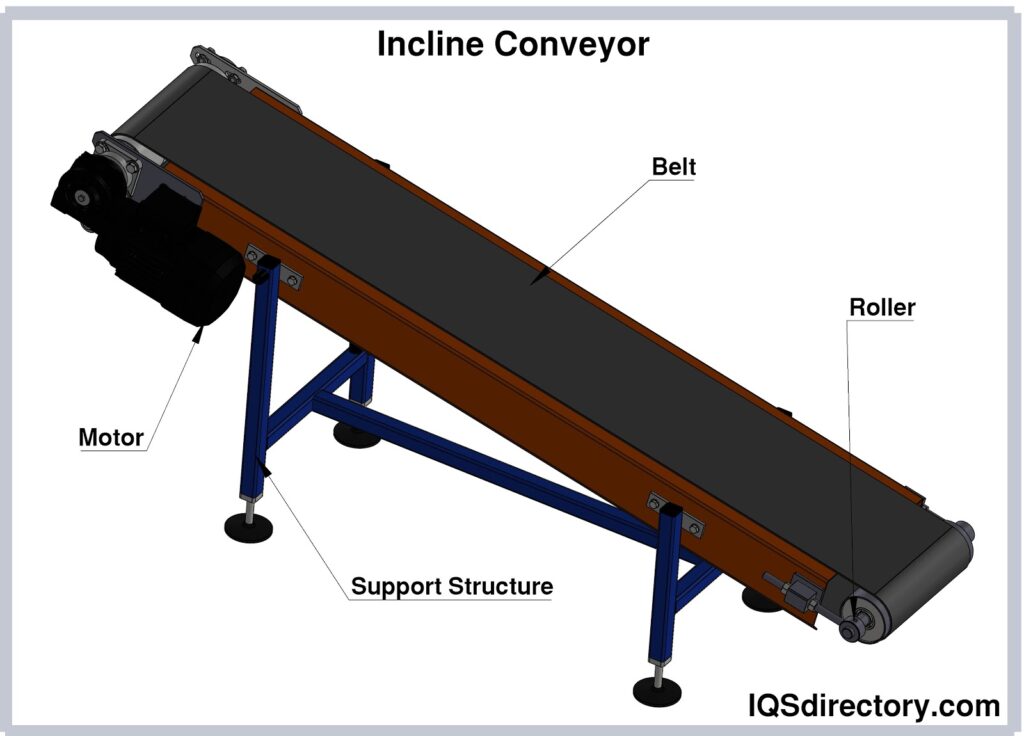
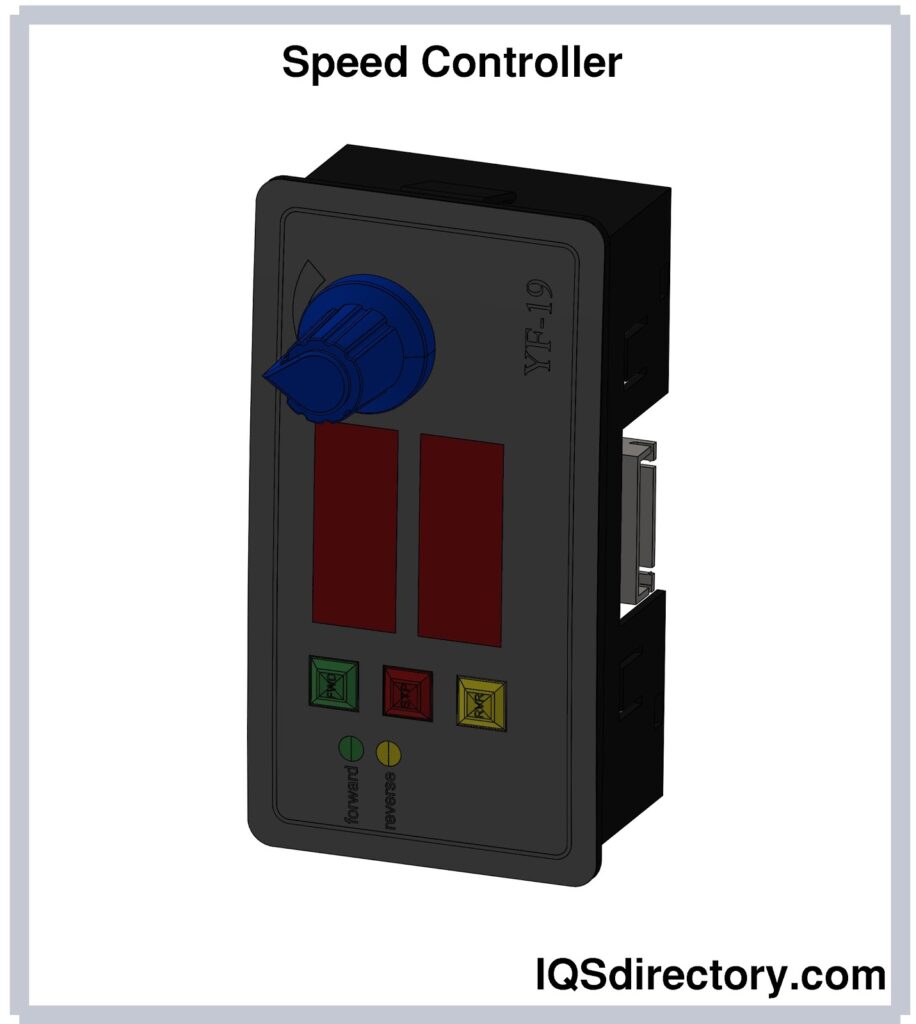
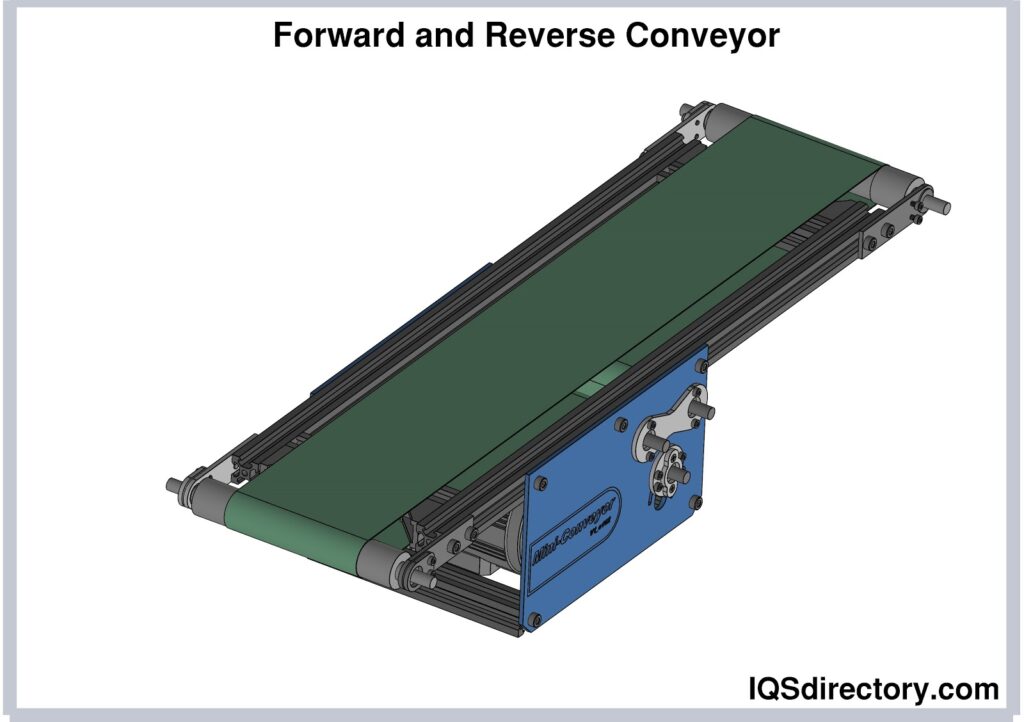
A driven conveyor can be run at a set speed, ramped, stopped on a signal and, where the drive allows, reversed. That control comes from the drive and the control system rather than the conveyor itself: a variable frequency drive sets the speed, and a PLC decides when the section runs, stops or changes direction based on what the sensors are telling it.
Reversing a section is a design decision rather than a given. It has to be specified, because the drive, the belt tracking and the transfers either side all have to cope with running both ways.
Continuous running between processes
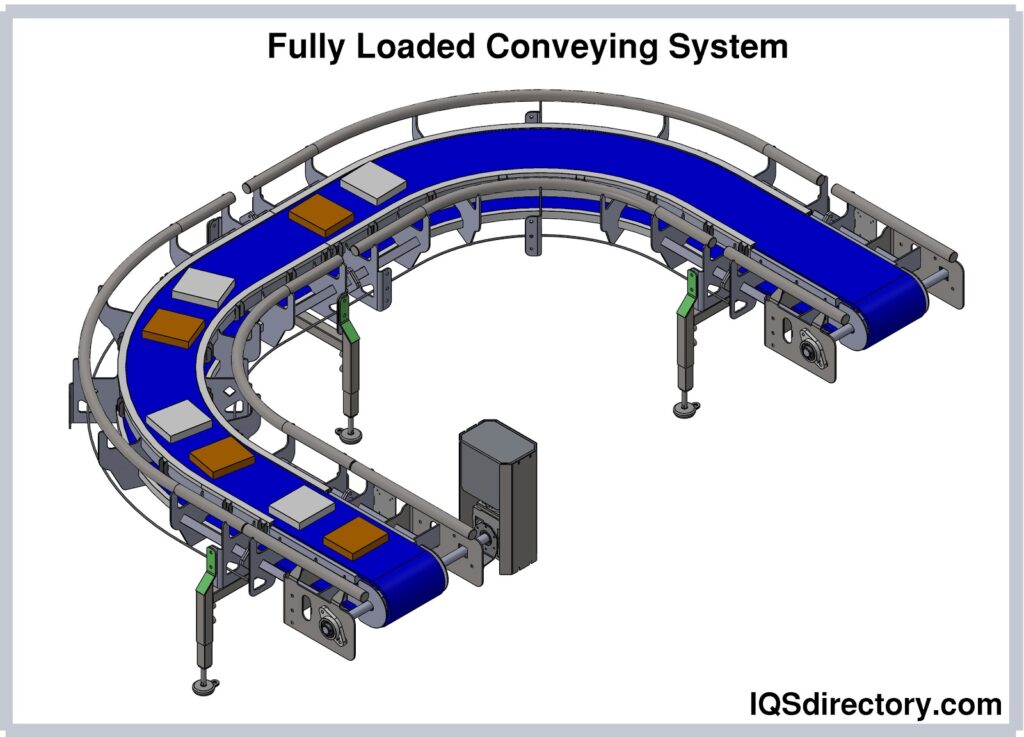
A conveyor can run without a break for as long as the process either side of it does, and a full section acts as a buffer so that a short stop at one machine does not immediately starve the next. Where the buffer has to preserve order, that is a FIFO lane; where it just has to hold product, it is accumulation.
Volume the manual alternative cannot reach
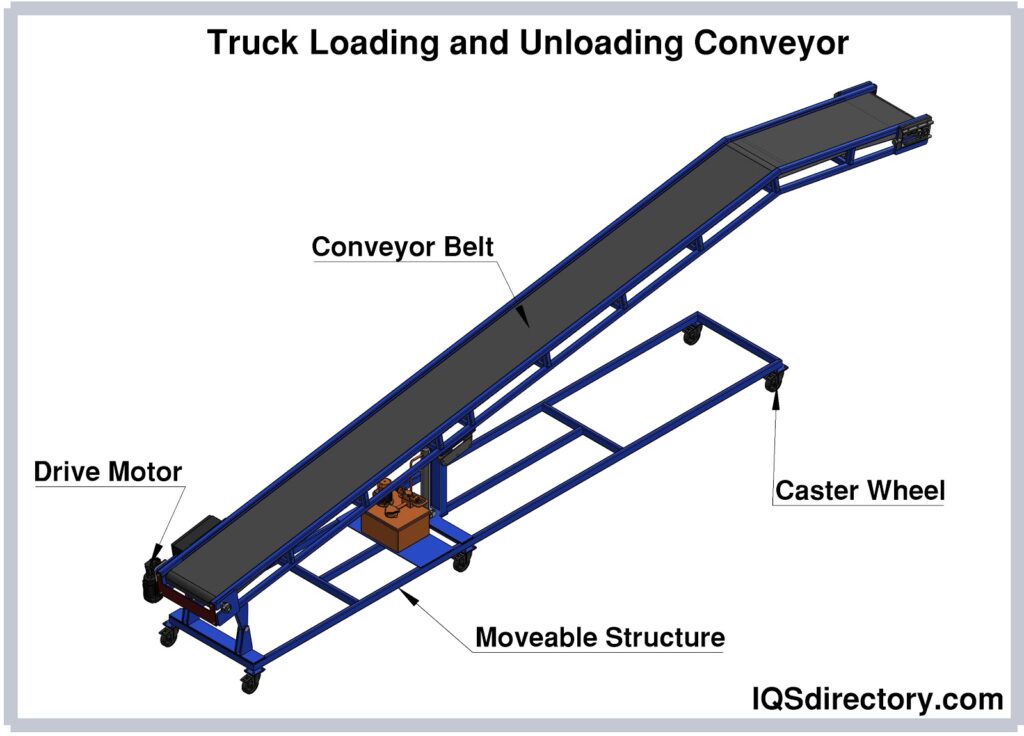
Above a certain throughput, manual movement stops being an option at any staffing level. This is where conveying is not an improvement on the alternative but a replacement for it, and it is the clearest case of all — high-volume lines in FMCG and logistics and e-commerce are built around conveying because nothing else moves that quantity reliably.
Where a conveyor is the wrong answer
The benefits above are real, but they are not universal, and the cases below come up often enough to be worth stating plainly.
- Low, irregular volumes. A transfer done a handful of times a day rarely pays back the cost, the floor space and the maintenance.
- Layouts that keep changing. A fixed conveyor is exactly that. Where product routes change month to month, the flexibility you lose can outweigh the handling you save.
- Floor space you do not have. A conveyor occupies its run permanently, plus clearance to work alongside it and designed crossings where people need to get past.
- Product that will not convey. Soft-bottomed, unstable or awkwardly shaped items may need a tote, a tray or a different method entirely.
Maintenance is the other honest qualifier. Conveyors are not maintenance-free, and the ones with drives, bearings and belts need a schedule. What that involves is covered in our guide to conveyor faults and maintenance.
Common questions
How do I work out whether a conveyor is worth it?
Start with the number of movements rather than the distance. How many times a shift does someone carry something along that route, and how long does each one take? Frequent short transfers usually justify a conveyor more readily than occasional long ones. Then add what else it enables: if it lets you automate a downstream step, that belongs in the calculation too.
Will a conveyor reduce headcount?
Sometimes, but the more common outcome is that the same people spend their time on production instead of transport. On lines that are already hard to staff, that is usually the more valuable result and the more durable business case.
Are conveyors low maintenance?
Gravity lanes come close, because there is no drive. Powered conveyors have motors, gearboxes, bearings and belts, and all of those need a maintenance schedule matched to how hard the system runs and what it carries. Treating a powered conveyor as fit-and-forget is how a cheap repair becomes an expensive one.
Can a conveyor run in both directions?
Only if it is designed to. It depends on the drive, on belt tracking behaving in both directions, and on the transfers at each end being able to hand product over either way. It is worth specifying at the outset rather than assuming.
Does a conveyor make a line safer?
It removes manual handling exposure, which is the most common cause of reported workplace injury in Ireland. It also introduces machinery hazards that have to be guarded and controlled. The net effect is usually positive, but it comes from the design being right rather than from the conveyor existing.
What if our product will not sit on a belt?
Common, and usually solvable. Unstable or soft-based items are typically carried in a tote, tray or on a slave board, and the carrier is conveyed instead. Where that is not practical, a different handling method may suit better.
Getting the case right
Whether conveying pays depends on your volumes, your layout and your product, and the answer is not always yes. LVP Automation works that through as part of conveyor system design, and where the case is uncertain a simulation can test it before anything is committed to.
We are based in Finglas, Dublin 11 and work with manufacturers across Ireland. If you have a movement you are still doing by hand and want a straight answer on whether it is worth automating, get in touch.