LVP Automation is the Irish distributor for Carryline slat conveyor systems. This page explains what they are, where they suit, and how the four configurations differ — so you can work out which applies to your line before talking to anyone.
Carryline builds modular slat chain conveyors from aluminium and stainless steel. The defining characteristic is that the system is assembled from a common set of components rather than fabricated for one layout, which is what makes it straightforward to extend, reroute or reconfigure later.
What a slat conveyor is
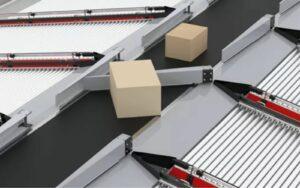
A slat conveyor carries product on a chain of linked plastic or steel slats running in a guided beam, rather than on a continuous belt. The chain is driven at one end and returns underneath the beam.
The practical differences from a belt conveyor matter more than the mechanism:
- It turns corners. A slat chain articulates horizontally, so one continuous run can go round bends without a transfer between conveyors. Every transfer removed is a place product can no longer jam or fall.
- It carries a hard, flat surface. Product sits on a rigid slat rather than a flexible belt, which suits items that need firm support — bottles, jars, cans, cartons and trays.
- Product can accumulate on it. Slat chains are commonly run with product backing up on a moving chain, which is what allows buffering between machines without stopping the line.
- Sections are replaceable. A damaged length of chain is changed without taking the whole thing off.
The trade-off is that slats need a reasonably rigid, flat-bottomed product. Anything soft, sagging or very small is usually better on a belt.
The four Carryline configurations
Aluminium slat conveyors
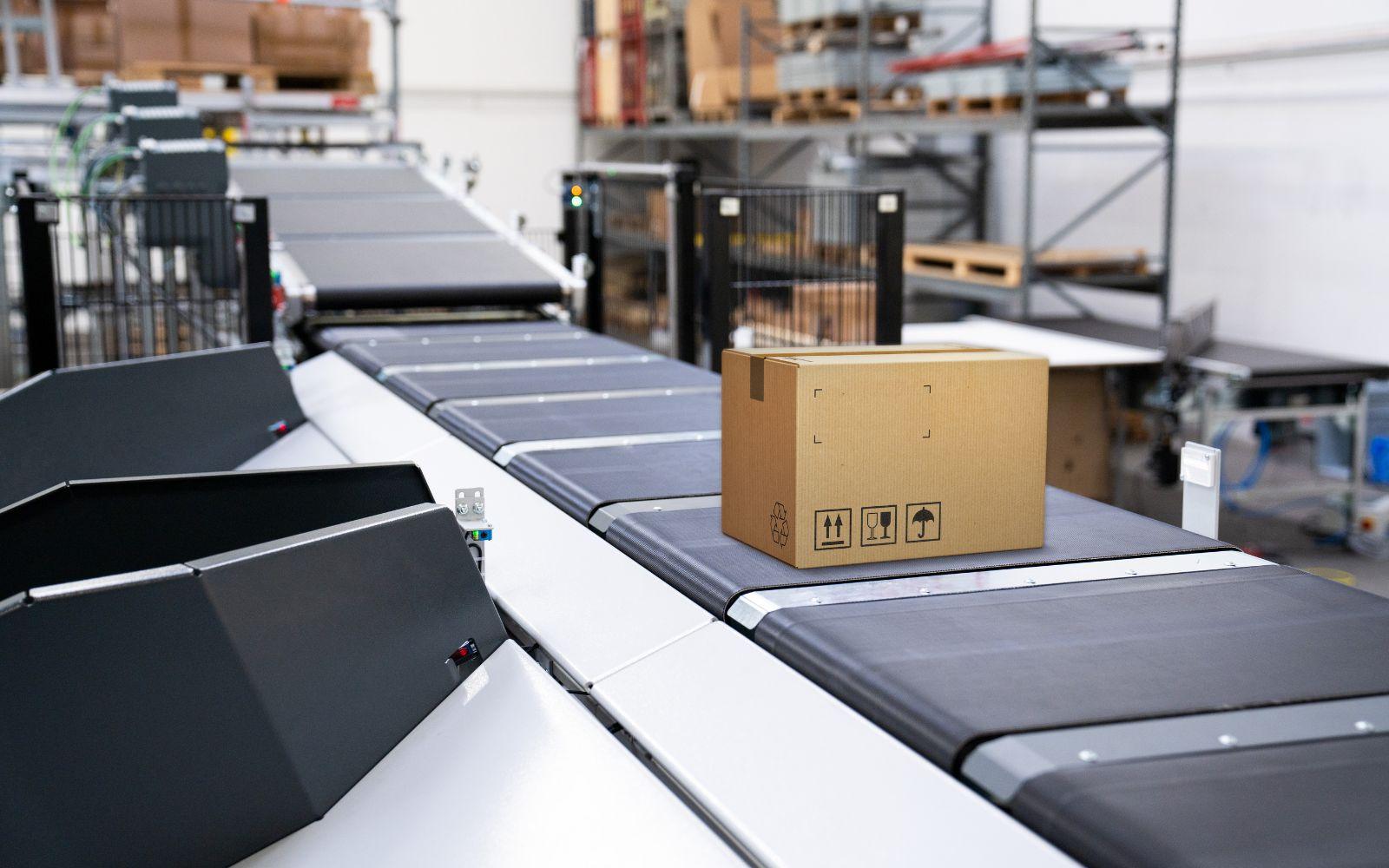
The standard horizontal system, and the one most lines start with. Modular aluminium construction means it can be assembled quickly and reconfigured when the layout changes, which is the main reason it gets specified over a fabricated conveyor. Chain widths run from 24 mm up to 220 mm, so the same system covers anything from small bottles to case handling.
Aluminium slat conveyors suit general product movement in production and packaging areas, and integrate into existing lines without rebuilding what is already there.
Stainless steel slat conveyors
The same principle built for wash-down. Every component including screws and chain shafts is stainless, and the conveyor beam carries a drainage channel so rinse water and debris run off rather than collecting in the structure.
This is the configuration for food, beverage and any environment with a hygiene regime. Stainless steel slat conveyors come up most often in bakery, beverage and fish processing applications.
Spiral slat conveyors
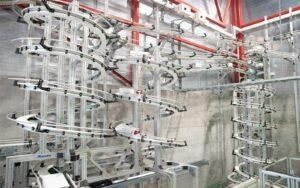
Where product has to change level and there is no room for an inclined run, a spiral does it within roughly its own diameter. The Carryline spiral is built with minimal moving parts and the same common components as the rest of the range, and is available in aluminium or stainless steel.
The usual reason to specify one is floor space rather than height: an incline gentle enough for product to stay stable can need a long run, and a spiral achieves the same rise in a fraction of the footprint.
Vertical slat conveyors
For moving product between floor levels, or elevating it quickly to keep flow going. Vertical slat conveyors come in side-grip and friction chain configurations, which handle different product types and slopes, and can be run continuously or as a buffer.
Side-grip holds the product between two chains, which suits items that would not stay upright on a slope. Friction chain relies on the product sitting on the chain surface, which suits stable, flat-based items on shallower rises.
Combining configurations in one system
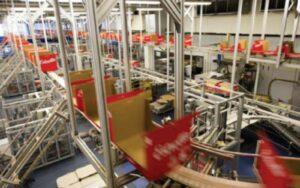
Lines rarely need only one of the four. A single installation commonly runs horizontally through a packing area, climbs or descends where the building requires it, and lifts vertically between levels — all built from the same component set, so the transitions between sections are part of the system rather than joins between different manufacturers’ equipment.
Guide rails are set to the product being carried and can be adjusted, which matters on lines running more than one carton or container size. Chain width is chosen the same way: the 24 mm to 220 mm range covers small containers through to case handling, and the width follows the footprint of what is being moved.
Where slat systems are the right choice
Slat conveyors earn their place in a few specific situations rather than as a general default:
- The route has bends in it. One continuous chain round a corner beats two belts and a transfer.
- Product needs to accumulate. Running product back on a moving chain is a straightforward way to buffer between machines — see accumulation.
- Wash-down is a requirement. Stainless construction with drainage is designed for it rather than adapted to it.
- The layout will change. Modular systems get reconfigured; fabricated ones get replaced.
- Levels have to change in a tight footprint. Spiral and vertical configurations handle what an incline cannot fit.
Where none of those apply and the run is a straight line carrying a light, flat product, a plain belt conveyor is usually simpler and cheaper. That comparison is worth making honestly — our conveyor range covers both.
Common questions
What is the difference between a slat conveyor and a belt conveyor?
A slat conveyor carries product on linked rigid slats running in a guided beam; a belt conveyor uses a continuous flexible belt. Slats turn corners in a single run and give a hard supporting surface, which suits bottles, jars and cans. Belts handle small, soft or irregular items better.
Is LVP Automation the Irish distributor for Carryline?
Yes. We supply, install and support the Carryline range in Ireland, and integrate it into wider systems alongside our own conveyors and automation.
Can a Carryline system be extended later?
That is the main argument for it. The range is built from common modular components, so adding a section, changing a route or reconfiguring for a new product is an assembly job rather than a rebuild.
Which configuration do I need?
Horizontal movement in a dry environment points to aluminium; anything washed down points to stainless; a level change in limited floor space points to spiral; moving between floors points to vertical. Most real lines use more than one.
What chain widths are available?
The aluminium range runs from 24 mm to 220 mm. Width is set by the footprint of the product being carried rather than chosen for its own sake.
Can Carryline conveyors be integrated with existing equipment?
Yes, and that is generally how they are installed — into existing production or packaging areas rather than as a standalone line. Getting the handover right at each end is part of conveyor system design.
Talk to us about a Carryline system
The full range is on the Carryline brand page, and we handle specification, installation and support in Ireland, including on-site maintenance and spare parts.
We are based in Finglas, Dublin 11 and work with manufacturers across Ireland. Tell us what you are moving and we will tell you which configuration suits.